#TARNo3
We present to you, the third edition of The Accursed Race — and the first on the new South loop: Lost Dot’s no-fly, fixed route, off-road race exploring the Balkans — the heartlands of the Transcontinental Race.
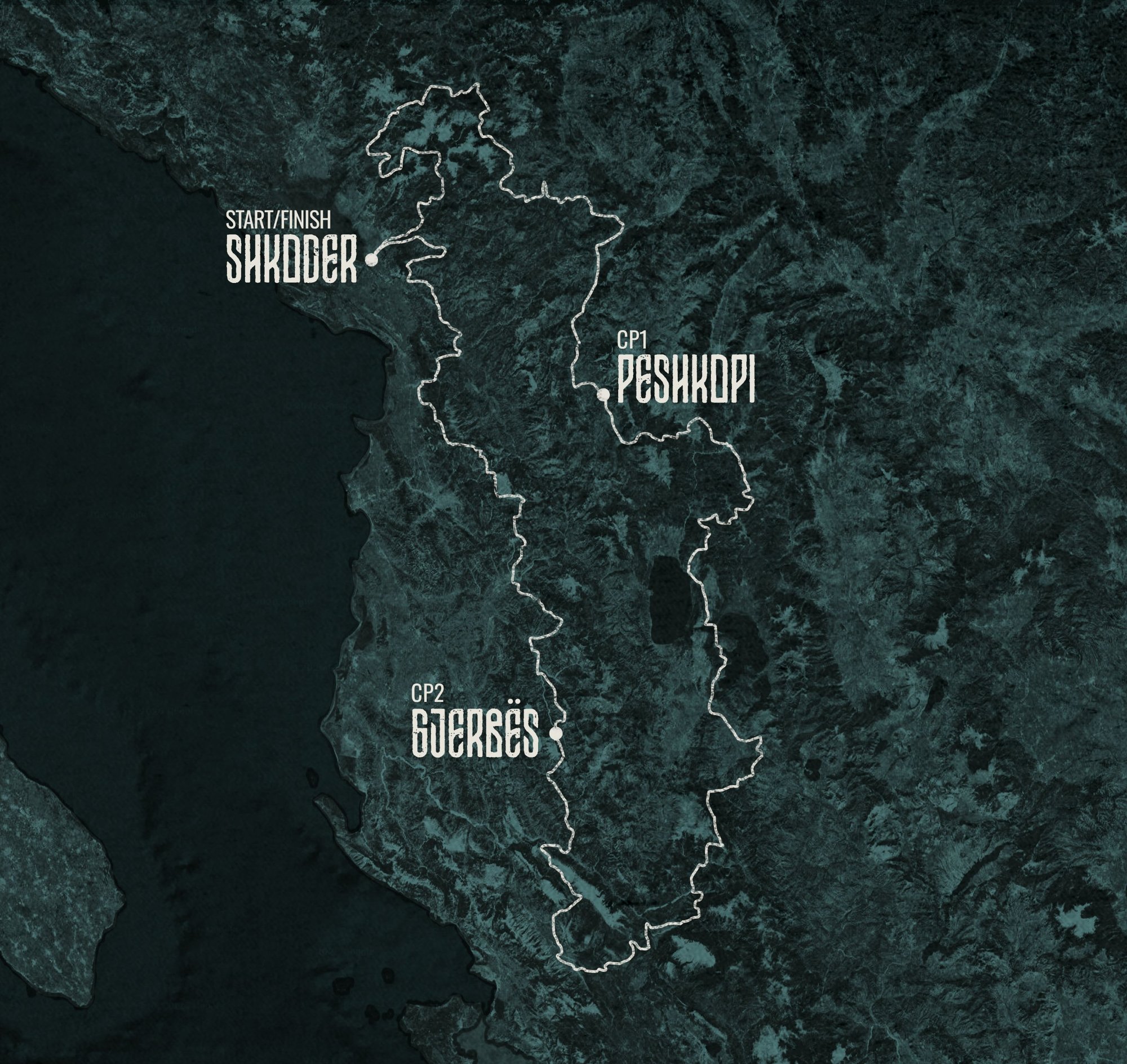
Starting and finishing in Shkodër, Albania, the South loop carves a route through the rugged backbone of Albania, weaving across borders into Montenegro, North Macedonia and Greece.
No-fly: riders must travel overland to attend the race
Fixed route: 35,000 m elevation, with two staffed Control Points on route, in Peshkopi and Gjerbës
Off-road: a hardtail or lightweight full-suspension mountain bike is our recommended choice
Location: Starting and finishing in Shkodër, Albania
Registration: 17th May 2027 14:00–16:00 CEST
Race start: 18th May 2027 9:00 CEST
Finish party: 28th May 2027, evening
Finish cut-off: Friday 28th May 2027 23:59 CEST
Open to: solo entrants or pairs
Cost: £415 per rider + refundable £130 tracker deposit
Stay tuned
Receive regular updates about our races, offers and more
About the Race
The Accursed Race is Lost Dot’s first fixed route, no-fly, off-road race. Exploring the Balkans — the heartlands of the Transcontinental Race — it now runs on two loops: the South race in odd years, through Albania, Montenegro, North Macedonia and Greece, and the North race in even years, through Albania, Montenegro, Bosnia and Herzegovina, and Kosovo. In the works since 2017, The Accursed Race is the result of years of knowledge built up by Lost Dot in this breathtaking corner of Europe.
No-fly
Key to our mission is that our races are sustainable, and that they continue to set the benchmark for unsupported ultra-racing. Switching from aviation to overland travel is the most impactful thing we can do to to minimise the environmental impact of our races. We hope that The Accursed can be a catalyst for change, and to show the community that this is what sustainable ultra-racing can look like.
Fixed route
Breaking the mould from our free-route events, The Accursed Race takes a fixed route format, allowing us to shape the narrative of this route in minute detail. Rather than racing from A to B via the line of least resistance, a fixed route will take riders on the route less travelled.
Off-road
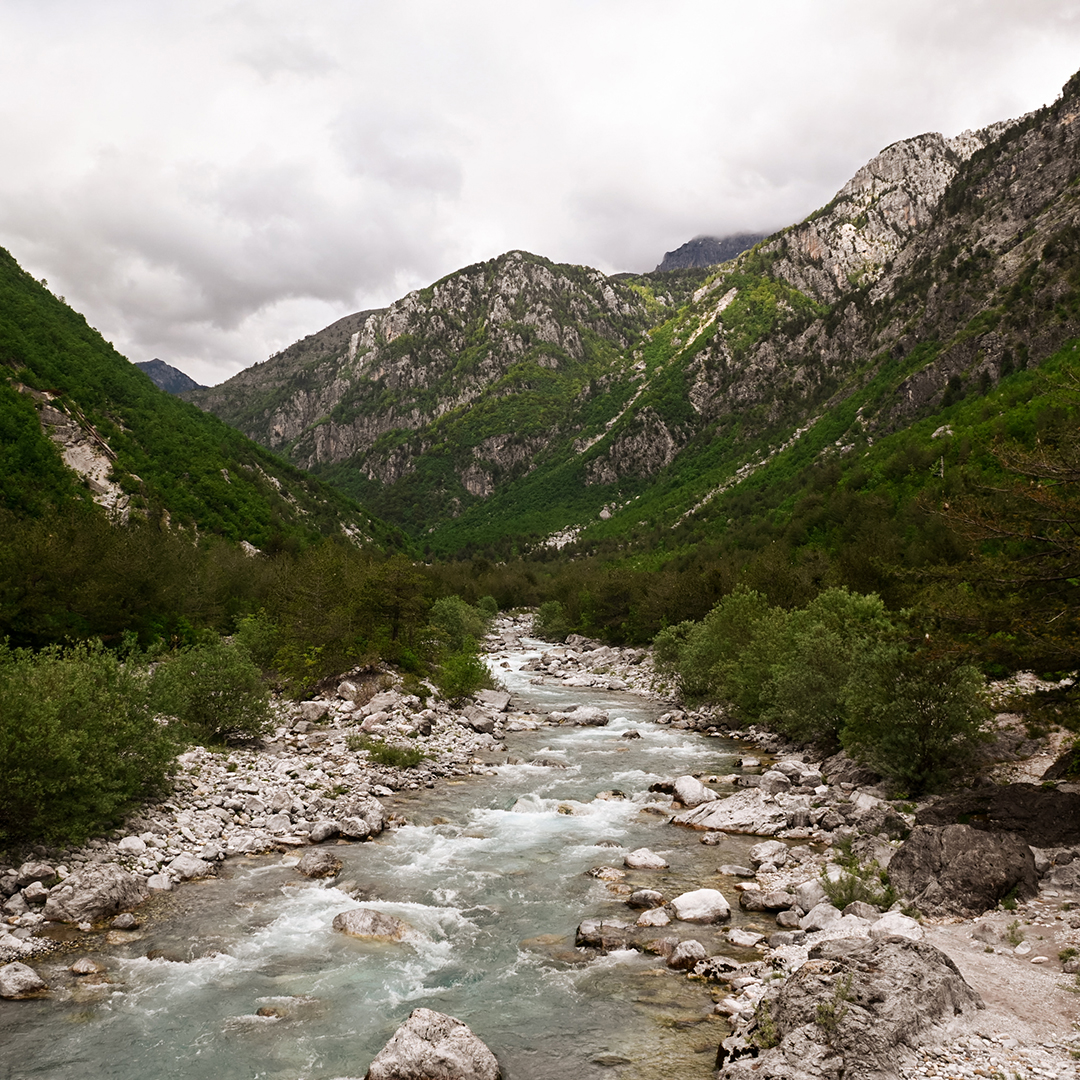
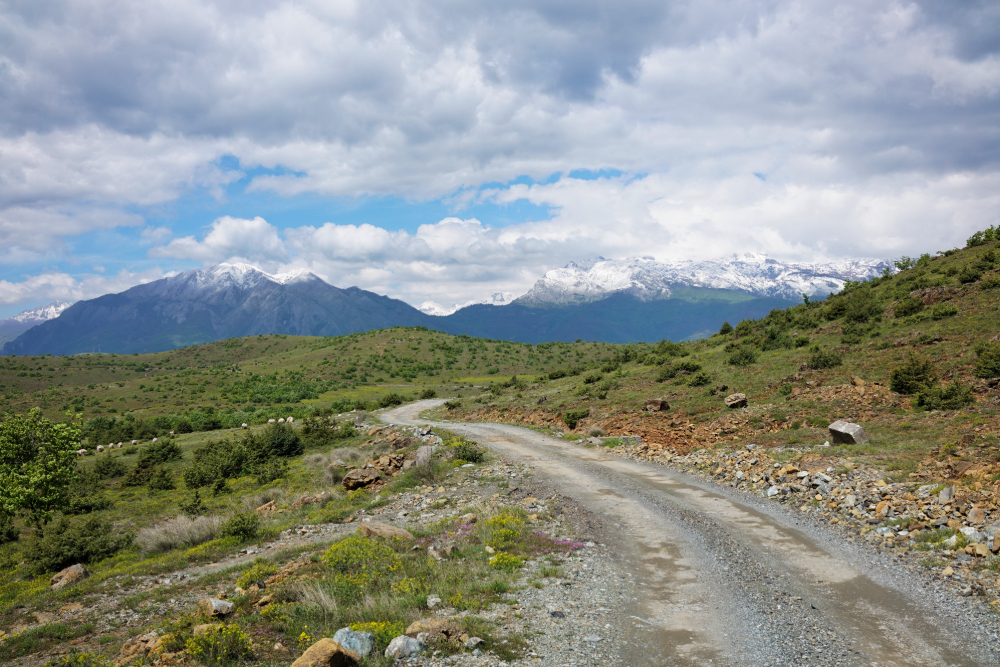
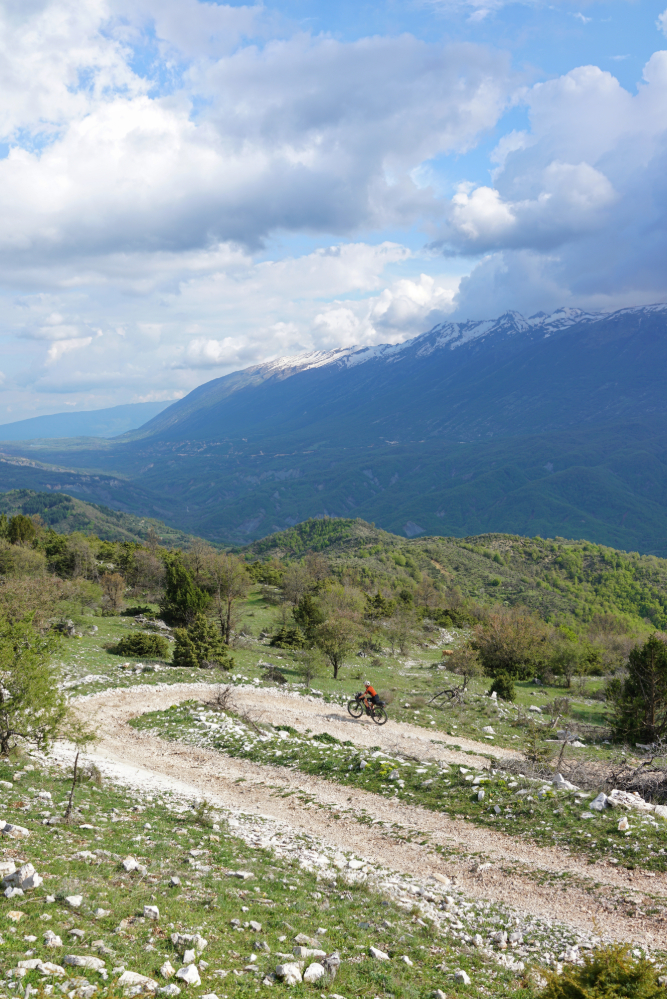
An off-road format for The Accursed Race will take riders straight to the heart of some of the most magnificent scenery in the Balkans. Meandering over diverse terrain, the route will take riders along some of Europe's last wild rivers, down sweeping gravel tracks, tracing contours of mountain ridgelines, and over karst plateaus.
Mike’s Legacy
Standing on the shoulders of Mike Hall, The Accursed Race is Lost Dot's first race to be conceptualised since he tragically passed in 2017. Still led and inspired by his spirit, The Accursed rings true to the values that have been woven through the fabric of the Transcontinental Race and the Trans Pyrenees Race:
Courage // Respect // Humility // Inclusivity // Integrity // Equality // Sustainability // Ethical // Ecological
The Accursed Race was inspired by Mike’s idea that the more competent and confident you feel on a bike, the bigger your map grows and the greater your desire to fill in the spaces between. With enough experience, knowledge and preparation, you can take yourself anywhere you want.
It was on the Tour Divide, an annual off-road race that traverses the length of the Rocky Mountains, that Mike Hall cut his racing teeth. The Tour Divide is annually beset by conditions that test a racer’s problem solving capabilities and endurance to persevere under challenging conditions. This, combined with the remote landscapes and spectacular views, make the route all the more rewarding.
Speaking of the Tour Divide as the inspiration behind The Accursed, Anna Haslock, Managing Director of Lost Dot, said “I wanted to bring some of that to Europe, giving riders the opportunity to experience some of the more unique and exotic locations Europe has to offer.”


Mike Hall
The man who started it all. Mike Hall devised the Transcontinental Race and ran all editions until his tragic death in 2017. Find out all about the inspiring maverick whose spirit remains the beating heart of everything Lost Dot do.
Lost Dot
We preserve and nurture Mike Hall's legacy of fair and self-sufficient racing, championing integrity, equality and inclusivity, creating opportunities for unique and beautiful journeys of self discovery to share with as many people as possible.
Explore more

The Route
Introducing the new Southern Loop
The Accursed Race now comes in two loops: North and South. The South race runs in odd years and the North in even years, so the route stays fresh for riders and race team alike. TARNo3 is the first edition of the South loop. It starts and finishes in Shkodër and takes riders through Albania, Montenegro, North Macedonia and Greece before returning to Albania.
Different in character, but no less spectacular than its northern cousin, the South loop is another journey along the roof of the Balkans: arduous terrain and constantly evolving landscapes that transform over every summit.
A mix of rocky and steep terrain, paved roads, and easygoing gravel mean that any choice of bike will be a compromise — though we consider a hardtail mountain bike or lightweight full-suspension bike to be the optimal choice. Riderʼs kit selection will affect not only their likelihood of success, but how they experience the route. A healthy serving of 35,000 m in elevation gain hints at the mountainous adventure to come, and the route is designed to be well draining, so it is rideable in all conditions.
Route Breakdown
Intertwined, our two routes cross like a Möbius strip, connected, the same, yet somehow ineffably different. Wrapped around our familiar stomping ground at the heart of The Accursed Mountains, the first 250km show off some of the best of the Albanian Alps: towering peaks, impossible valleys, and apatite blue rivers straight out of fiction. So untouched are these areas that modernity comes with a jolt when it interrupts in staccato bursts; brutalist monuments to collapsed regimes, monolithic damns, and glassy pyramids of half forgotten hotels rake the sky as if in parody of the natural perfection of their mountainous backdrops.
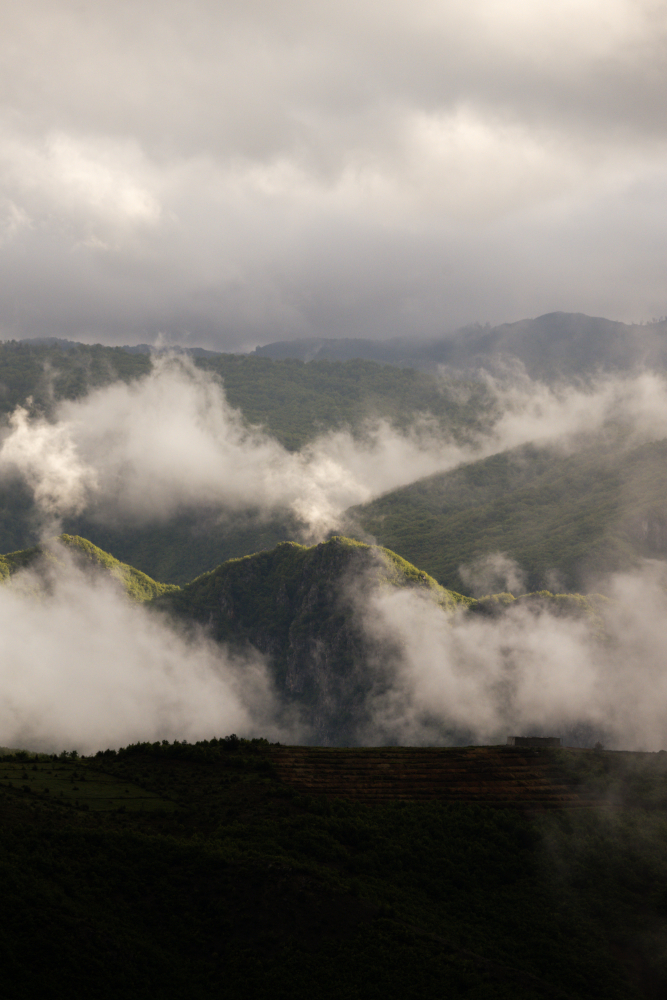
This is a story repeated down Albania’s eastern flank: the untamable Black Drin river tamed by the demand for hydroelectric power. The inaccessible Kukes county, now (technically) reachable by the town’s ‘international’ airport, and Peshkopi’s majestic minarets standing in defiance of the country’s atheistic past. Under Mt Korab’s watchful gaze the route leaves Albania. Torn away too soon and comforted only by the thought that the separation cannot last, we climb into Macedonia’s Mavrovo. If Albania throws down the gauntlet, North Macedonia seizes it with gusto. Higher mountains, colder rivers, and purer lakes are the retort. But the interlude is brief before the Pindus come calling.
Straddling the border of Northern Greece and Southern Albania, these mountains stand as if in testament to the power of collaboration. The border between the two countries, merely a wrinkle, insignificant compared to a nature which pays them no heed. Peaks belittle this manmade construct, rivers ignore it, and caves (some of the world’s most unexplored) literally undermine it.
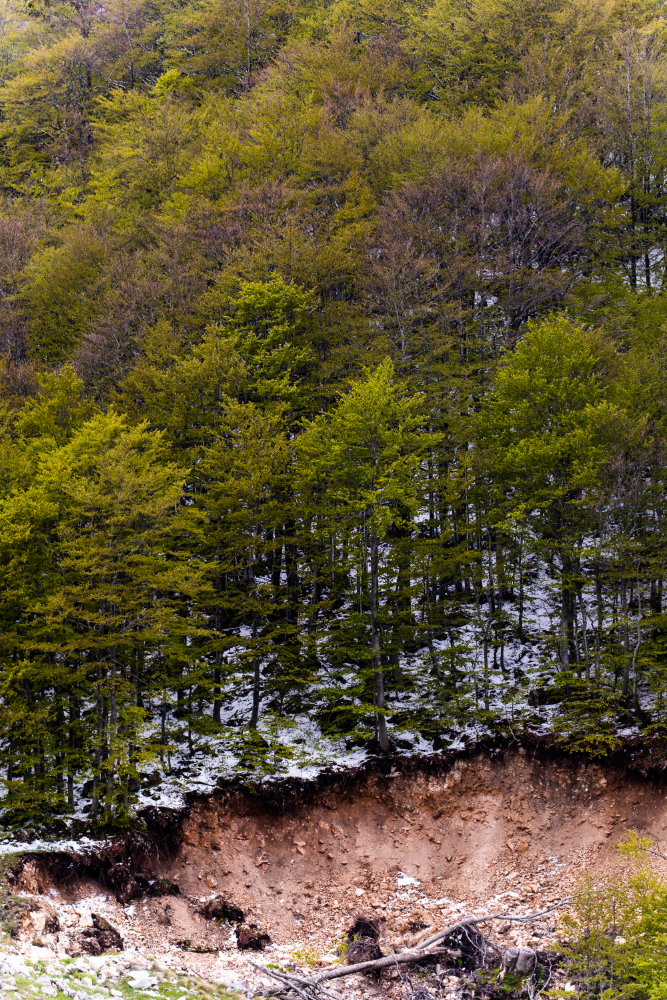
As if to prove the folly of nationalism, the Pindus reject lazy stereotypes: leaving Albania and entering this part of Greece is to travel back in time. Cars, signs, people, and traditions are all older and pay less heed to the changing world here. Coffee is still poured as if the foundations of a building, and still drunk in stone squares under ancient trees. Leaving behind the scant habitations, we enter a realm not yet dominated by man. Bear footprints replace tyre tracks, and the race will pass here only as the seasons permit. If Icarus flew too close to the sun, his Northern Greek cousin could have used the warmth, more likely to freeze than melt, the highest part of the route comes with low level backups - and each year we will decide whether we must take the passes or the valleys.
But just as quickly as they came, so they will pass, and as the hills replace the mountains, so the tarmac takes the place of the tracks. In anticipation we imagine ourselves lamenting the passing isolation. In the reality of the race, we will accept the respite with gratitude.
Of course it will not last, and back in Albania the mountains of Tomorr and Zagoria are waiting and watching. A relentless battle with gravity now begins, and peaks follow troughs like a disturbed sea, throwing our riders mercilessly about as they swim for shore. With each crest comes another geology, another culture, another landscape. Rivers, vineyards, pine forests, rocky slopes, beech trees, and canyons chiselled deep into the ground await.
By this point some riders may be too exhausted to care. For others, it will be all that sustains them, nourishment that even carbohydrates cannot surpass. Finally, in the mines of the Mali-me-Gropa, the Möbius strip reaches its inflection point, and riders of the first two editions will know the way home. Of course, knowing and doing are not the same. The struggle with gravity continues. The terrain gets no easier, and the rocks so softer.
But, those who persevere know this: Shkodër is waiting. At our old home in Traveler Hostel, Xhulio and Enes sit and wait, day and night, and once in the warm embrace of the city and the race’s close-knit community, you will reflect, process, share, and in this moment know whether it was all worth it.
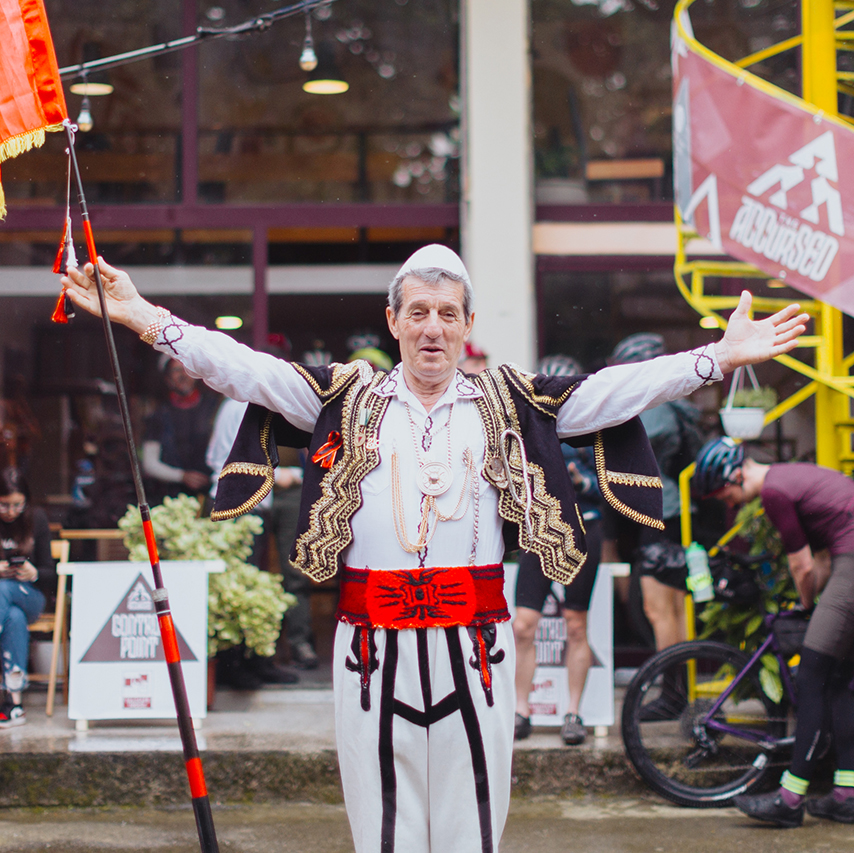
Shkodër is the Amsterdam of Albania! The cycling capital of Albania, terminus of The Accursed Express, and gateway to The Accursed Mountains.
Xhulio and Enes are waiting at Traveler 1 to welcome us back, as are the city's many bars, restaurants, pavement sellers, and local bike shops - just don't expect to find the latest 12 speed components in stock - come prepared!
Pre-race, spin your legs out to Mes Bridge and swim under the Ottoman bridge to cool off under May's warming skies.
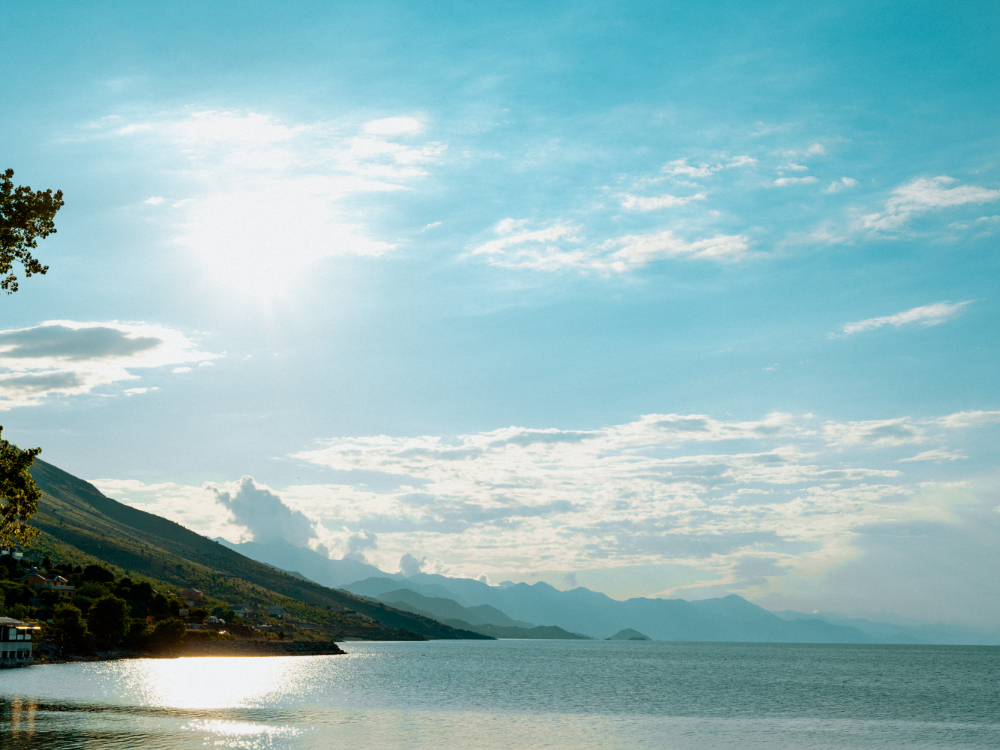
Leaving Shkodër on the shores of Lake Skadar, the climbing starts almost immediately. Tarmac at first, along the Kir river valley where thousands of years of slow erosion have carved natural millponds into the living rock, then when the tarmac runs out the climbing begins in earnest. A rugged bedrock doubletrack with loose rocks and little resupply takes riders higher into the mountains before the descent into the Theth valley and the heart of The Accursed mountains.
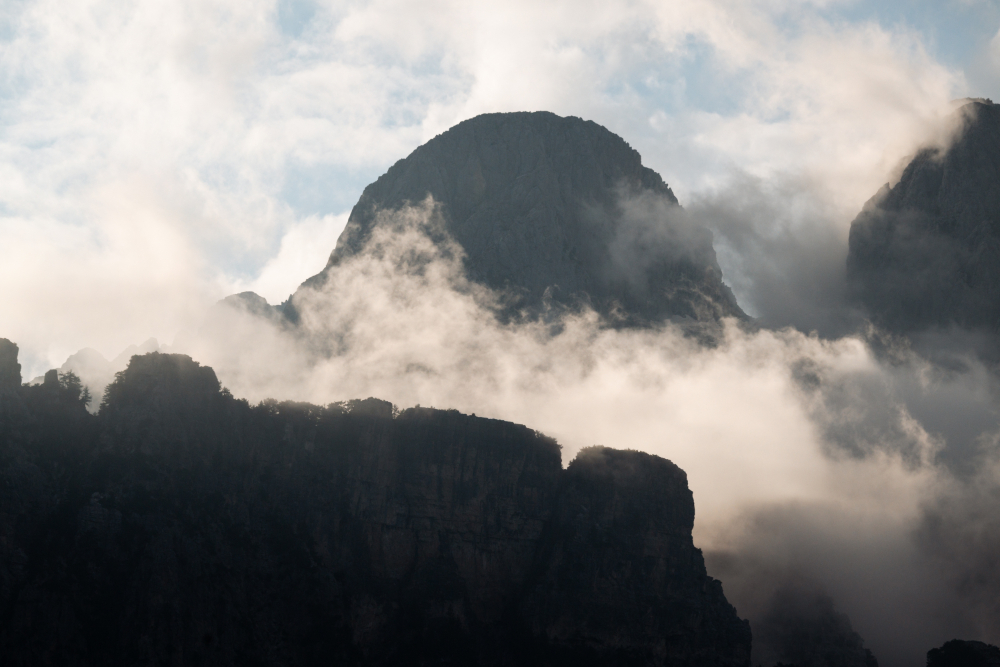
After Theth, the route turns north-east through deep valleys to the Montenegrin border. From the town of Plav it climbs back into Albania and the famous Valbona valley, where craggy peaks clash with cotton wool clouds, escaping them briefly to scrape blue skies with their jagged edges.
Between Bajram Curri and Peshkopi lies real backcountry Albania: shepherds, abandoned communal farms, and old Mercedes in unlikely places.
Our old friend Xhimmy will be ready to welcome riders to CP1 at the Hotel Piazza. It's a chance to refuel and stock up on burek before heading back into the unknown, towards the North Macedonian border.
Across the border, Mavrovo National Park's Orlovo Sedelo is the race's Cima Coppi: at 1,887 m, the highest point of the route. Unknown to most outside of the Balkans, Mavrovo is a wild and unexplored place trapped on the border between Macedonia, Albania, and Kosovo. Impassable after heavy snow, riders will do well to have their resilience routes downloaded here...
Through Kičevo and cross-country to Ohrid, riders resupply beside one of the world's oldest and most biodiverse lakes. The lucky ones may even take a quick dip to wash away 660 km of toil and soil, before climbing above the lake with views over Greek ground and the shores of Lake Prespa.
After a brief return to Albania, the route crosses into Greece. Anyone expecting home comforts back in the EU should think again: this corner of northern Greece has barely changed in 40 years, and resupply, accommodation and even the dogs are tougher here. The rewards are great, though: snow-capped peaks rising from deep green forests, turquoise water in the valley bottoms, and the source of the Vjosa (Aoös), often described as Europe's last wild river.
By the time the tarmac returns, all will be grateful for it. Back in Albania, the route dives off the beaten track again via Poliçan and the Zagoria park. It isn't the highest part of the route, but its prominence is breathtaking, and anyone crossing in daylight will be rewarded with world-beating views in every direction.
From here the off-road comes thick and fast: badlands and gorges to Çorovodë, then marble quarries like Lego bricks on the way to CP2 at Gjerbës. Beyond the control, it's rivers all the way to Elbasan.
After Elbasan, the route climbs through the olive groves and rejoins the North loop on the famous doubletrack balcony road above Shëngjergj. TARNo1 and No2 riders will know the way home from here, but that doesn't make it easy: more than 250 km still remain, and The Accursed mountains don't like to loosen their grip.
Apply to ride
Other ways to take part
No race reports
Frequently asked questions
The entry cost for TARNo3 is £415 + a refundable deposit for your tracker. Entries for TARNo3 close on 15th December 2026 @23:59 GMT.
Deposit (£265) payment deadline: 15th January 2027
Remaining balance payment (£150): 19th February 2027
Refundable tracker deposit payment (£130) and media licence payment (optional, £140 per sponsor) deadline: 18th April 2027
Put simply, yes. However, we'd encourage you to take public transport, such as trains, buses and ferries instead, as this has significantly lower emissions. For those opting to drive to the race, we're looking to implement a system to enable participants to find carpooling partners.
If you need to divert off-route, for example, to access a bike shop or resupply point, you would need to return to the point at which you left the route before continuing. If you take a wrong turn during the race and fail to correct it, but rejoin the route at a later point, we may apply time adjustments to your finish time to reflect how much time we deem the diversion to have saved. If you miss a substantial part of the route, but continue to the finish location, you may fail to achieve an official race finish. Decisions will be made at the Race Director's discretion, but will be open to consultation with the rider.
Riders will be asked to submit documentation of their journey following the race. This could be in the form of travel receipts, gps files (if they’ve cycled there), location tracking info (e.g. Google Maps timeline info), photos with time and location stamps, or however else you can think to document your journey.
Send us an email at accursed@lostdot.cc, and we’d be happy to discuss your situation and whether it aligns with the no-fly ethos.
The no-fly rule is to prevent racers from travelling to and from the race via aviation-based travel/aeroplane. We won’t be preventing applications from international participants, but would expect their travel to and from the race to be via flight-free travel.
Based on our experience developing the route, either a hardtail or a full-suspension mountain bike would be most appropriate for the terrain. Our route recce trips have been done on everything from endurance road bikes with wide tyres, to gravel bikes, hardtail mountain bikes, and full-sus trail bikes. You could certainly take on the route with a gravel bike, but it would be far less comfortable, and we’d recommend opting for wide tyres and low gearing to make it more suitable for the route.
Due to the remote locations, high altitudes, and potentially mixed weather conditions that riders may face during the Race, we have specified a mandatory kit list for the event for rider safety. We will be checking for the following kit at registration:
- Insulated jacket (down, or high-quality synthetic)
- Waterproof jacket (10,000mm hydrostatic head, or more)
- Insulated sleeping bag (5 degree comfort level)
- Bivvy bag (not emergency blanket)
- Emergency blanket
Although The Accursed takes place primarily off-road and on smaller roads, vehicles and drivers are still likely to be the biggest danger to riders. At Lost Dot we know that road safety is often in the hands of the driver, rather than the rider, but we must take a pragmatic approach to rider safety. As such, we will also be checking for the following mandatory safety equipment at registration:
- A helmet that conforms to current regulations, is the correct size, and is securely fastened and worn at all times.
- Two independent* white front lights available for use (i.e. attached to the bicycle or carried) at all times. The light must conform to current EC regulations.
- Two independent* red rear lights available for use (i.e. attached to the bicycle or carried) at all times. The light must conform to current EC regulations.
- One of each front and rear light must be fixed to the bicycle or to a secure accessory (e.g. a rack or saddle bag).
- At low light, in poor visibility, and at night at least one front light and one rear light must be illuminated.
- A red rear reflector
- We also recommend, but do not enforce, having lights on while riding on road during daytime.
- A fluorescent and retroreflective upper-body garment (most commonly a vest) must be worn at low light, in poor visibility and at night. The reflective garment must be worn over the top of all garments (and musette if the musette is not reflective). The retroreflective component should be significant and placed across the front and back of the garment. Reflective piping alone is not considered sufficient.
We acknowledge that this is a difficult undertaking, and are committed to doing what we can to make this easier, more affordable, and less daunting for those involved. As such, we are doing the following:
- Providing 15 Low-Carbon Travel Fund (LCTF) grants of £250 to riders who might not otherwise be able to afford the travel
- Providing detailed information on how to travel to and from the race
- Arranging a coach service which we expect to run from Zagreb to Shkoder on 12th May, tickets for which will be available to riders at cost price
We have also planned the race so that the majority of riders will be able to travel, take part, attend the party, and travel back within two weeks of leave.
In 2022 we analysed our carbon footprint, and found that 70% of emissions are a result of rider travel to and from races, with the vast majority being a result of air travel. Therefore with the launch of our newest race, The Accursed, we have committed to limiting its carbon emissions by making it ‘no-fly’. This means that only riders who commit to travelling flight-free to and from the race will be able to take part.
A Control is a mandatory key location which racers must navigate to in order to validate their participation in the race. It is also where the race records their timings for race reporting. Controls are chosen for their dramatic terrain, natural beauty and often include icons of cycling or adventure. Their locations also shape the race as a whole and the terrain and route dilemmas which may occur in-between. A Control usually consists of ‘Control Point’ and ‘Control Parcours’
The Control Point is a fixed station, often a local business such as a hotel, where race staff validate the arrival of the racers by recording their arrival and time stamping their Brevet Card. The control point is often a place where food, accommodation and communications services are available. The control points are established by the production and media team who will arrive in one or more of the control vehicles. They are then manned by volunteers in shifts until the control closure time. Some controls provide a round the clock reception whilst others may temporarily close overnight and have an automated check in feature. Failure to report in at any of the control points will mean that the rider is no longer qualified for inclusion in the finishers classification. Control Points are open from the time of arrival of the first rider, to the date specified in the Rider Manual. After this time the control will be closed and no longer be manned. Riders who arrive after closure of the control are excluded from the General Classifications but remain within the race.
Applications to race open with plenty of notice through our social media accounts, at dedicated times throughout the year for our three races. The application forms become available once the application window opens, and as soon as the applicant has registered and created a profile at lostdot.cc. Applications are open for 2 weeks for TCR and TPR to allow plenty of time for riders to get their application in without favouring any particular nationalities. Applications for TAR are on a first-come first-served basis. The application process consists of completing the registration stage, downloading and reading the Race Manual (available after registration and a few legal questions) and completing the application form - which will give us an idea of your knowledge regarding methods of route planning, an understanding of the the basic requirements of the race and an idea of your experience to date.
There are no qualification requirements however we expect applicants to have gained relevant, multi-day, long distance expedition experience either alone or as part of a small group.


_square_1080.jpeg)


_square_1080.jpeg)