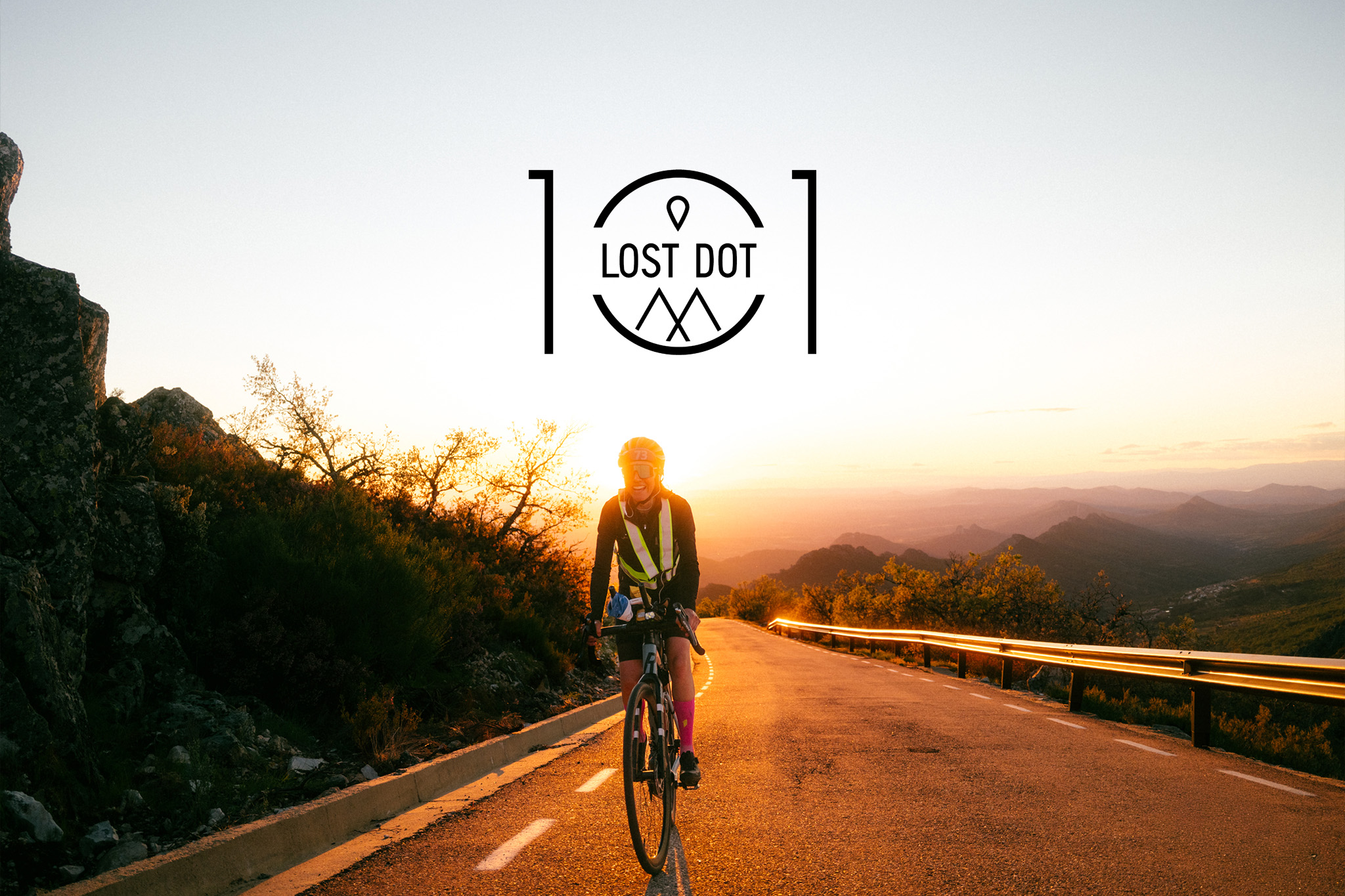
Lost Dot 101: Porto
Lost Dot 101: An ultra-race for women, non-binary, and trans riders
Building on the success of the inaugural edition of the Lost Dot 101, which saw 148 riders roll up to the start line in Santiago de Compostela, the race returns in 2027. This time, starting in Porto on the wild, Atlantic coastline, our riders will make their way between parcours and Control Points across Portugal and Spain to eventually arrive on the Mediterranean coast line in Malaga.
Riders will make their journey under the same Rules and Spirit of the Race that define Lost Dot’s events, while benefiting from relaxed time allowances to enable more riders to finish and compete for the general classification.
“We want to create a race that is welcoming and accessible to anyone interested in getting into the sport, giving riders the time to discover the rhythm of ultra-racing without removing the challenge. At the same time, we want it to attract the strongest riders, creating a highly competitive race at the front and giving those riders a platform to line up against their toughest competitors.”
- Hannah Larbalestier, Race Director.
The Lost Dot 101 is a continuation of Lost Dot’s #100TCRWomen campaign, which aims to increase participation by creating confidence, knowledge, and community among women and FLINTA riders within ultra-racing. Through a series of Q&As and webinars hosted by experienced ultra-racers, the initiative seeks to ensure riders feel equipped and supported, whether they are racing the TCR this year, next year, or any other ultra-race. This approach has already shown powerful results, with women’s participation at the Transcontinental Race doubling from 41 riders at TCRNo10 to 79 riders at TCRNo11.
“This is why we put a number on it. We wanted those people who were on the fence about entering to know that they’d be in good company and surrounded by other riders like them,” said Taylor Doyle, Media Manager at Lost Dot. “When you see other people like you doing something, it gives you the confidence in yourself to do it. And that’s why increasing representation is so important – it’s a cliché, but there’s a reason people say ‘if you can’t see it, you can’t be it.’”
The race is open to anyone over 18 who identifies as FLINTA (female, lesbian, intersex, non-binary, trans and agender people, i.e. anyone who does not identify as cis-man).
Riders may apply to race solo or as a pair.
Applications are now open with a deadline of 31st December 2026 at 23:59 GMT.
Spaces will be allocated on a first come first served basis, with priority given to no-fly riders. Applications will be marked on a rolling two-weekly basis, with riders able to secure their place on the race by paying their deposit within two weeks of being offered a place on the race.
Stay tuned
Receive regular updates about our races, offers and more
About the Race
The race will be open to anyone over the age of 18 who identifies under the category FLINTA*: female, lesbian, intersex, non-binary, trans and agender people (i.e. anyone who does not fall under the category of cis-man). All riders are free to self-identify as they choose, with no scrutiny.
The race will have a relaxed time allowance in comparison to our other races, enabling a greater proportion of riders to compete for the general classification time-cut, and make it to the finish in time for the finish party. The minimum distance that riders will need to cover per day to reach the finish in time will be ~200 km.
Applications for the 2027 edition are open until 31st December 2026. Applications are marked on a rolling two-weekly basis, and riders offered a place can secure their entry by paying their deposit within two weeks. Spaces are allocated on a first come, first served basis, with priority given to riders travelling flight-free.
Deposit: £190
Final balance (£150): 31st March 2027
Total: £340 per rider, plus a £130 refundable tracker deposit (and £5 non-refundable card processing fee)
Provisional control points and parcours are in Race Manual Issue 0. Exact details will follow in Race Manual Issue 1 in 2027.


Mike Hall
The man who started it all. Mike Hall devised the Transcontinental Race and ran all editions until his tragic death in 2017. Find out all about the inspiring maverick whose spirit remains the beating heart of everything Lost Dot do.
Lost Dot
We preserve and nurture Mike Hall's legacy of fair and self-sufficient racing, championing integrity, equality and inclusivity, creating opportunities for unique and beautiful journeys of self discovery to share with as many people as possible.
Explore more
.jpg)
The Route
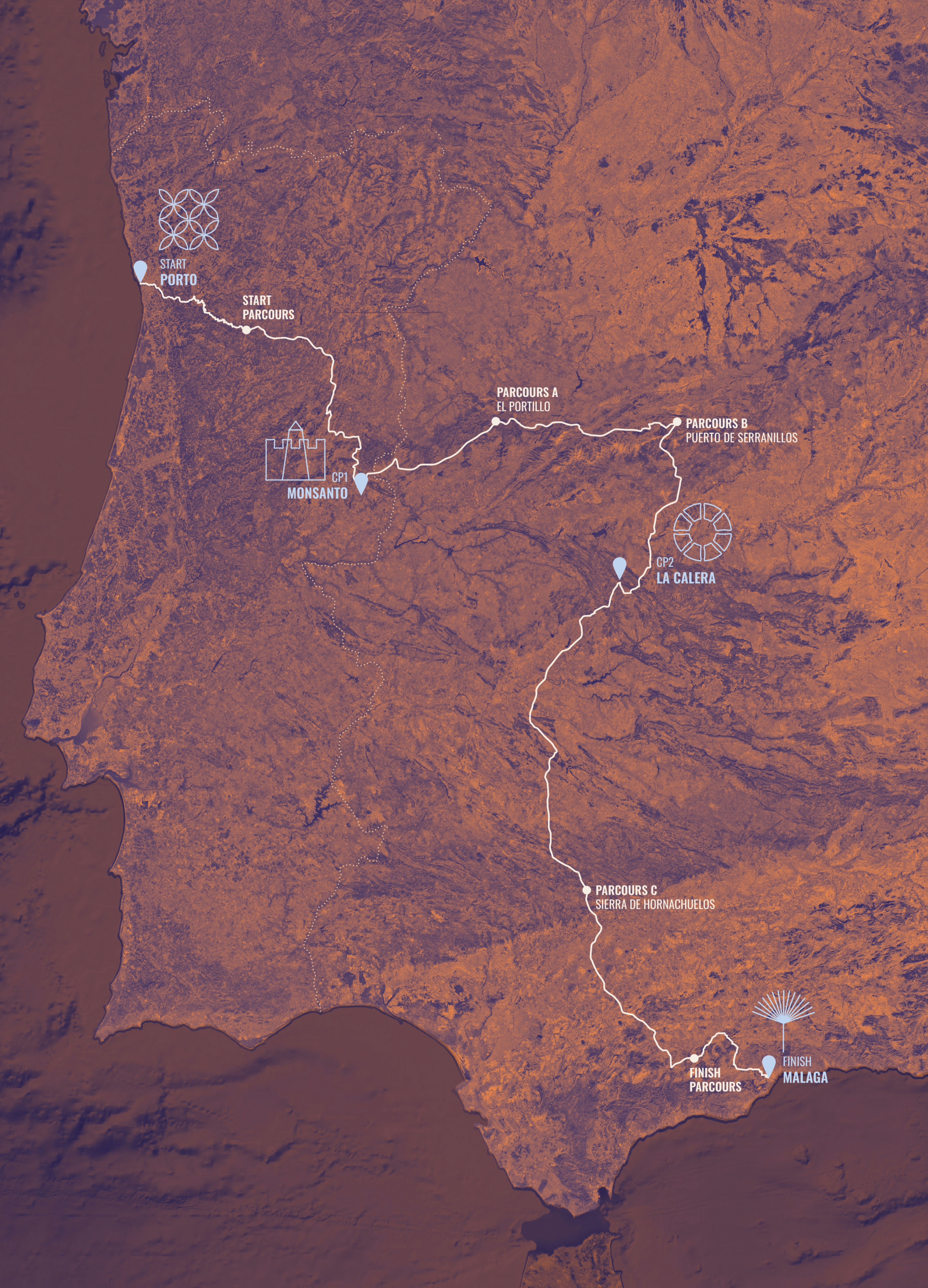
Starting in Porto, and finishing in Malaga, the format will be a ~1200 km, free-route race, between a series of mandatory control points and parcours. The race will follow a similar format to The Transcontinental Race, following the same Rules and Spirit of the Race.
Key details:
Race start: 2 May 2027, 07:00 CEST, Porto, Portugal
GC time cut-off: 8 May 2027, 23:59 CEST, Malaga, Spain
Entry fee: £340
Daily distance needed to finish within the GC: ~200 km
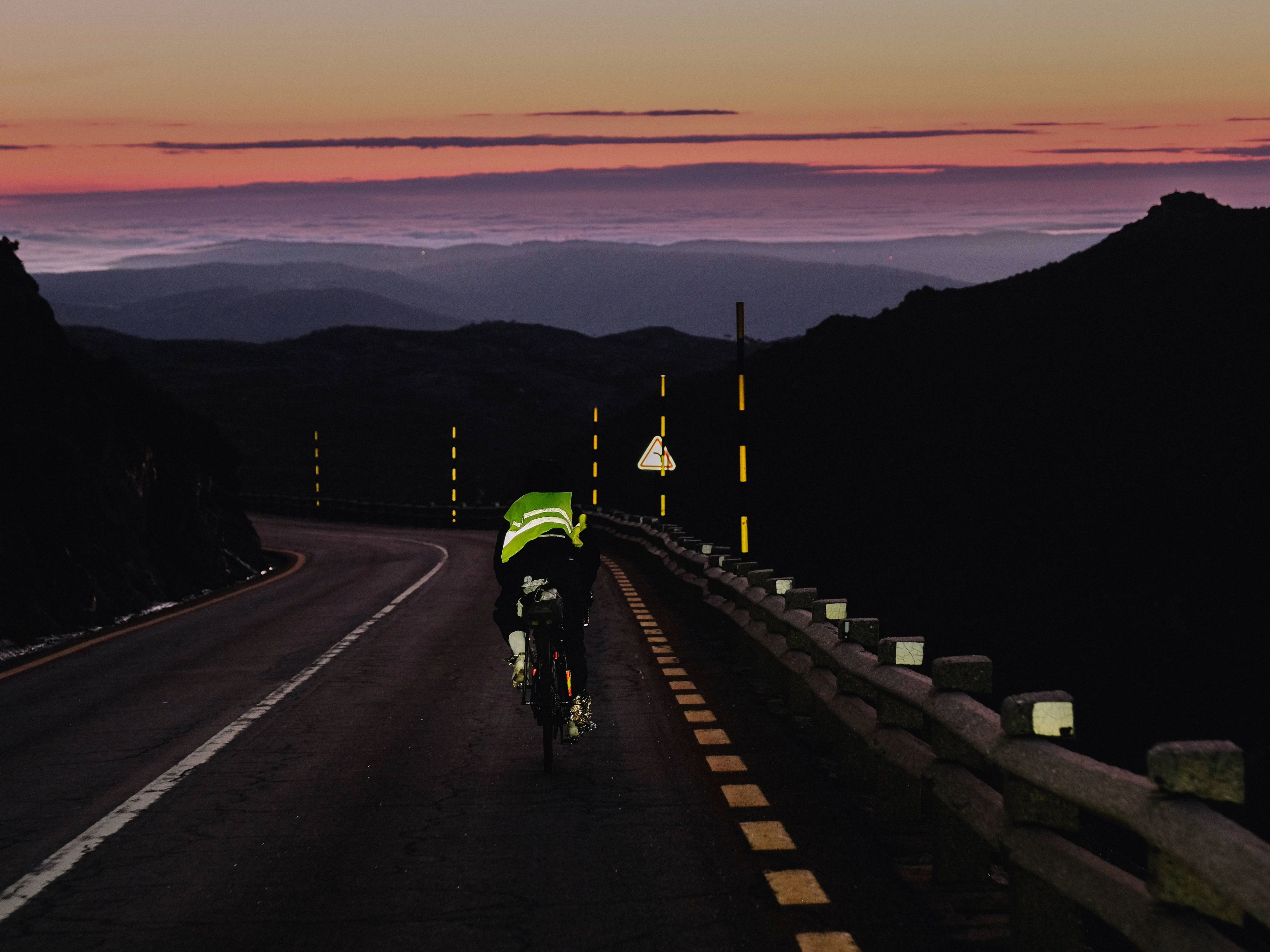
The second edition of the Lost Dot 101 will start in Porto. The city takes its name from the ancient Roman settlement Portus Cale, which later gave its name to the entire country of Portugal.
Starting on the wild Atlantic coastline, our riders will make their way up the estuary of the River Douro, tracing the snaking shape of the water as they make their way inland. Leaving the natural contours of the waterway, our riders will begin to ascend into quieter, greener pastures, the urban sprawl of Porto cast behind them as they thread their way along small roads, edging ever higher into the hills that surround the city. Upon reaching the town of Castro Daire, they will be free to make their own choices and determine the best route to the first control of the race in Monsanto.
The unmistakable hilltop village of Monsanto marks the first control point for our riders. With multiple routes available between the end of the start parcours and the volunteers waiting to provide their first brevet card stamp, riders will have the opportunity to play to their strengths, with the mountain roads of Serra de Estrela situated between them and this early marker of progress. Once in Monsanto, they will navigate narrow cobbled streets intertwined with giant boulders balanced above and around the houses.
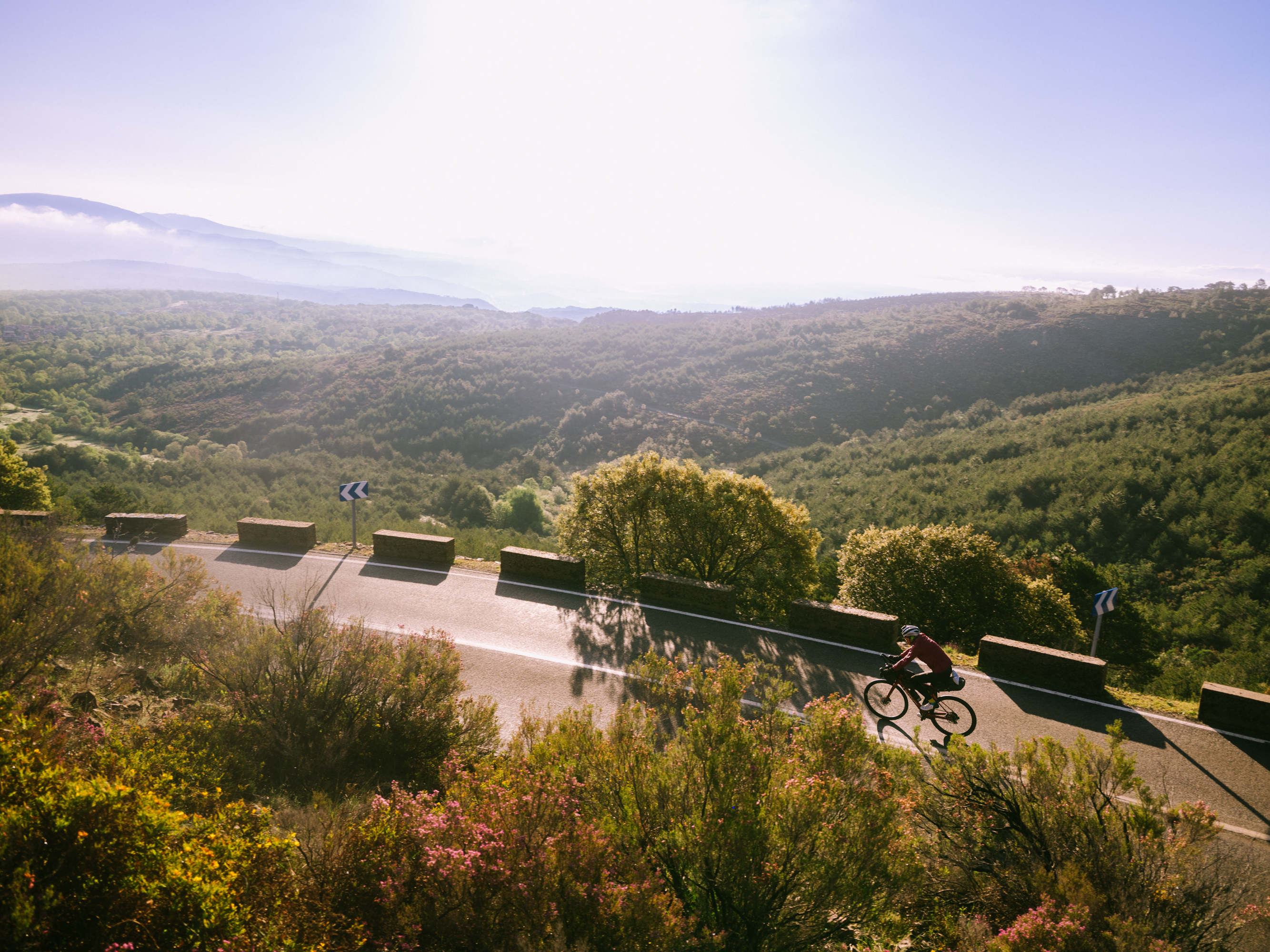
From Las Mestas, our riders climb 18.7 km through the Parque Natural de Las Batuecas y Sierra de Francia, leaving Extremadura behind. In Spanish, to be “en las Batuecas” is to be miles away: lost in thought and blissfully unaware of the world. By this point in the race, many riders will know the feeling well. The phrase comes from this valley, once so remote that its name became shorthand for being out of touch. Here, there is little to trouble them but the next hairpin. At 1,252 m, El Portillo, “the little gateway,” divides the valley from the sierras above. Beyond it lie Castilla y León and the stone-and-timber streets of La Alberca.
High up in the Sierra de Gredos, lies the Puerto de Serranillos, our second parcours. For centuries, this was a frontier. Between the 8th and 10th centuries, these mountains formed a no-man’s land between the Islamic kingdoms of the south and the Christian north, which few crossed. Then came the shepherds: after the Mesta’s tight control over livestock routes ended in the 1800s, flocks began moving over the pass. Their legacy is now apparent in the sparsely vegetated landscape. The Scots pine forests that once covered these slopes were burned and grazed away, leaving the dry broom and juniper our riders now climb through.
Drawing riders away from the drier landscapes to somewhere inherently more luscious, La Calera is home to the second staffed control point of the race. Nestled within the Geoparque Villuercas-Ibores-Jara, the area is famous for its spectacular "Appalachian-style" landforms, with parallel valleys and ridges shaped by erosion over millions of years.
Situated to the west of Córdoba, the finish line of the inaugural Lost Dot 101, lies the Parque Natural Sierra de Hornachuelos. Here, on the race’s only gravel parcours, riders will test their mettle as they leave the tarmac behind for rocky tracks through remote country of rolling hills and vast ranches. Holm, cork and gall oaks cover the hillsides, while overhead, the park is home to one of Andalusia’s most important black vulture colonies, sharing the skies with griffon vultures, golden, imperial and Bonelli’s eagles, and black storks.
Málaga acts as the finish line for the second edition of the Lost Dot 101. After traversing more than 1200km from Porto, our riders will reach the Mediterranean to complete their journey. The final challenge that awaits them is 85km of finish parcours through Andalusian countryside, with quiet, smooth roads through tree lined hillside punctuated by small hamlets, before the edges of the city below lap towards them like the rolling waves on the sandy beaches that await.
Apply to ride
Other ways to take part
No race reports
Frequently asked questions
A Control is a mandatory key location which racers must navigate to in order to validate their participation in the race. It is also where the race records their timings for race reporting. Controls are chosen for their dramatic terrain, natural beauty and often include icons of cycling or adventure. Their locations also shape the race as a whole and the terrain and route dilemmas which may occur in-between. A Control usually consists of ‘Control Point’ and ‘Control Parcours’
The Control Point is a fixed station, often a local business such as a hotel, where race staff validate the arrival of the racers by recording their arrival and time stamping their Brevet Card. The control point is often a place where food, accommodation and communications services are available. The control points are established by the production and media team who will arrive in one or more of the control vehicles. They are then manned by volunteers in shifts until the control closure time. Some controls provide a round the clock reception whilst others may temporarily close overnight and have an automated check in feature. Failure to report in at any of the control points will mean that the rider is no longer qualified for inclusion in the finishers classification. Control Points are open from the time of arrival of the first rider, to the date specified in the Rider Manual. After this time the control will be closed and no longer be manned. Riders who arrive after closure of the control are excluded from the General Classifications but remain within the race.