Registration Day // The Great Assembly
July 20, 2026
Words by Jake Thorpe
Photos by Sam Dugon and Tomás Montes
My own migration
London St. Pancras, Thursday 17th July, 06:16BST. A last-ditch dash towards the train doors proves futile as, with a subtle shrug, they close, and the train hauls itself into motion. Not quite the start I’d hoped for. But plans adapt. Soon enough, I’m back on track.
Climbing the ladder of northern latitudes, advancing steadily on Trondheim, the ghostly blur of European borders slips by. Caught only in glimpses, the evolving commute feels both geographically and geopolitically seamless. A quartet of concrete columns on the Øresund bridge, two stained red and white – Norway – the next, yellow and blue – Sweden. Currency, language, legroom: the changes are gradual.
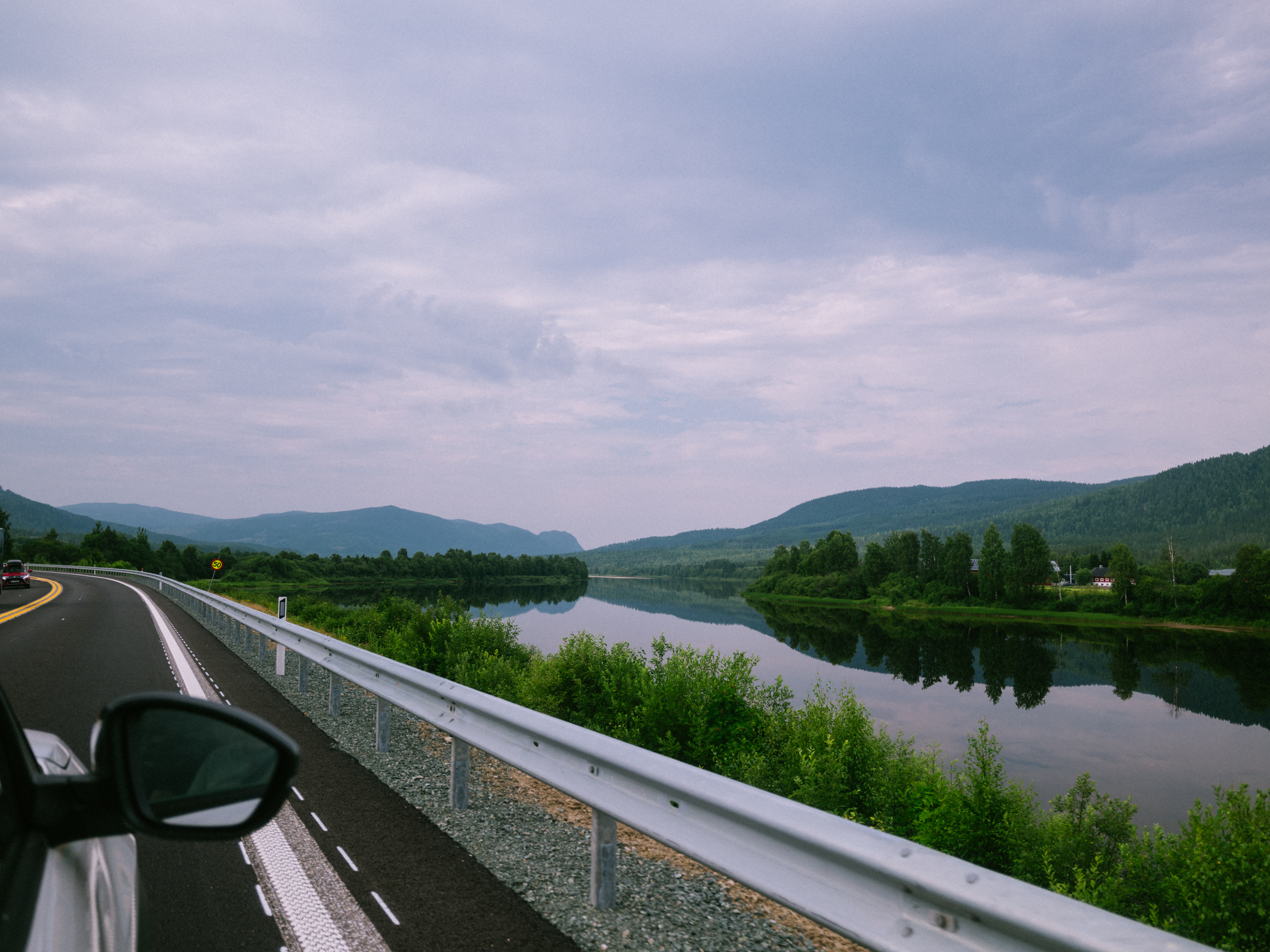
I can see why our riders are drawn to low-carbon travel. Is it convenient? Not always. But neither is convenience always the bedfellow of composure. Composure rarely comes in an instant; it takes time to put yourself together. I arrive in Trondheim composed, put together, ready to continue a journey, rather than to begin one.
The Green Leaderboard
A third of all riders this year have opted to travel to and from the race by low-carbon means. This is an astonishing statistic: 135 riders choosing not only to race from Trondheim to Kalamata, but to trace that journey’s negative overland as well. In recent years, we have witnessed a seismic shift in the travel choices of riders, with those able to join the Green Leaderboard recognising the wealth of benefits that accompany a slower displacement. Premeditation and reflection take time and space, and the TCR requires plenty of both.
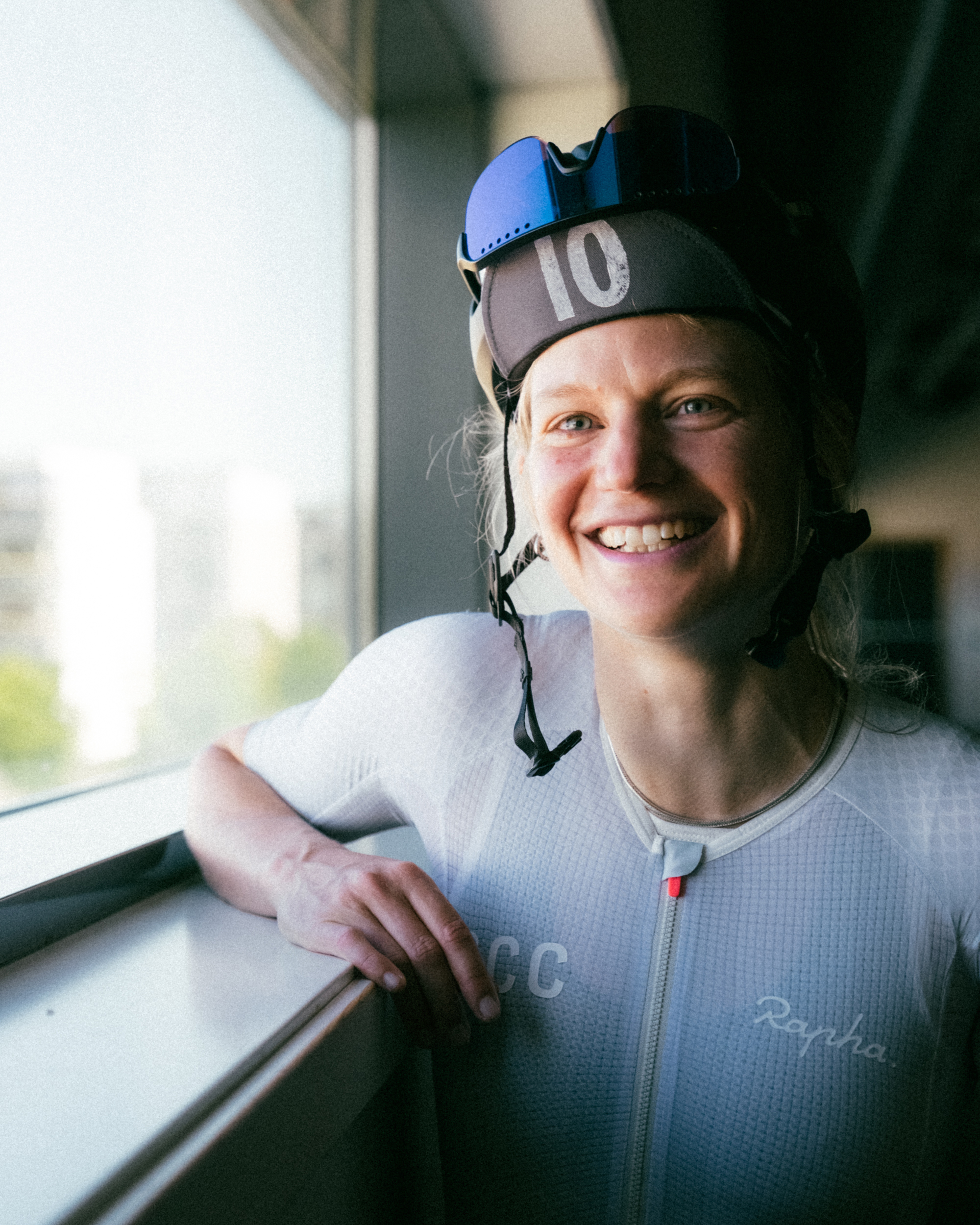
At registration, Jana Kesenheimer (010) also reflects on the parallel her journey draws with the physical scale of the task ahead. Witnessing change in increments helps settle her into the more pedestrian pace of the coming weeks. That is, of course, if you can call crossing a continent by bike in less than two weeks pedestrian.
I noticed a further thread of connection coming from my own overland travel. At each juncture, glimpses of other riders on a kindred mission added another stitch to the collective tapestry – a picture of shared pilgrimage slowly coming into focus. At first, sightings were speculative. Faintly technical clothing paired with flip-flops and low-drag socks; luggage of about the right dimensions; a musette, parted, to reveal a hint of hi-vis. As paths converged, speculations hardened into theories. Frames festooned with fluorescent tape; deep section wheels paired with thick, slick tyres; multiple rear lights. And then, with the profile of an aerobar catching the eye, theories cemented into certainties. Nods of recognition were exchanged. Journeys coalesced.
The FLINTA Category
Making a debut in this edition is our latest classification: the FLINTA category. Standing for female, lesbian, intersex, non-binary, transgender, and asexual, FLINTA represents a broader field than just women – a field our latest podium intends to celebrate.
As fastest woman of the last two editions, Jana Kesenheimer (010) was particularly excited by the new category. Foregrounding FLINTA riders, she agreed, pays the “respect that’s needed” to their achievements, beyond a spot in the General Classification. She also hopes it will add to the drama of the race within a race, as the FLINTA field jostles for position, each now vying for spot on the podium.
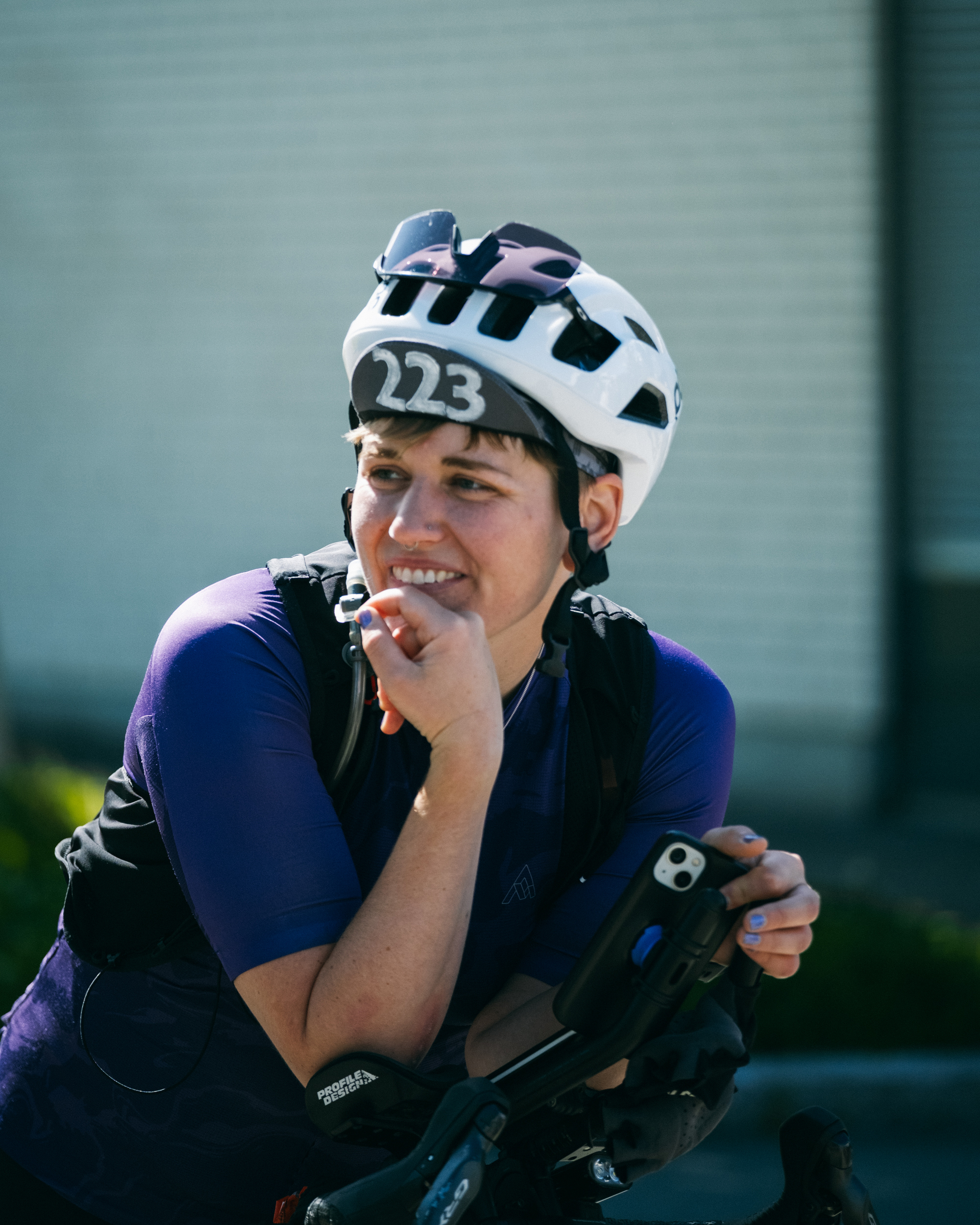
Anna Carlqvist (223), whose efforts in TCRNo10 would have earned her a podium finish under new category rules, was equally enthusiastic about its introduction. “I think it’s a really cool initiative”, she acknowledged, “something that’s been kind of missing in this space.” A chance for more riders to be recognised in an ever-diversifying field.
The Calm Before the Storm
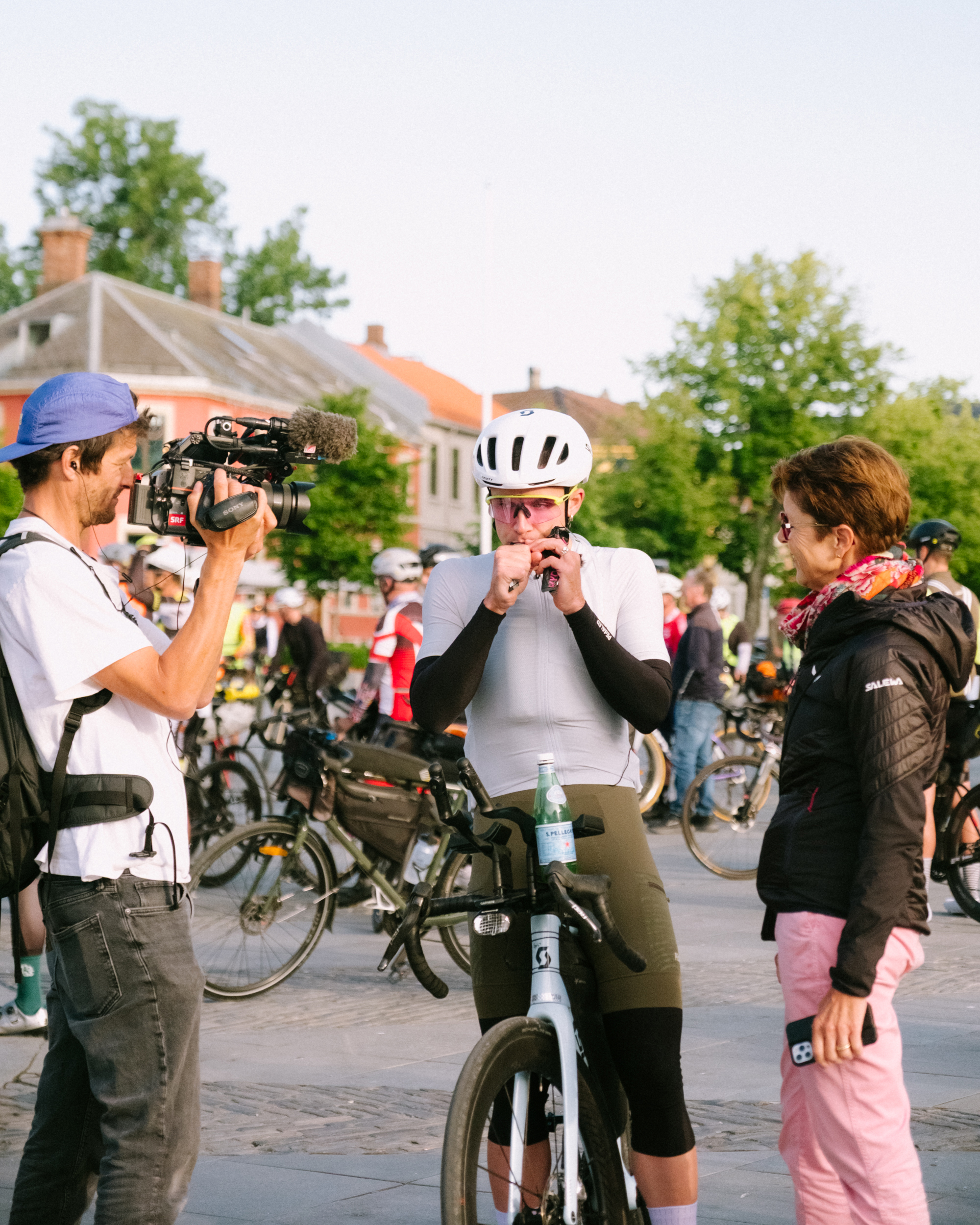
Cruising into registration in late afternoon, Robin Gemperle (001) embodied the very essence of ease. Dressed in far more fashionable attire than the eclectic melange of nylon and polyester adorning the majority of those milling around Trondheim’s Rosenborghallen, he sauntered in, trailed by a cameraman, every inch the celebrity. Asked whether the unshakeable faith others placed in him had any bearing on his own composure, he demurred: “I think, no. I try to be very realistic about what I do, and if I’m to be successful, I have to have a certain degree of confidence.” A little perspective, too, seemed useful. “After all”, he continued, “what we’re doing is not the most important thing in the world.”
Mikko Mäkipää (044) emanated confidence of a very different form as he arrived to register for his twelfth TCR. It’s a confidence that only 11 GC finishes in as many editions can sustain. Having changed almost nothing in his approach since 2013 – apart from, this year, his jersey – Mikko exemplifies the spirit of adventure that first brought the race to life. Known for riding a race of infinite curiosity, we can be sure that he’ll have planned a route that explores as many of the continent’s inches as the GC cut-off allows.
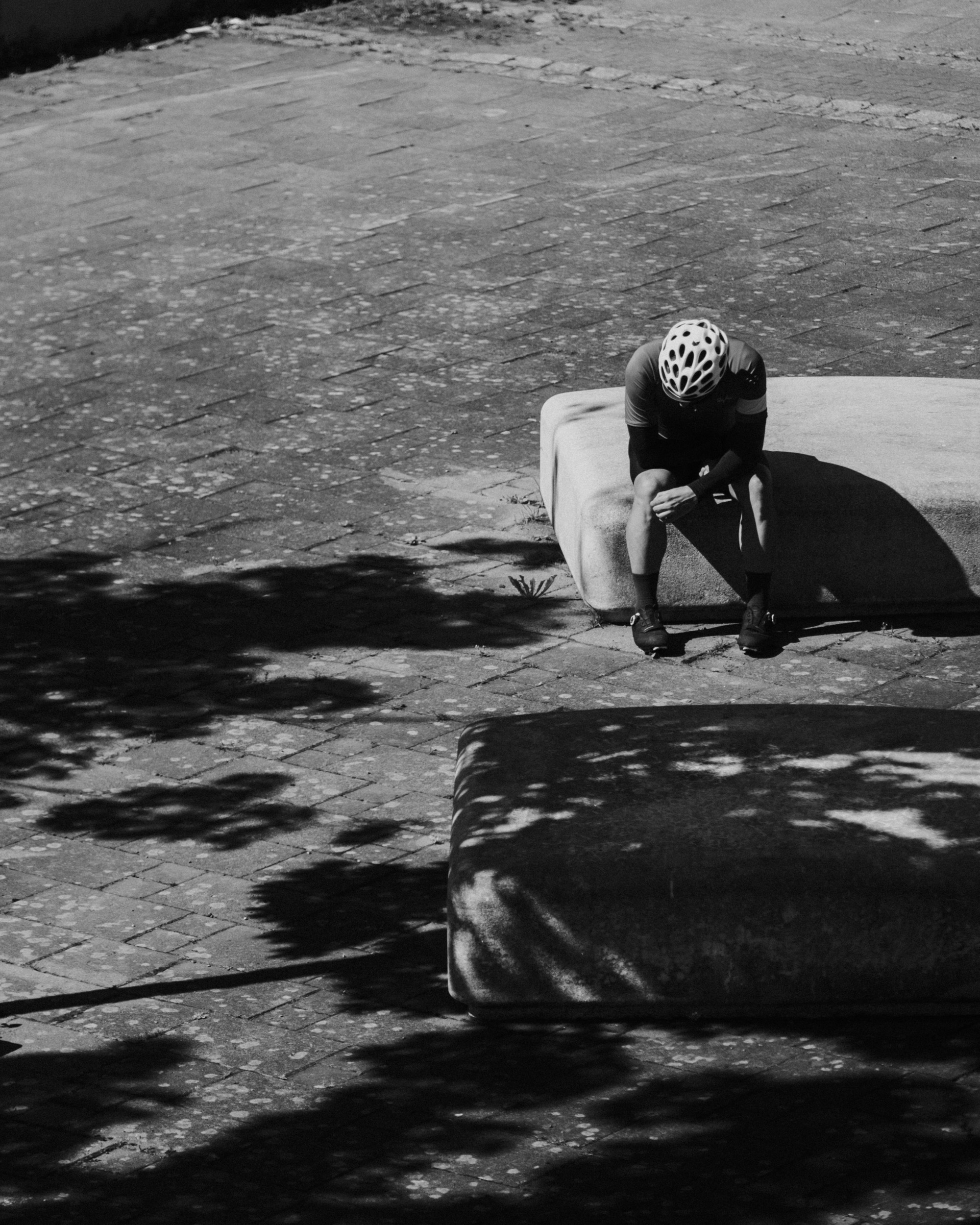
But riders need not be approaching their TCR dozen in order to reap the benefits of a race reprisal. At registration, Anna Carlqvist (223) spoke of how the roots of anxiety have loosened in approach to her second race, while Mike Fawcett (053) touched on the spiritual prospect of his third, recalling the moments of profound peace that have followed his lowest moments on the road. Knowing where the mind goes, how the body responds – viscerally, not hypothetically – helps to ground limitless prospect in limited experience. Having previously endured the race’s sheer gravity proves, perhaps unsurprisingly, to be reassuring.
Project Why
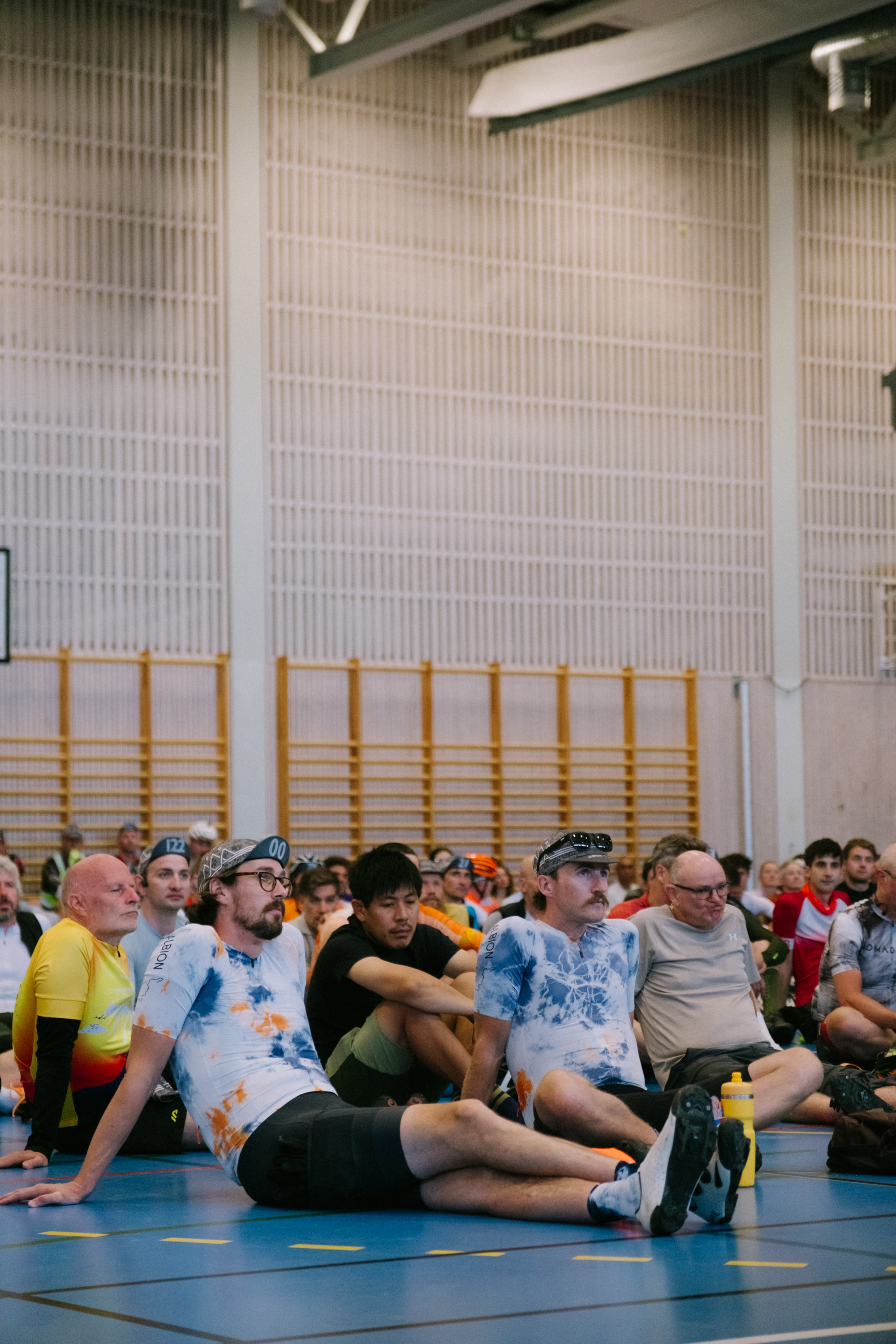
There’s something else that speaks to the race's gravity – or, perhaps, its resulting pull. In an unlikely twist, both Andrew Phillips (00a) and Jon Endres (00b) have chosen to spend their precious fallow year not baking on a beach somewhere in psychedelic spandex, but instead crossing a continent in it.
Many of you will know Andrew as one of Lost Dot's rotating Race Directors, and Jon as the familiar Rider Comms Manager of recent editions. This year, however, they've earned a place on the start line – not as racers in the General Classification, but as reporters, tasked with exploring the motivations that draw people to a race like the TCR.
Before the race, I was especially curious to understand Jon's own. Having spent more than half a decade woven into the fabric of the Transcontinental, without ever experiencing it from the rider’s perspective, curiosity seemed as powerful a motivator as any – helped along, perhaps, by some gentle needling from Andrew.
And for pairs, there seems to be a second why. Not only, “Why choose to race across a continent?”, but also “Why choose to do it with this partner?” This was another of my curiosities. Why had this particular pair chosen to ride together? When Jon and I caught up, I decided to find out. “Riding as a pair might be described as an exercise in constant compromise,” I began, innocuously enough. “Do you feel ‘compromising’ is a word you associate with Andrew Phillips?” This was a little more leading.
.jpg)
Andrew is fiercely competitive. He has, of course, ridden a TCR; and not only ridden, but raced. Ninth to Burgas in the eighth edition, and with a healthy helping of podium positions to his palmarès, he knows why he races. But why he rides? That feels a question of less certain origin. Yet the pairing feels purposeful. Two close friends with a wealth of shared experience, looking to add a little more.
For Andrew, Jon, and every other rider taking to the start line, I’ve no doubt their why will develop a dynamic quality. As pedals turn, motivations cloud and clarify, and answers to important questions deepen and shallow with the rise and fall of the road. We look forward to exploring how they evolve.
A Route Speaks a Thousand Words.
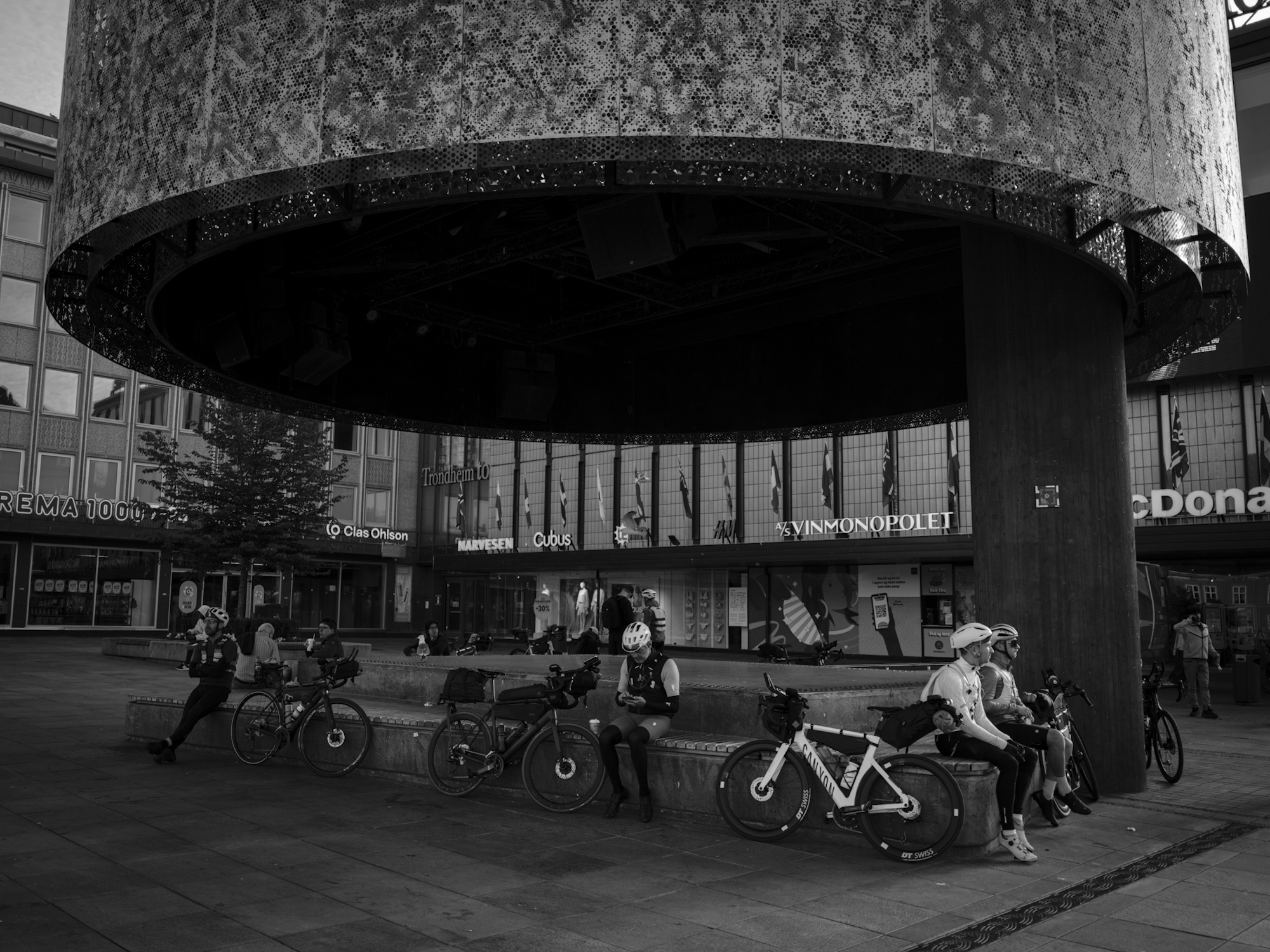
It must be said, the why felt fairly obvious as our motley crew slowly congregated in the old Norwegian market town of Trondheim. Skirting the shores of the fjord, old storehouses double up, their painted facades mirrored in the water below. Ochre, slate, pine, rust: earth tones, resonant with the substance of a town built on trade. From the gallery of the Rosenborghallen, the nucleus of pre-race preparation, the city itself appears to slip seductively into the saline shallows. To gather here, on the threshold of a continental crossing, feels like a prospect impossible to resist.
It’s really no wonder, then, that this year’s route received near-universal credit as one ingredient of riders’ why. Searching for some alternative summer plans in a bid to curb his Transcontinental obsession, Pawel “Piko” Pulawski (008), was again ensnared in the race’s grip after one look at the straight shot south – so much so that he’s vowed that this, his seventh TCR, will be his last. Each year he has every intention of racing elsewhere, he admits, “but when I see the route, my mind is like, ‘Oh, I have to do it.’”
For Christian Dupraz (424b), the route has inspired a third return to the start line, and for his pair, Dina Byland (424a) a consequent second. “I thought he was sure to come back,” she said of Christian. But after realising that leaving him to ride would leave her to dot-watch, joining him seemed all but inevitable. “I do not like to dot-watch,” she admitted, “so I said, ‘I’ll come with you, so that everything you’ll see, I’ll also see.’” They certainly make a formidable duo. In the closing bars of their race last year, just 200 km from the finish, Dina’s steel frame snapped. After some time spent in the company of a roadside mechanic, a hammer, and a metal garden chair leg, the frame was soon splinted and then welded, allowing the two to finish. What I’d not appreciated at the time, was that in order to preserve the integrity of the cowboy bodge, Christian had loaded all of Dina’s luggage onto his own bike. In a pair, all baggage, both literal and metaphorical, is shared.
While some riders mirrored Christian and Dina’s unity – (422a) Mylene Vicente and Bastien Sentubery (422b), for instance, nominating the race as the perfect stage for their honeymoon this year – not everyone had quite the same perspective. Karin Eder (365) confessed, “It would be the end of our relationship if we rode as a pair.” To avoid thirty years of marriage going up in smoke over the nuances of pacing, she and her husband Alexander Eder (407) have each chosen to make their own way across the continent, hoping to reunite on the Messinian Gulf to bathe in success, both joint and several.
A Well-Loved Bike has Many Mods
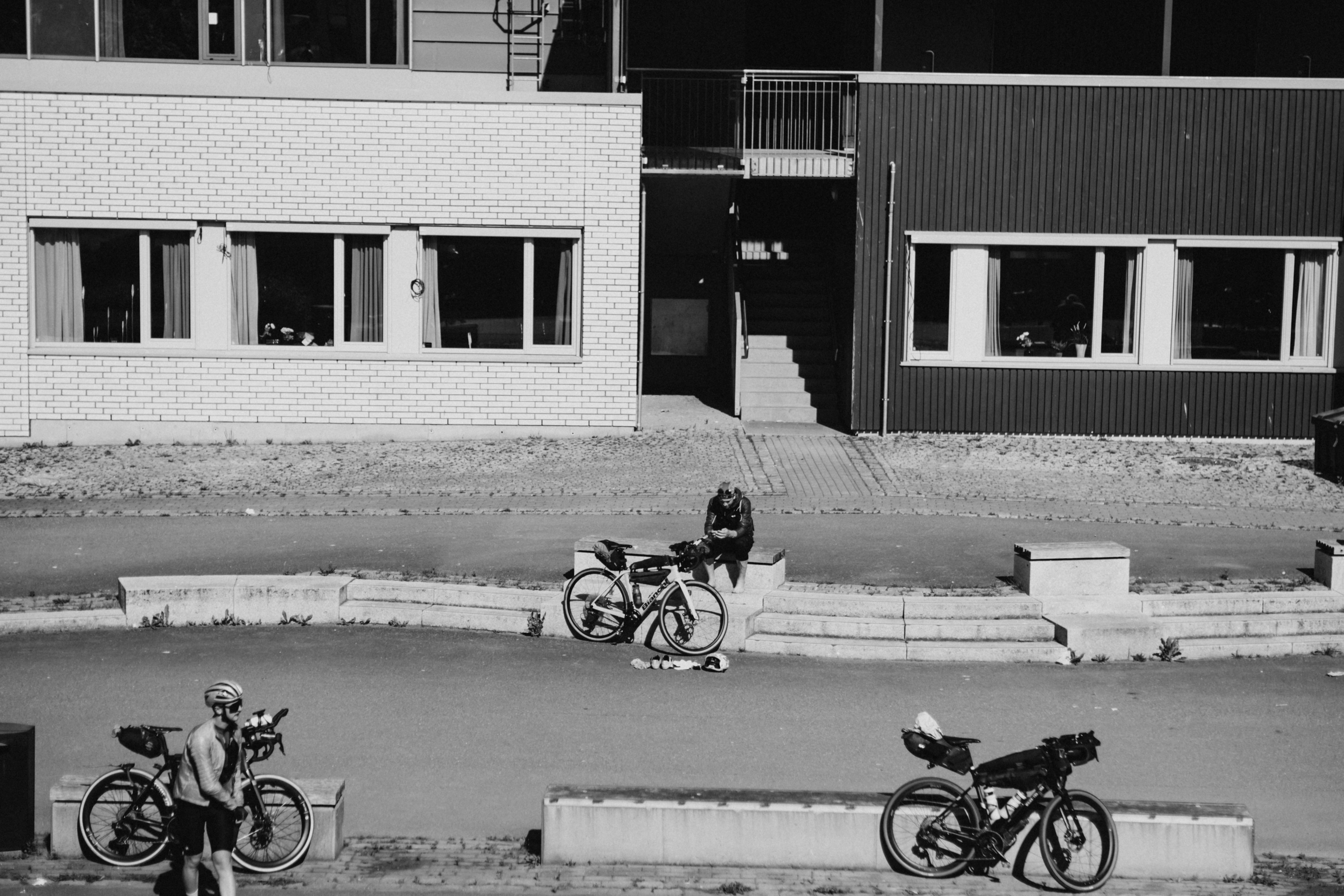
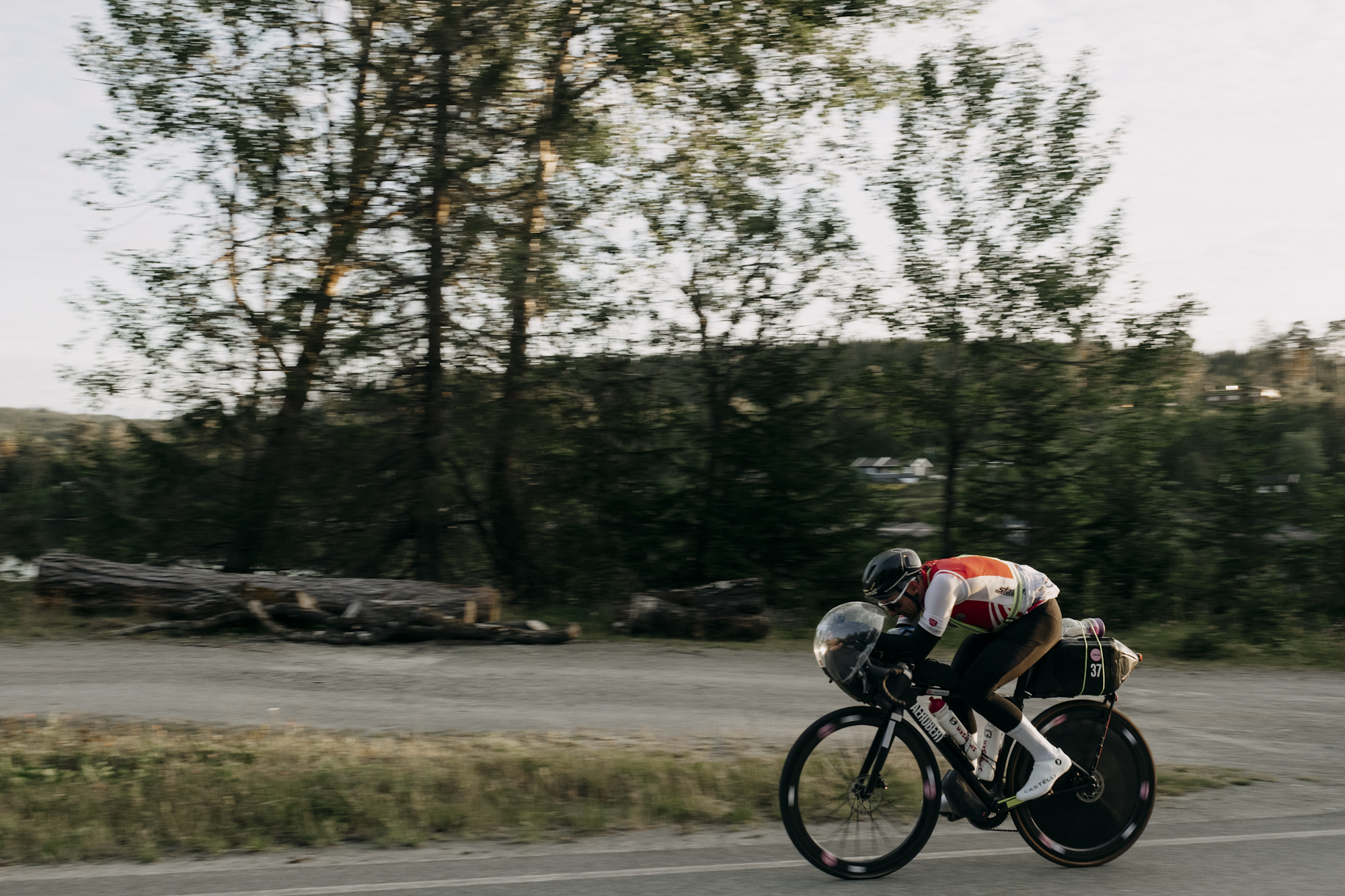
As bikes were checked at registration, last tweaks were made to the machines that will carry riders across a continent over the coming weeks. While I spotted no garden chair legs, there were modifications aplenty, from Robert Müller’s (037) space-age aero-dome and homemade disc wheel, to Andreas Herrig’s (107) potpourri of 3D printing and parcel tape, the string of supplements housed in his aerobars secured with wine corks. Triumphs of ingenuity. But of engineering? We’ll have to wait and see.

Several riders, forced to dismantle bikes to meet stringent airline restrictions, found them less than the sum of their parts when the time came to rebuild them. From Lucas Strittmatter (197), who was down a single, crucial derailleur screw, to Lukas Stiller (200) who was down an entire bike, creative solutions were in high demand. Enter Terje Skånøy. Shop manager and mechanic of Brattorkaia Sykkel, Terje saved countless races in the lead up to the grand départ. From racing debutants threading a bolt on reassembly, to seasoned veterans like Josh Ibbett (101), threading a bolt on reassembly, all were welcomed with open arms on Terje’s precious day off.
The Curtain Rises
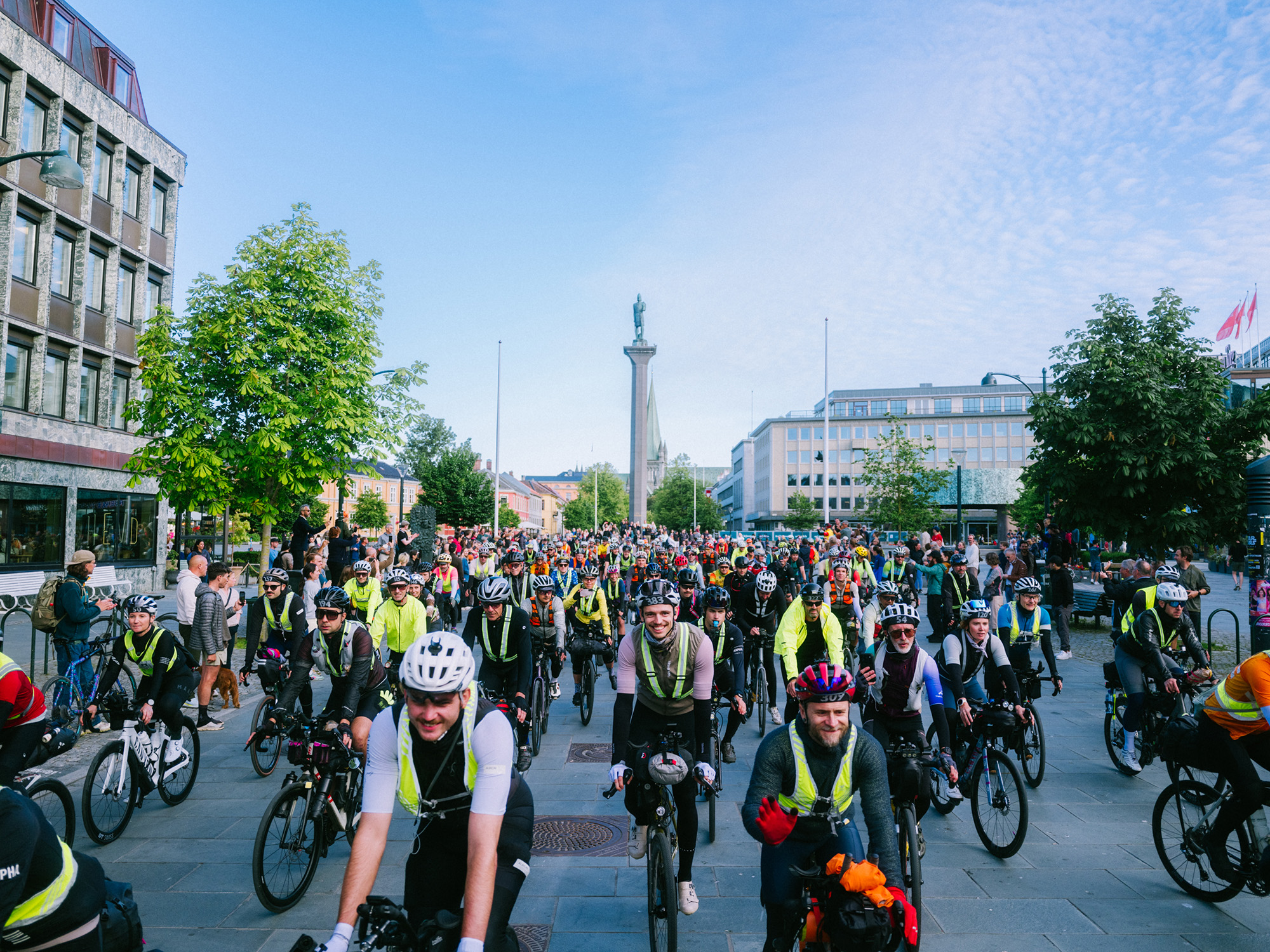
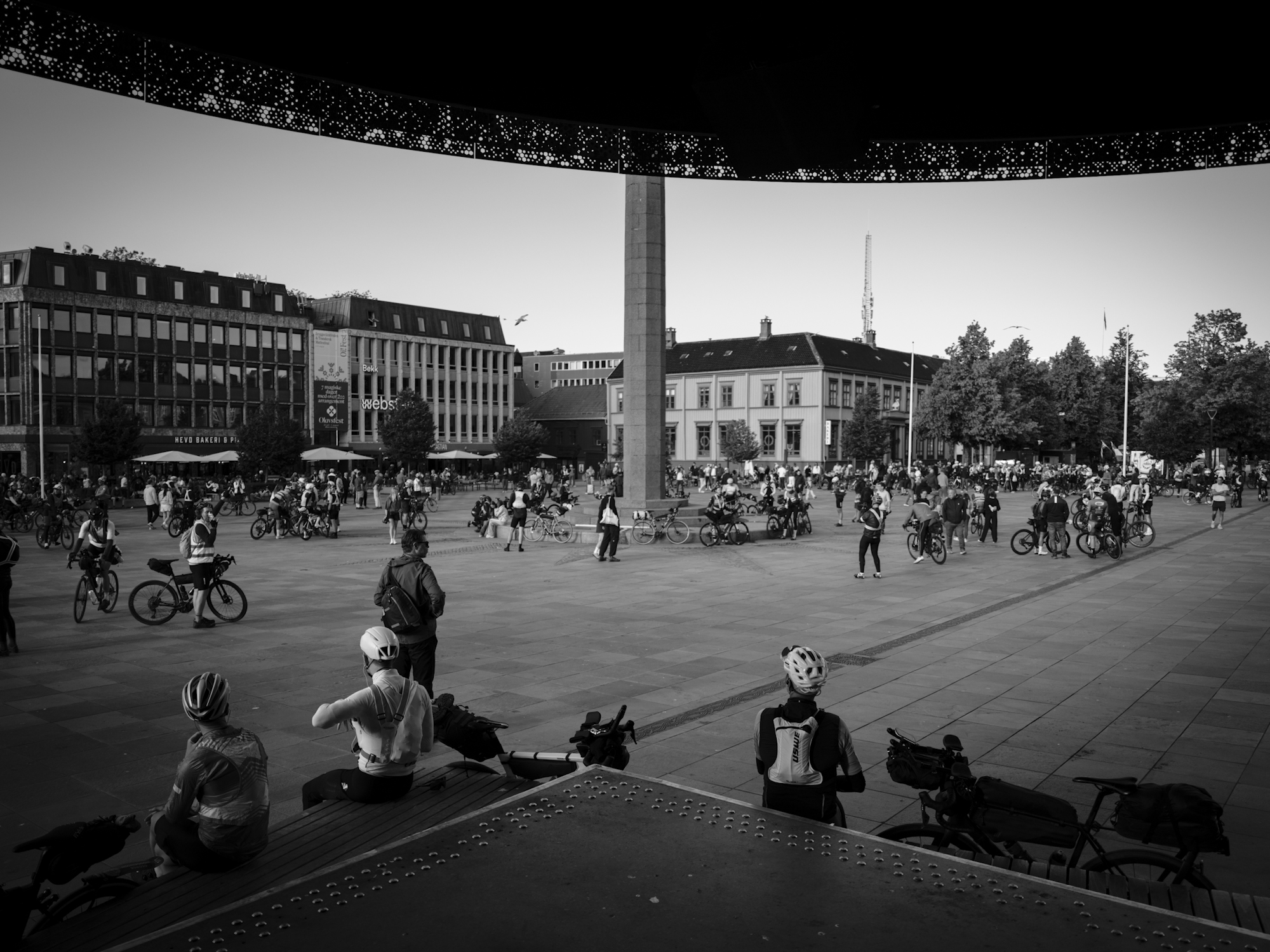
A Viking king, cast in bronze, stands atop a granite column in the heart of Trondheim. The column, which doubles as a sundial, presides over time as well as space in Torvet, the city’s main square. As riders gathered in the bars and restaurants that line the square’s periphery, a slight chill crept into the air. Shivers of nervous energy rippled through the gathering crowds as King Olav measured out the unhurried minutes of life in its regular pattern. For many, that was about to change.