
Day 5 // The Full Diana Ross
July 25, 2026
Words by Jake Thorpe
Photos by Tomás Montes
A Very Swiss Lead
Yesterday evening, the race entered Czechia. Bedding down a stone’s throw from where the elusive Robin Gemperle (001) had chosen to make camp, Hawk Team 1 admitted defeat and abandoned the hunt. Leaving in the small hours, Robin continued his lonely journey onto the rough gravel tracks of Parcours 2a, leaving us to once again piece together his spectral presence from afar.
Robin felt few impediments to his onward momentum through Czechia, and by lunchtime rather fancied the challenge of another country. So on to Slovakia it was. The race so far, for the Swiss Whippet, was unfolding with the precision of his countrymen’s finest clockwork.
By mid-morning, twelve hours behind Robin, a steady stream of riders approached the Czech section of the second split parcours. Heading the pack was Jonas Verest (368) who, since the Baltic, had changed gear, blasting through the field to assume pole position in pursuit.
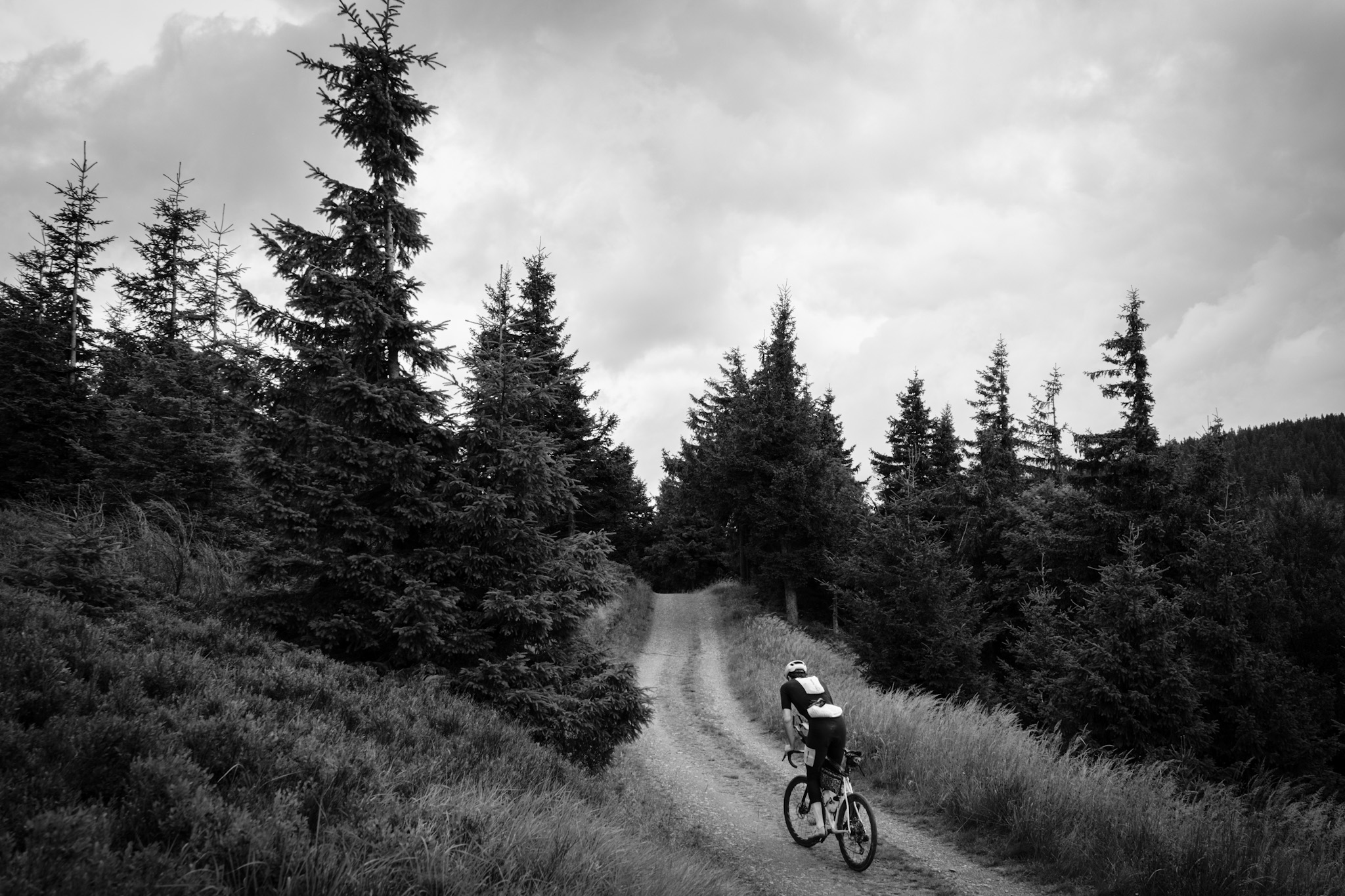
“Yesterday was a bit faster than I thought,” Jonas conceded, as we caught up at lunchtime. But on the whole, the Swiss rider was content with his pacing. The others, he felt, might have overstretched themselves in pursuit of the Trelleborg ferry. “I think it was a bit too early to burn some unnecessary matches for a 2-hour headstart,” he concluded. Rather than cutting a night in a mad dash south, Jonas had prioritised a sustainable sleep schedule, time at the terminal, and, crucially, an onboard cabin for his Baltic crossing. Clearly this had paid off. With the leaders’ advantage now eviscerated, Jonas was beginning to reap the benefits of a fuller battery. Considering the demands of the next stretch of riding, he’ll need it.
A Sign of the Times
With No Ski Boots now adorning the walls of our hotel and snow chains a common visual mandate of the roadside, Czechia made no efforts to hide its intentions. After the flat drag through Sweden and Poland, the race once more inclines.
A 3D relief map, hanging from the wall in a corridor of Švýcárna – a ski chalet beside the gravel track of Parcours 2a – protruded nearly enough to block passage. The Jeseníky Mountains, while perhaps less well known than their taller Caparthian neighbours, will prove no pushover.
Arriving at 08:00CEST to this potential roadside resupply, hoping to catch riders along the parcours, we found the place deserted, a lone delivery driver ferrying the day’s supplies though the back door. I couldn’t help but think that the courier might find himself requested on a more frequent schedule over the coming days; surely this sleepy chalet would see its seams stretched by the imminent influx of ravenous riders.
By 10am, however, I was less concerned. Heaving with local foot traffic dropping by for their morning libations – mugs of heady Czech beer and borůvkový likér, a local blueberry liqueur, on every table – Chalet Švýcárna was clearly well adapted. Striking the offbeat with our slow trickle of leading riders, delivery trucks arrived in droves throughout the day, keeping the fridge full and, crucially, the bar well stocked.
The Full Diana Ross
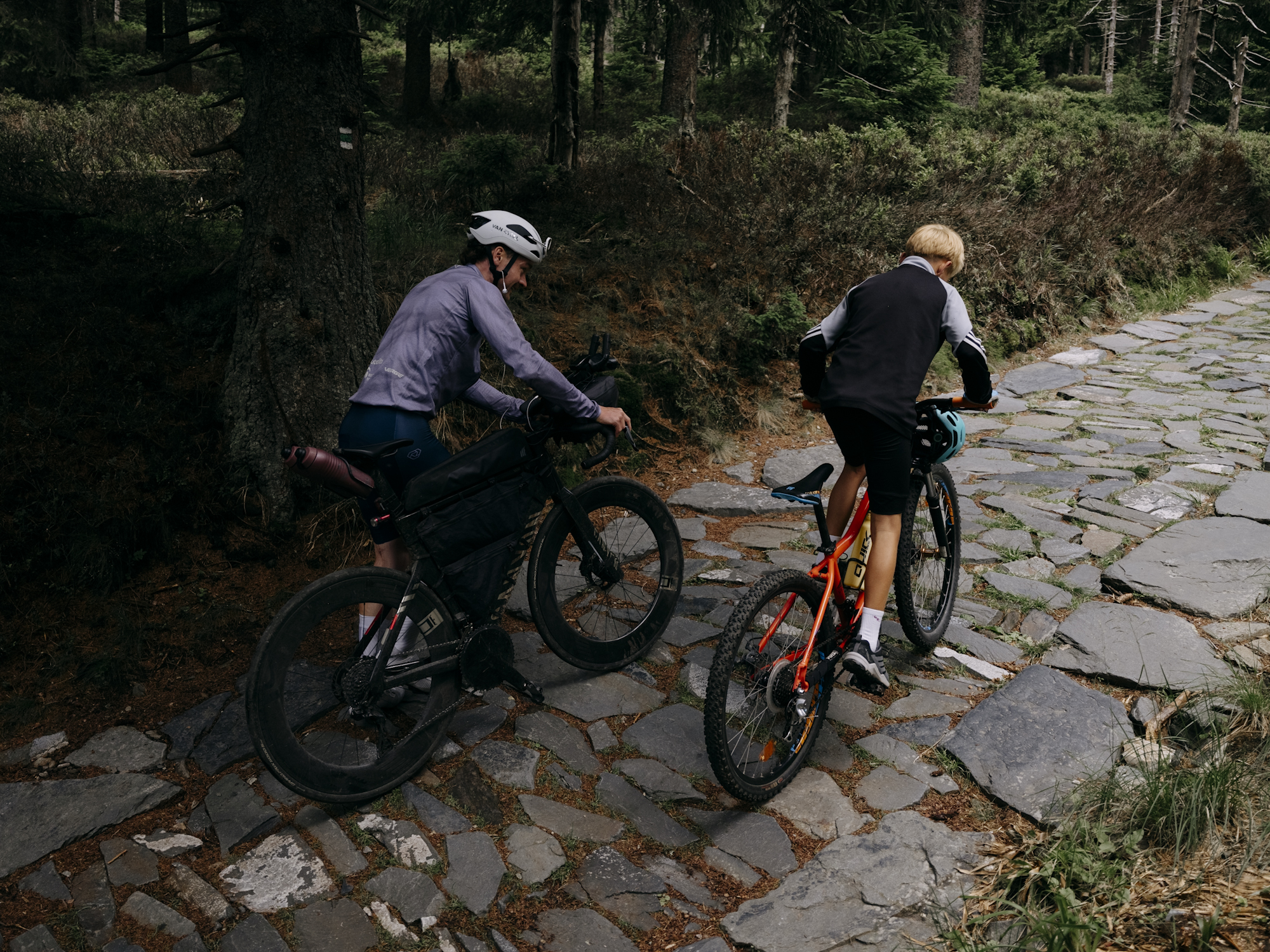
Parcours 2a is an adventure, guiding riders over two mountains via a 40 km stretch of deteriorating Czech back road. Decaying, gradually, over the course of the parcours, the surface, which begins as tarmac before working its way through gravel and boardwalk to end up a patchwork of sparse flagstone, will prove challenging. Most will be forced to dismount – the Czech cobblestones making those of the French look comparatively buttery.
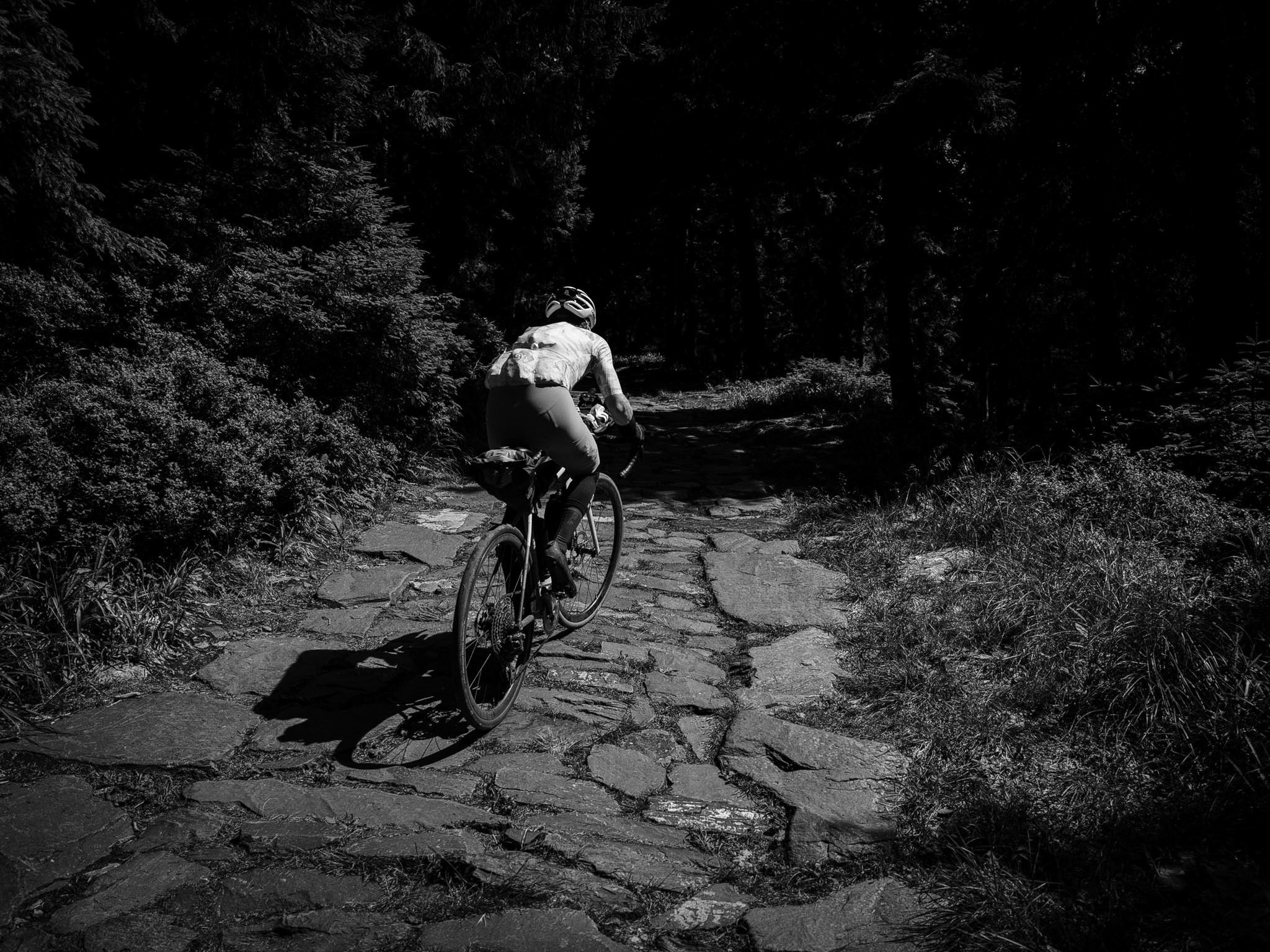
Forcing riders first to climb, then to descend, to lap a reservoir and twist back on themselves at every turn, the parcours offers the full Diana Ross – upside down, inside out, round and round. First flagged by Tim de Witte (003) in the wake of his podium-placing efforts at TCRNo10, this stretch of riding has been waiting in the wings for the time to make a proper appearance. “Well, no, I didn’t design it,” Tim demurred, as I caught up with him on the upper slopes that afternoon. “It’s a parcours from the Czechs to the TCR.”
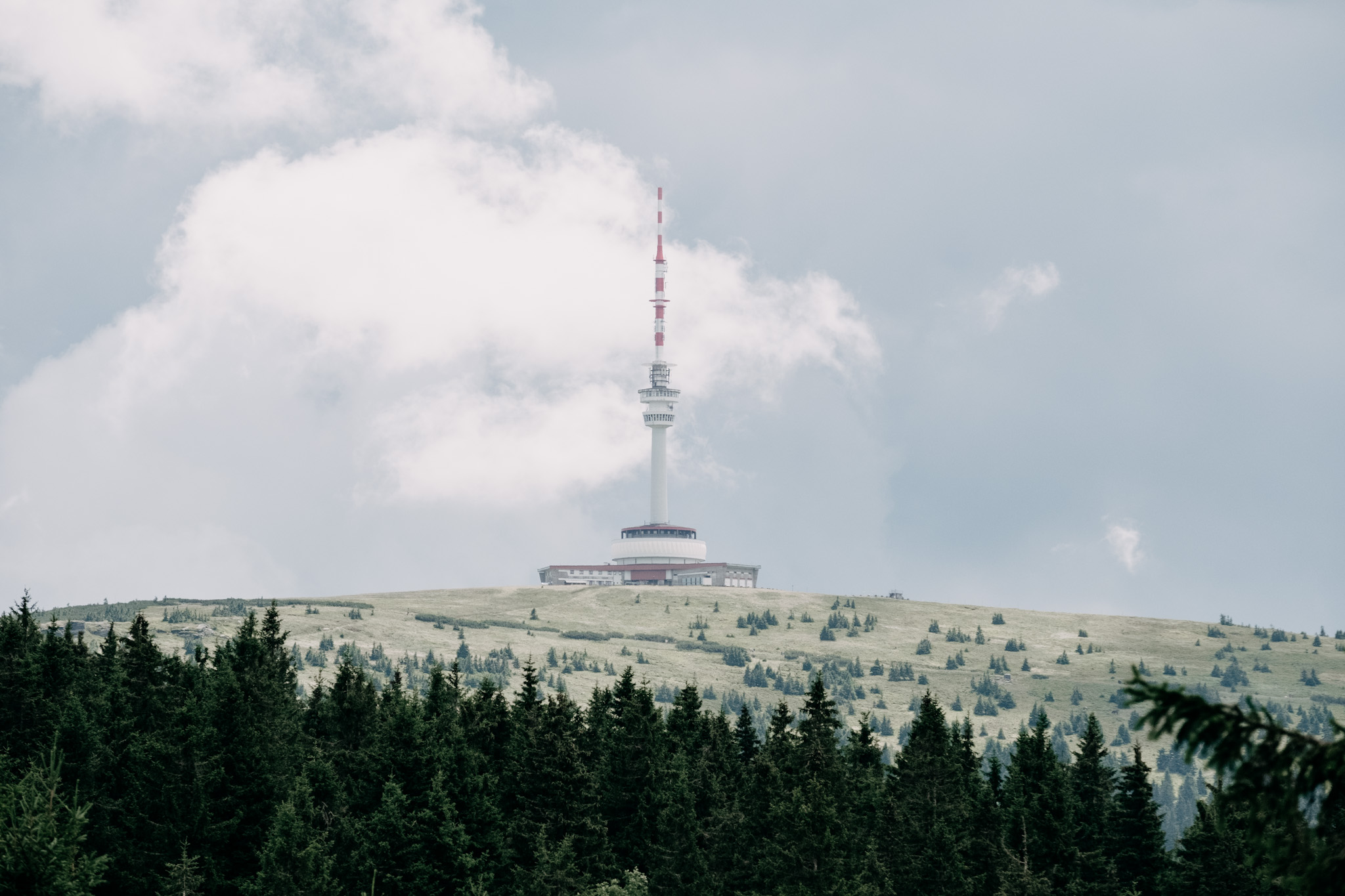
It is a treasured gift. Concluding at nearly 1500 m above sea level, on summit of Praděd, the “great-grandfather” of the Jeseníky mountains, riders will be greeted by a space-age apparition. Out of the hotel below protrudes the Praděd TV tower, a brutalist needle of concrete and steel whose tip marks the highest point in the Czech Republic.
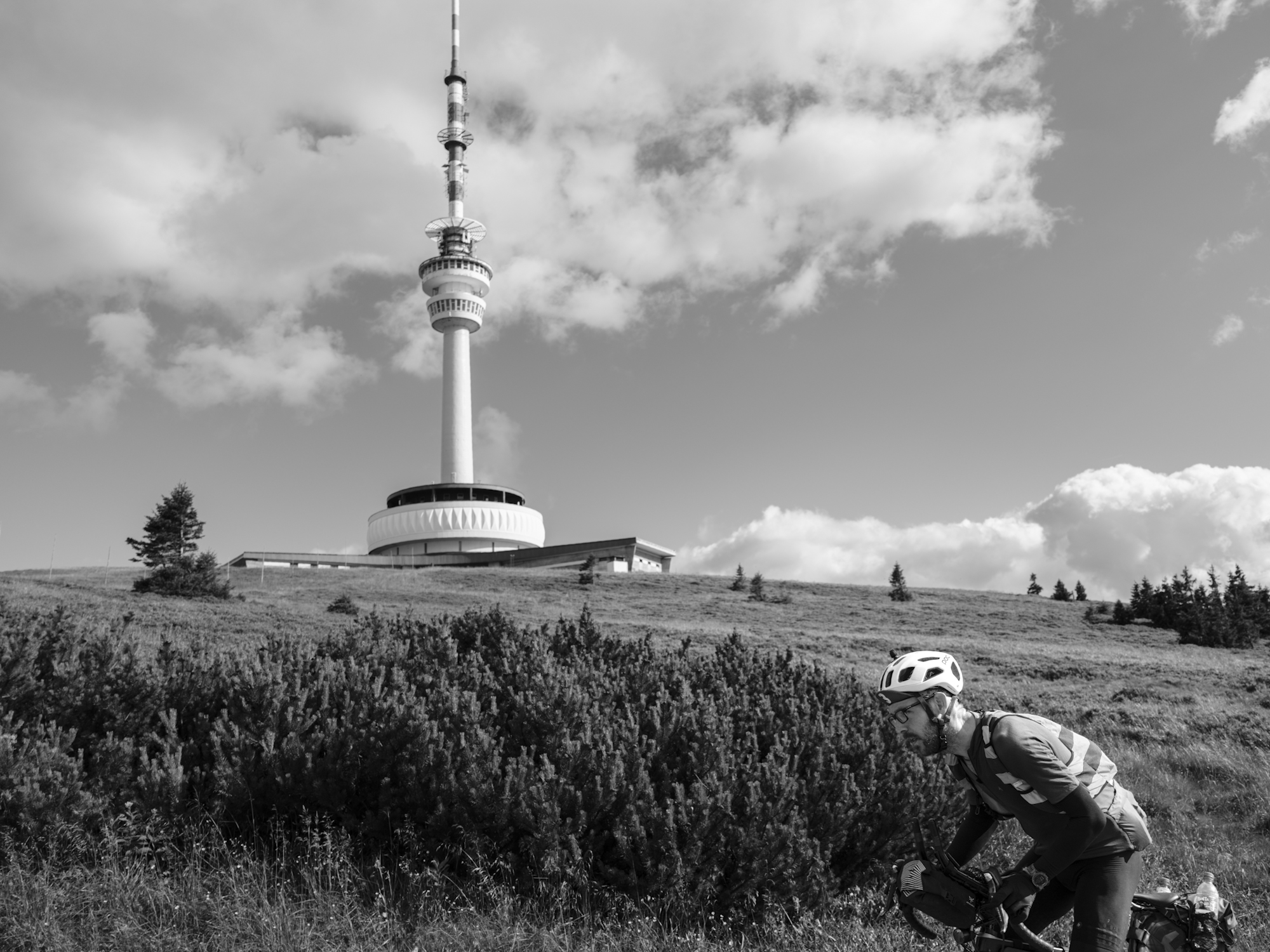
For Tim, though, it marked, instead, the high point of his day. Having spent the ride since the ferry slogging across the Polish plains, Tim had decided that he was not a flat road cyclist. “I must have the aerodynamics of a sack of potatoes,” he complained “I get into the tuck position and I kind of go backwards.” But the mountains of Tim’s adopted home offered some relief. Arriving at the top of Praděd, he ensconced himself in the corner of the restaurant to be plied with soup and Czech cola by the obliging staff.
Sweet Dreams
Clearly also enjoying the return to the mountains, Martin Moritz (002) appeared to be resurrecting in the race’s second act. “The greatest comeback since Easter Sunday,” had been the verdict of one particular friend. On the subject of the emerging elevation, Martin noted, “My bum is loving it; it needed a change, especially after those roads in Poland.”
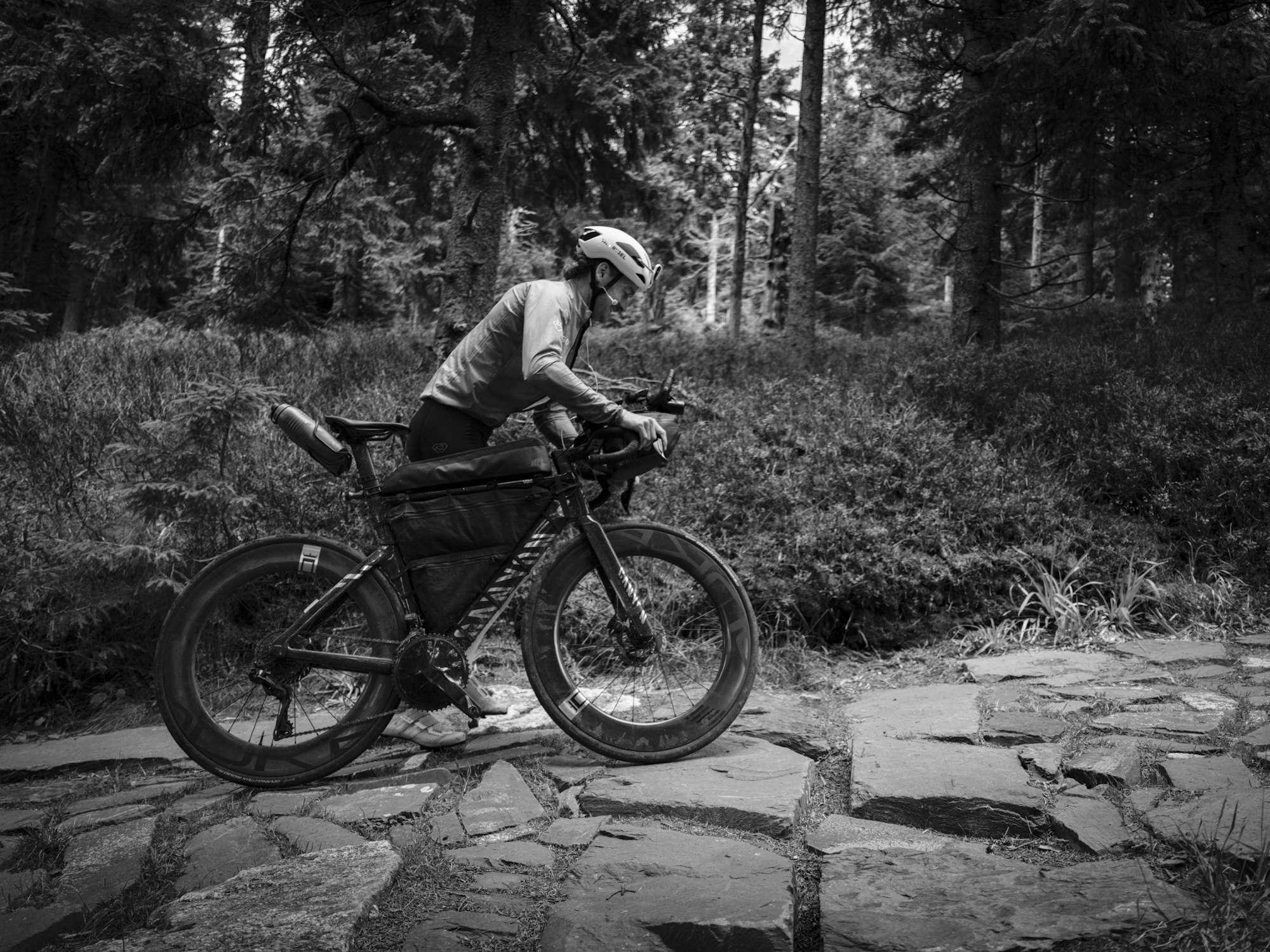
Back amongst the Norwegian fjords, a lugubrious mood had descended on the defending runner up, a product of punishing mountain passes, cold nights, and, I’m sure, the relentless pace of the pointy end. With Martin in the doldrums, he’d all but relinquished his racing aspirations. But now, with the wind in his sails after his Baltic crossing, The Mo had returned to true form. Fourth on the road at midday, and with Robert Müller (037) squarely in his sights, Martin was a man on a mission.
Just ahead, Robert, too, seemed in good spirits. The reason soon revealed itself. Discussing his sleeping arrangements of the night before, Robert described the scene that greeted him as he peeled back a roadside tarpaulin in search of a sheltered spot to bivvy. What, I hasten to wonder, had compelled him to do so in the first place? I’m sure we’ll never know – Robert’s penchant for nesting in life’s flotsam and jetsam defies explanation. In this latest instance, he had been greeted by a hoard of empty sugar sachets. “I used this as a mattress and I made a pillow out of it for my head,” he explained, before adding, inexplicably, “so I didn’t have to use my own mattress.” Only Robert Müller would eschew a night on an air mat to recline, instead, on a bed of refuse.
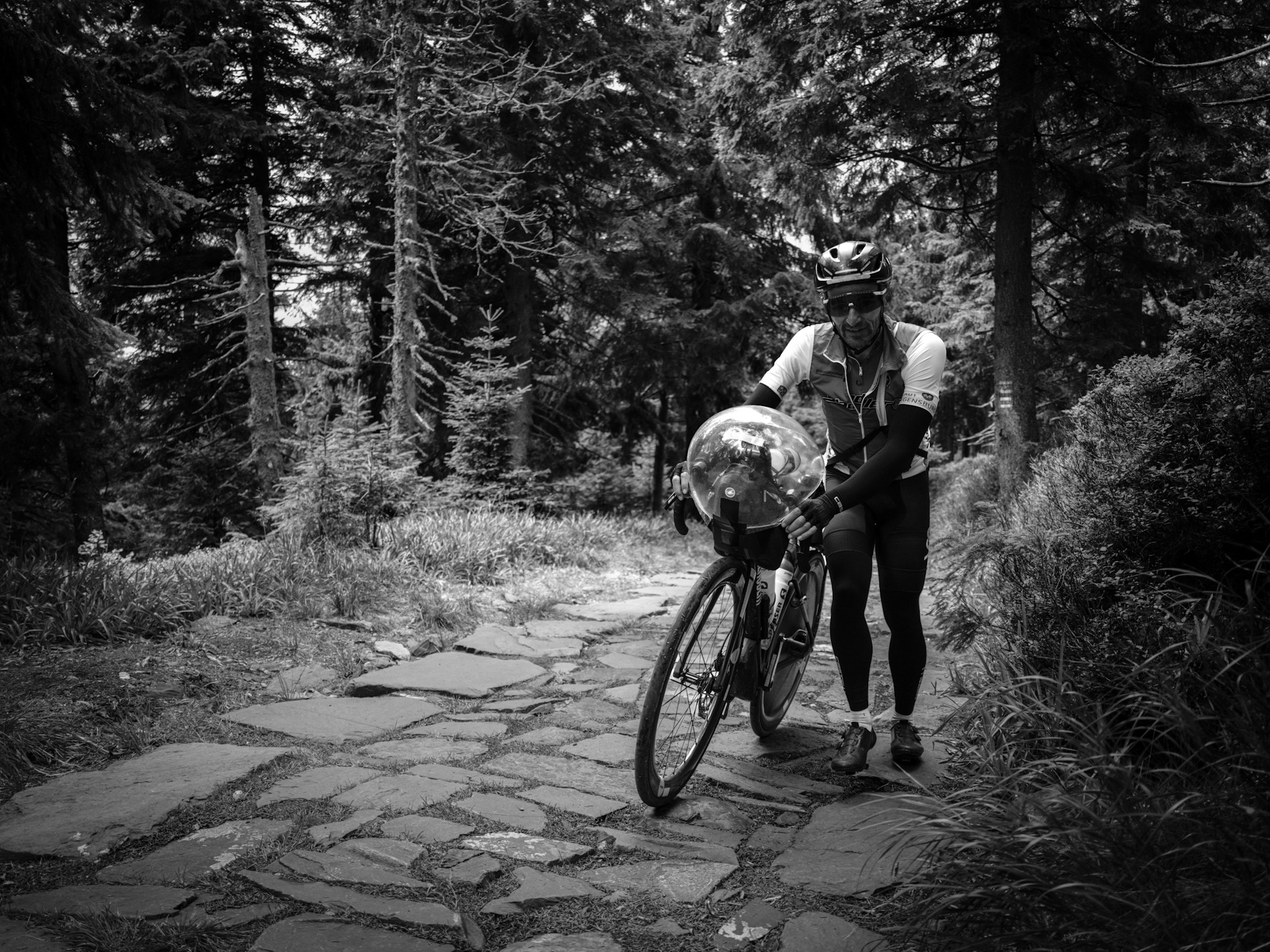
Despite suffering a buffeting aboard AEROBERT yesterday, Robert had managed to maintain an impressive average speed: 30 km/h for 450 km. It was far from certain that The Mo would gain ground. It seems there had been something in the water on that ferry from Ystad. Despite having arrived on Polish soil at a 2-hour disadvantage to those having crossed from Trelleborg, by the Czech parcours, passengers from that later crossing made up two thirds of the chasing pack.
Sleep First, Ride Later
For a group that, just three days earlier, had been separated by little more than 2 km from nose to tail, by late evening, the 10 leading riders on the FLINTA leaderboard now spanned the length of Poland. Where the fjords had focused the field, the Baltic had blown it apart.
In a bid to get back into her normal racing rhythm after the mad dash to the sea, Camille Albisser (270) had opted for a few hours of rest on Thursday night in Stargard, conceding the lead, briefly, to Sarah Bosslet (120). Recharged, however, Camille soon made up the lost ground, and the two proceeded to trade the lead through Poland, just as they had through Sweden, maintaining a significant advantage over those giving chase.
Anna Carlqvist (223) – having recovered well from her night in a public restroom with an over-enthusiastic automatic light switch – headed a five-strong chasing pack, with Lea Hamberger (404), Larissa Unsinn (346), Nicole van Batenburg (029) and Hélène Fromenty (134) all racing in close succession. With sleep high on the agenda all round, tomorrow morning will see them tackle Parcours 2a – a prospect that promises to shake up the monotony of Poland’s long, flat roads.
Up for Grabs
Back at the Baltic, while Świnoujście was emerging as a clear favourite for riders, whether from Trelleborg, Ystad, or Malmö, a handful of trailblazers were exploring other options. Not for the first time this race, having taken a less trodden scenic route to the first control, Nico Schleippman (096) – 18th in last year’s race and 5th on the Green Leaderboard – had picked an unorthodox path, as the first rider to head for a German shore. Sailing from Trelleborg to Rostock, while a marginally shorter passage, demands more distance on the mainland, as routes track east of Berlin along the Polish border. Facing a seven-hour wait for the more direct sailing, however, Nico appeared to deem the extra riding worth the earlier crossing. At racing pace, trading 130 km for seven hours seems a worthy exchange.
Tracing another novel trajectory were returning pair Rémi Mejean (414a) and Marguerite Mulhaus (414b), who had crossed to Sweden’s east coast in a bid to sail from Karlskrona. This crossing is a little longer than the prevailing Polish choice, and kicks riders out on a gentle curve that requires them to cut back west as they approach the Czech border and Parcours 2a. Docking in Gdynia at 06:00CEST, a little more than 12 hours after having reached the port in Karlskrona, the pair, along with fellow passenger Jonas Heyberger (215), made haste south-west.
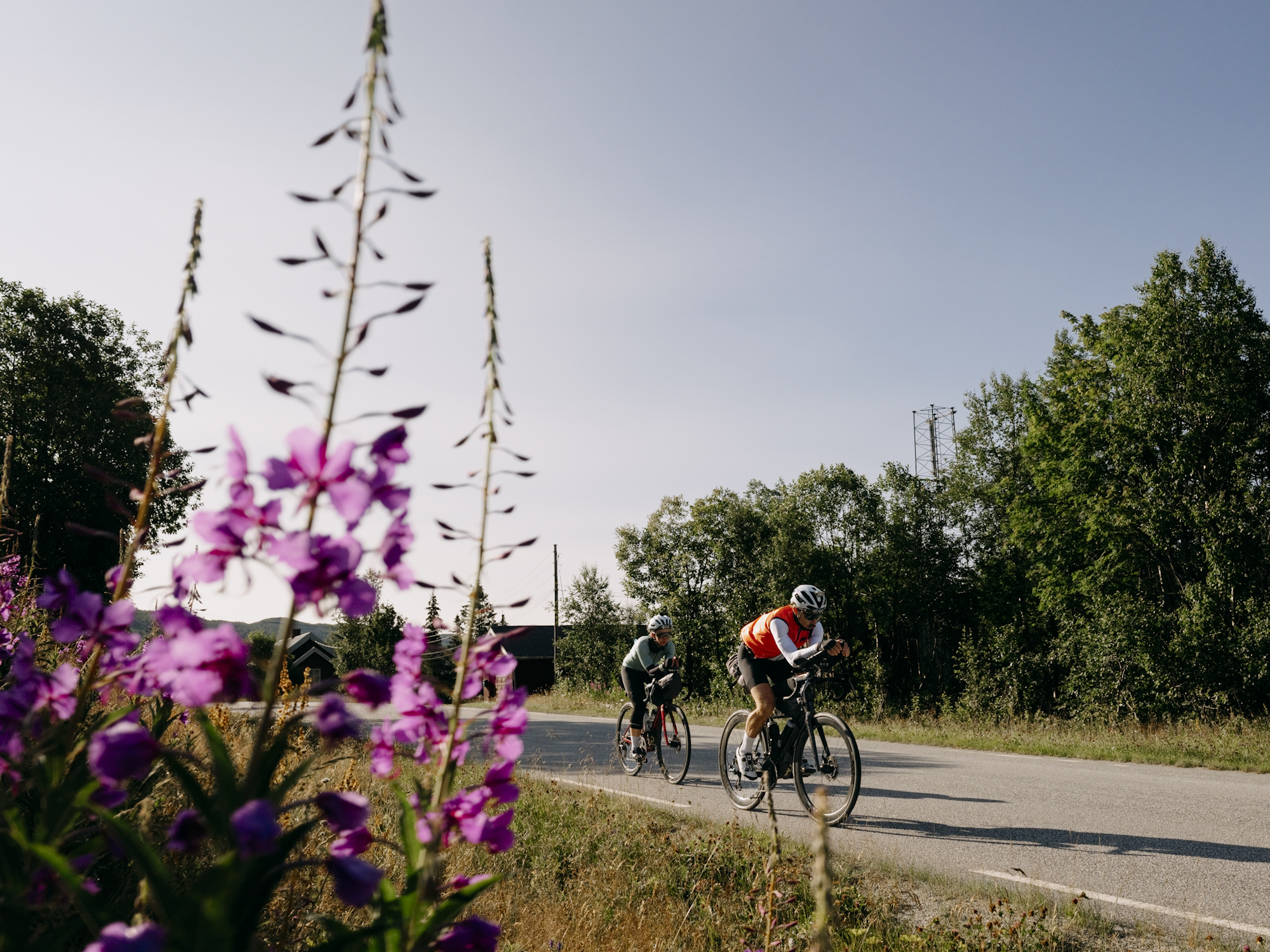
Currently holding second place on the road in the pairs category, unconventional routing seems to be a theme of Rémi and Marguerite’s race so far. Besides their unique crossing, like Nico, the pair had opted for a circuitous approach to Norway’s first control. When we caught up in Finse, Rémi had explained that the decision had been a deliberate diversion from more mountainous ground – an attempt to avoid rousing Marguerite’s dormant knee pain. Perhaps their choice of crossing employed a similar strategy.
They mustn’t make such diversions too regular a habit, however. Sharing their geographic parallel, having taken the prevailing Baltic crossing, Dina Byland (424a) and Christian Dupraz (424b) have been putting down a typically metronomic pace – one that has placed them very much in contention for the pairs race. The pair, however, share a relaxed outlook on racing; to them it’s just fast touring. They make no competitive claims, and keep any aspirations about their own performance close to the chest. Yet for all its repetition, the maxim of riding your own race does, repeatedly, prove its worth. Even without the ambitions of a racing lead, it’s possible Christian and Dina could end up there regardless.
Further ahead, having made it onto the same crossing as those at the front the FLINTA field, by mid-afternoon, leading pair Pierre-Yves Fontaine (411a) and Adrien Mabileau (411b) had passed Gorzów – the site of Nicolas Chatelet’s (126) brief concern – and were headed for Międzyrzecz – the town of Christoph Strasser’s (005) protracted ping and eventual scratch. Having taken the top spot at both last year’s TPR, and 2024’s Three Peaks Bike Race, Pierre-Yves and Adrien certainly seemed the pair to watch as they made light work of Poland and ploughed on towards the second parcours.
However, by mid-afternoon, we received word that Adrien had scratched due to knee pain. Pierre-Yves would continue alone, but crucially outside of GC. With that, our pairs race tightened considerably. At this point, it’s a four horse race, with our two leading pairs almost a day ahead of the next on the road. But as we’re fast discovering, the protagonists of this edition can change in a heartbeat.
A Different Draught
So was the case for Jocelyn Roth (114). Having held ground as second on the road through much of yesterday, by early evening, his dot had ground to a halt just outside of Lubin. A puncture, saved neither by plugs nor tubes, forced him to press pause for the night and wait until morning for an open bike shop. Sixteen hours spent stationary is an eternity at the sharp end of a race. With a new tyre sourced, by 10:30CEST, Jocelyn was back in business, riding hard on fresh legs to reclaim the lost ground.
If there had been something in the water on the Ystad ferry, those on the Trelleborg sailing appeared to have drunk from a rather different draught. They had endured a tough stint since the Baltic – first Nicolas Chatelet’s (126) tech troubles, then Christoph Strasser’s (005) surprise scratch, and now Jocelyn’s prolonged puncture.
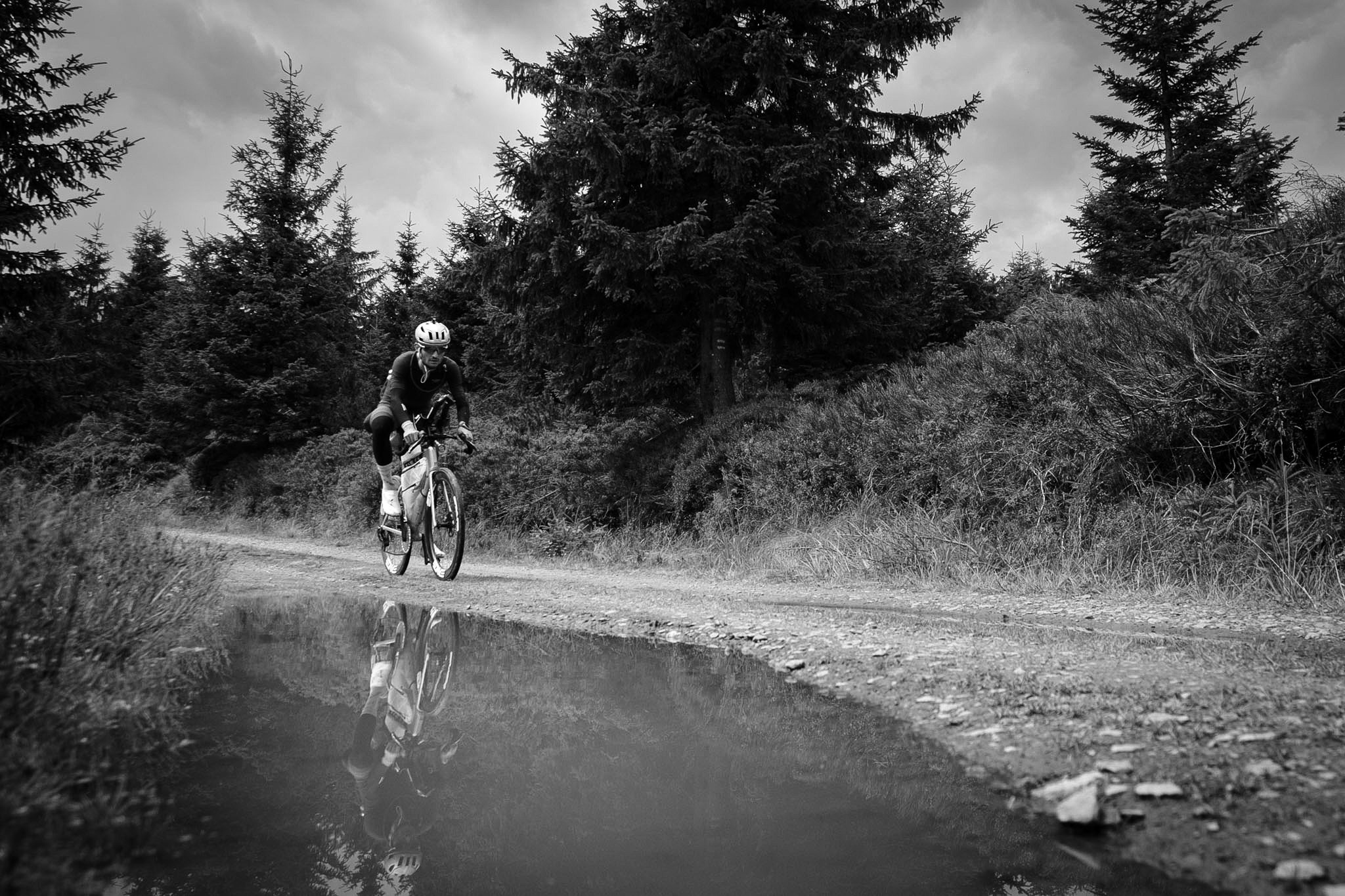
Max Agut (051), too, had not emerged unscathed. Laughing in the face of the parcours’ absurdity, he admitted to spending some time off the bike on the flagstones. “Not the best legs,” was Max’s appraisal. “Not the best road,” was my consolation. Having suffered some stomach trouble the evening before, however, progress had been slow since before the parcours. Yet by twilight, Max had pushed on into Slovakia, tucked into the now five-strong vanguard as they pressed towards the remainder of the split parcours and the race’s second control.
Fortune Favoured, Fortune Faded
From our Mike Hall Bursary riders, the day had held mixed fortunes. By midnight, Wojciech Wronka (095) had made it through the Czech parcours, skirting the country’s eastern border through the night before dipping briefly back into his native Poland. Wojtek is continuing to hold ground in the leading 20 riders, a remarkable performance in such a stacked field.
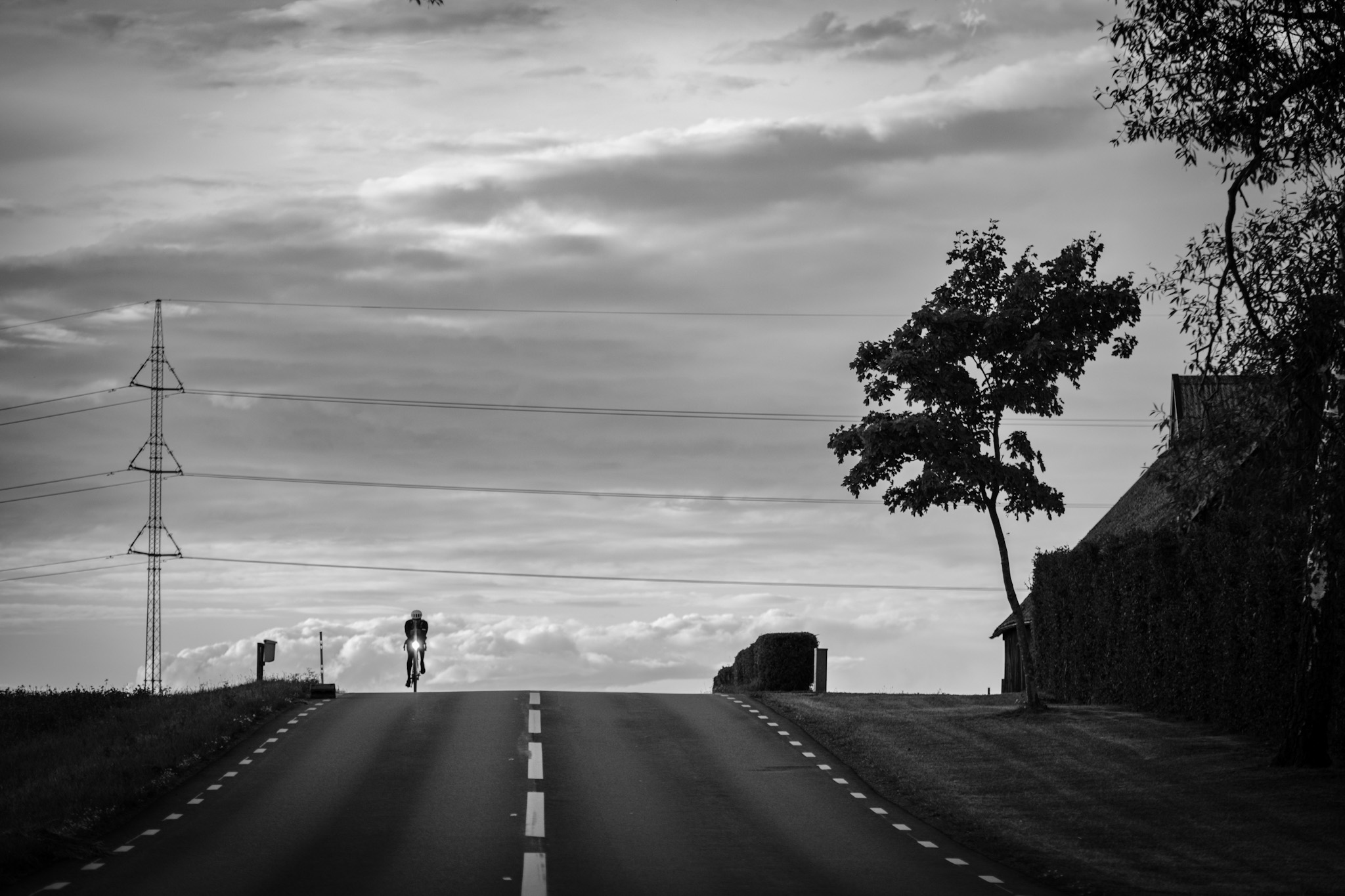
For pairs rider Małgorzata Gryszczuk (421a), the day had dealt a tougher hand. Her pair, Kinga Perzyńska (421b) had been struggling with motivation throughout, and when a niggle began to emerge for Małgosia, it was clear now was time to call stumps on their race. Having sampled the very best of Norway’s riding, however, we’re sure the lasting memory of the race for Małgosia will be a fond one.
For now, our three other bursary riders, Jack Wright (052), Maksym Matvieiev (139) and Luca Bessems (214), remain in GC, making steady progress on their long ride south.