
Day 3 // Ships in the Night
July 23, 2026
Words by Jake Thorpe
Photos by Sam Dugon and Tomás Montes
No Need to Walk, Only to Cycle
Today is the day of the ferry. As our leading GC rider, Robin Gemperle (001), continues his headlong dash for a midday Baltic crossing, those leading the FLINTA field have the Oslofjord firmly in their sights.
Sarah Bosslet (120), having bivvyed beneath the sink of a public bathroom for several hours the night before, had woken glad of the rest. “I’m feeling really good this morning,” she shared, “so I’m looking forward to catching the main ferry; but first, the small one”.
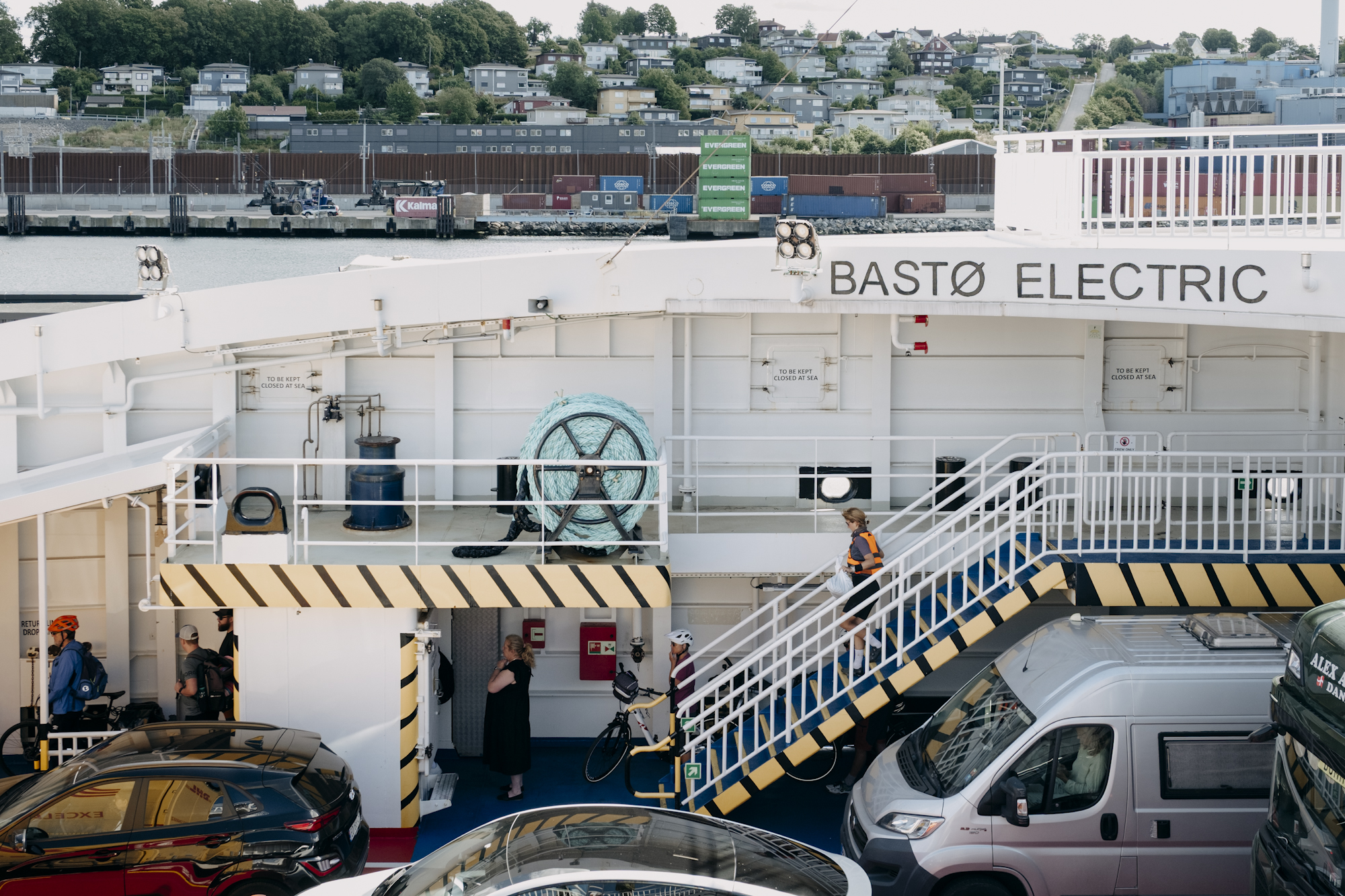
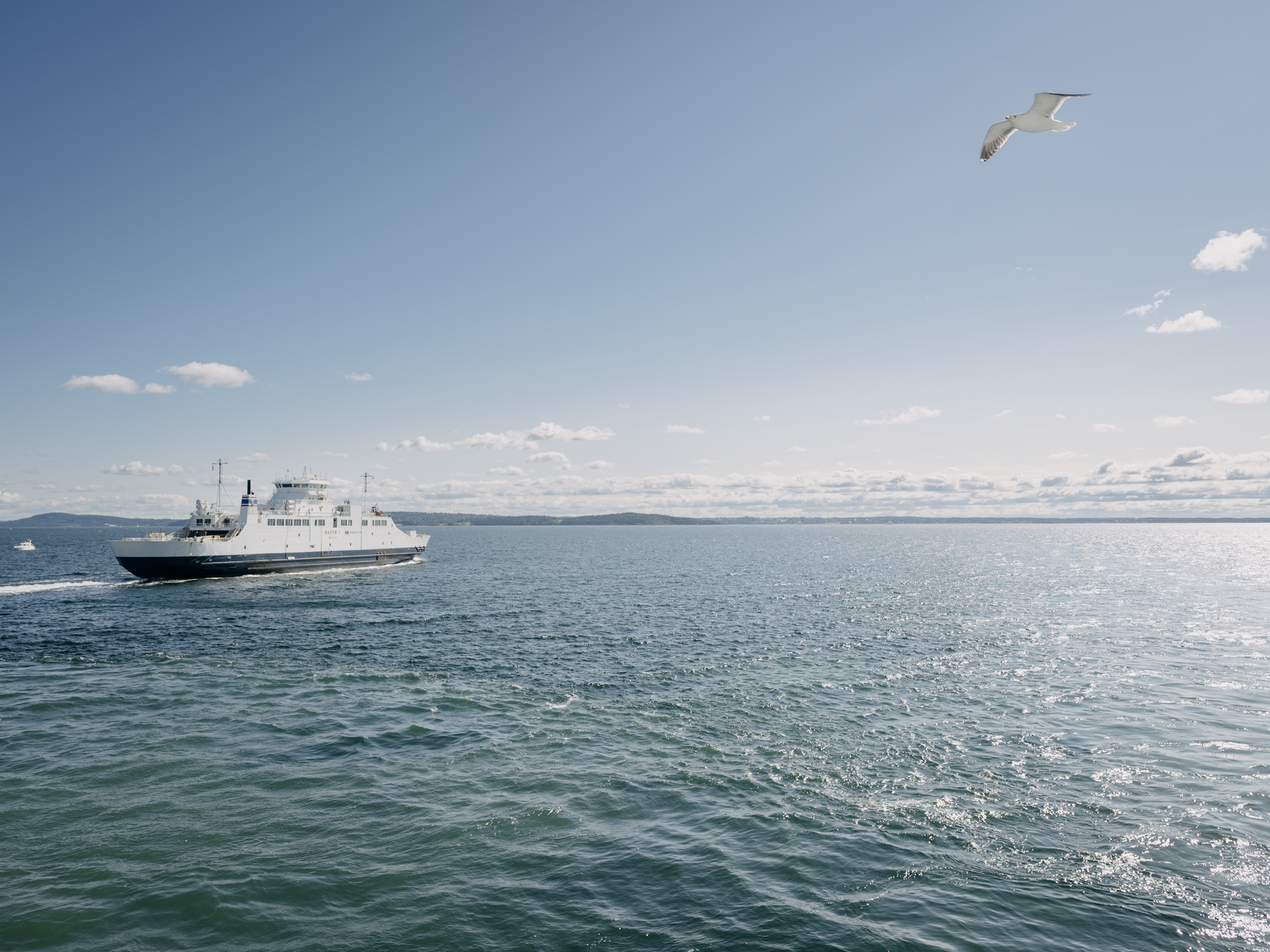
Sailing in tandem across the fjord, on the Horten to Moss ferry, leading FLINTA riders Sarah Bosslet (120) and Camille Albisser (270) caught up over breakfast on the go. Nearing the end of their time in Norway, they seemed to enjoy the opportunity to compare notes on their parallel journeys.
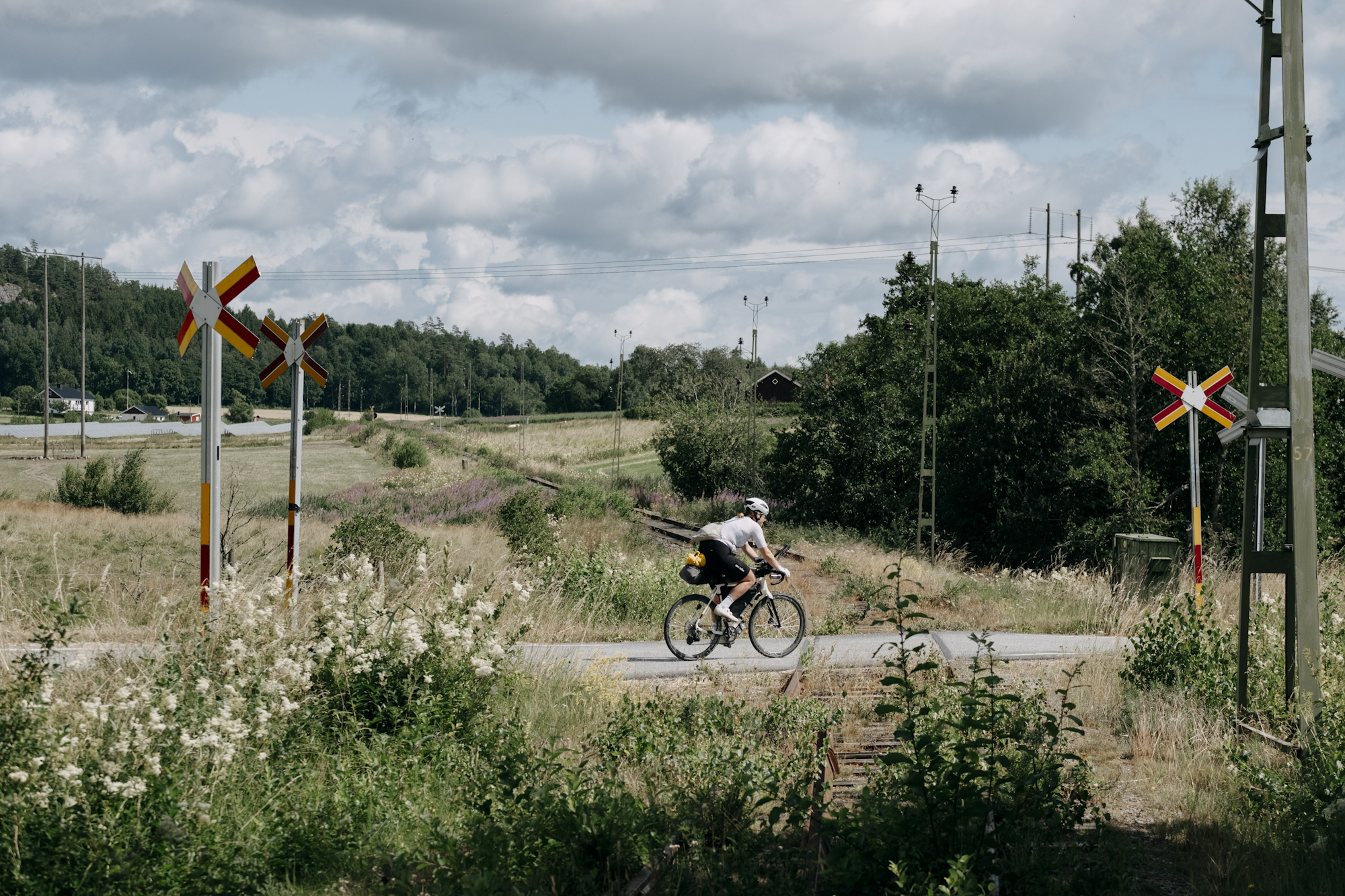
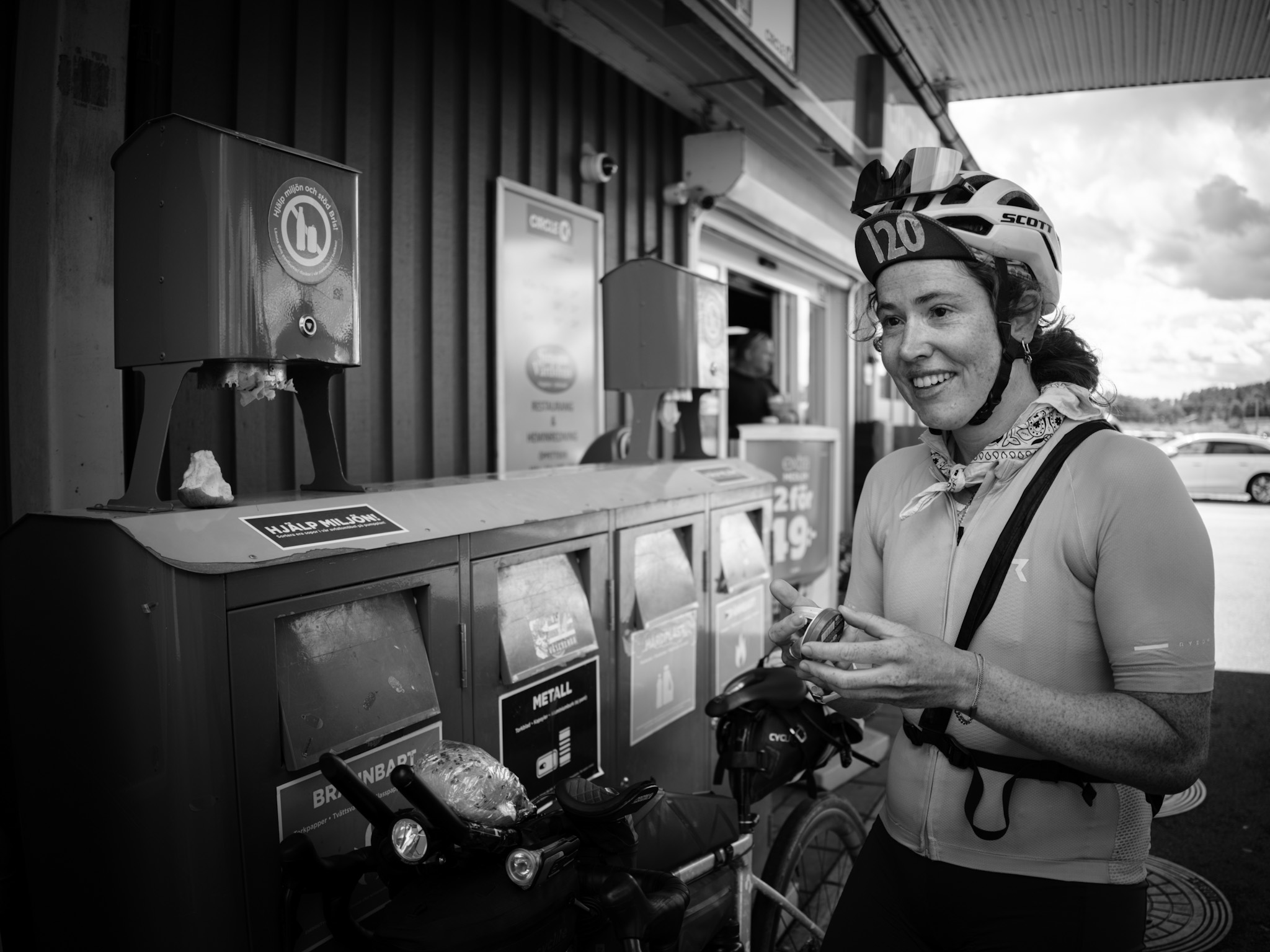
As the two riders disembarked, Sarah opened the taps, soon edging a slight lead over Camille. Chunking her ride into 100 km updates, by midday, Sarah had covered 1100 km in total, apparently immune to the common effects of spending more than 50 hours in the saddle. Stocking up on cheese sandwiches at a Swedish petrol station on her approach to the ferry, she looked impossibly fresh. This was hardly the result of a conservative start; in fact, Sarah confided, she was currently tracking 24 hours ahead of schedule.
Having twinged her ankle on a section of hike-a-bike up onto the Rallarvegen the day before, Sarah’s only complaint was that she was finding walking a little difficult. But riding? That was no trouble at all. As she plunged towards Gothenburg, holding the morning’s lead, Sarah found herself sitting squarely at the head of the FLINTA field.
Feeling the weight of her first Transcontinental category lead, Sarah acknowledged it had been an emotional morning. “I can only do it because of Mohit, because he believed in me, because he told me I could be top three.” Mohit Kohli, Sarah’s partner, was killed in a road traffic accident chasing a world record in South America last year, months before he was due to return to the start line of his second TCR. The pair had met at the finish line of TCRNo10, a year earlier. It’s no wonder, then, that the race holds such significance for Sarah; it’s a connected space.
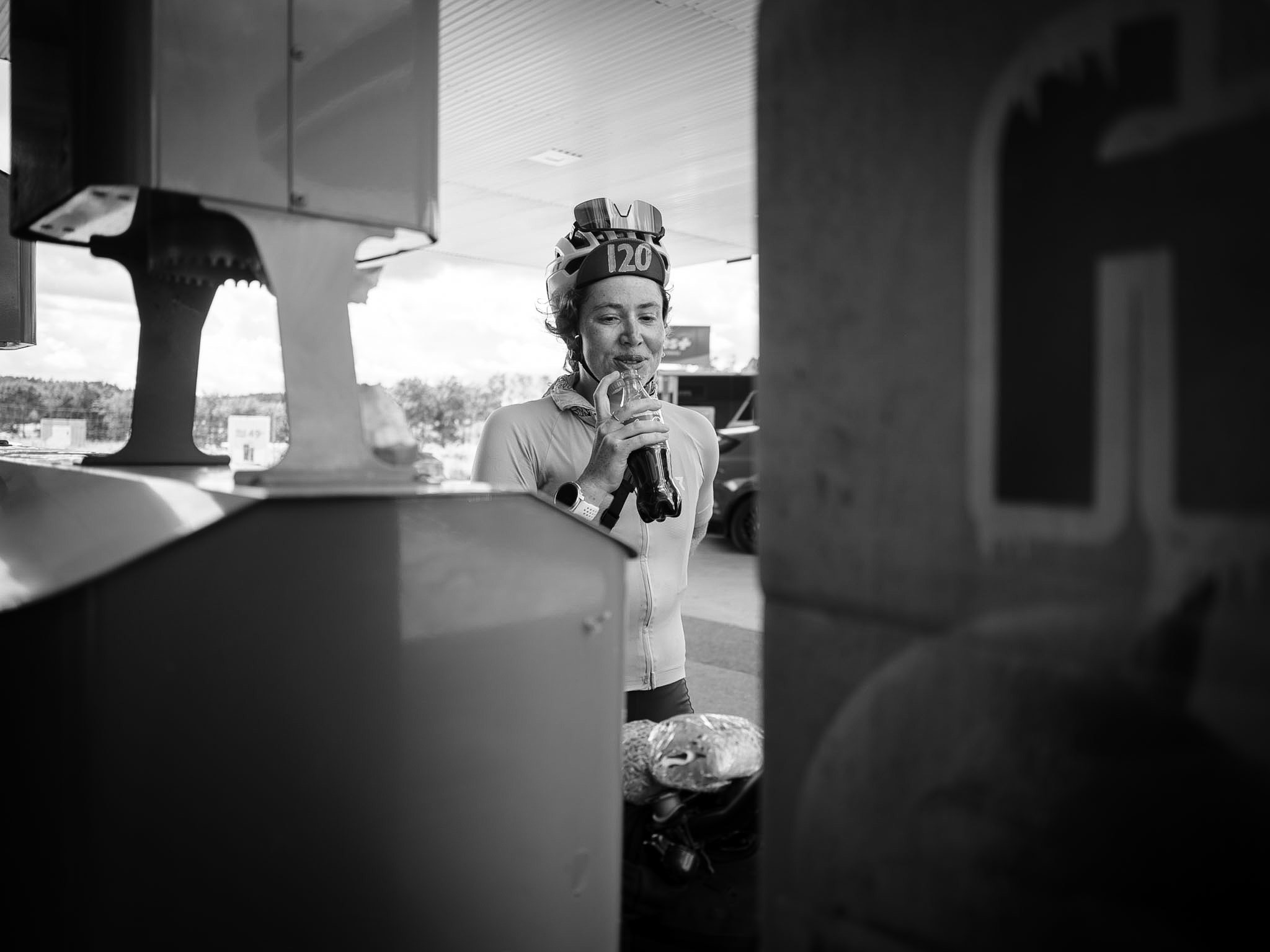
Racing too, this year, is Mudit Kohli (128), Mohit’s brother. Riding under Mohit’s TCRNo10 cap number, Mudit arrived at CP1 last night, bedding down for a night’s sleep ahead of a dawn outing on the Rallarvegen.
Ships in the Day
Arriving in Moss after a late-night pause in a Norwegian motel, our team in Control Car 1 hoped to spend the morning sailing back and forth – the Müller special – across the short stretch of fjord to catch up with the other riders currently animating the close-fought FLINTA field.
I caught Larissa Unsinn (346) just as I had at the end of Parcours 1b a day earlier: mid-meal. A ferry, of course, is one of the few places where resupply can be concurrent with forward progress. Larissa had selected a portion of fairly pallid-looking mashed potato as her preferred fuel – blissfully bland for sugar-blasted tastebuds.
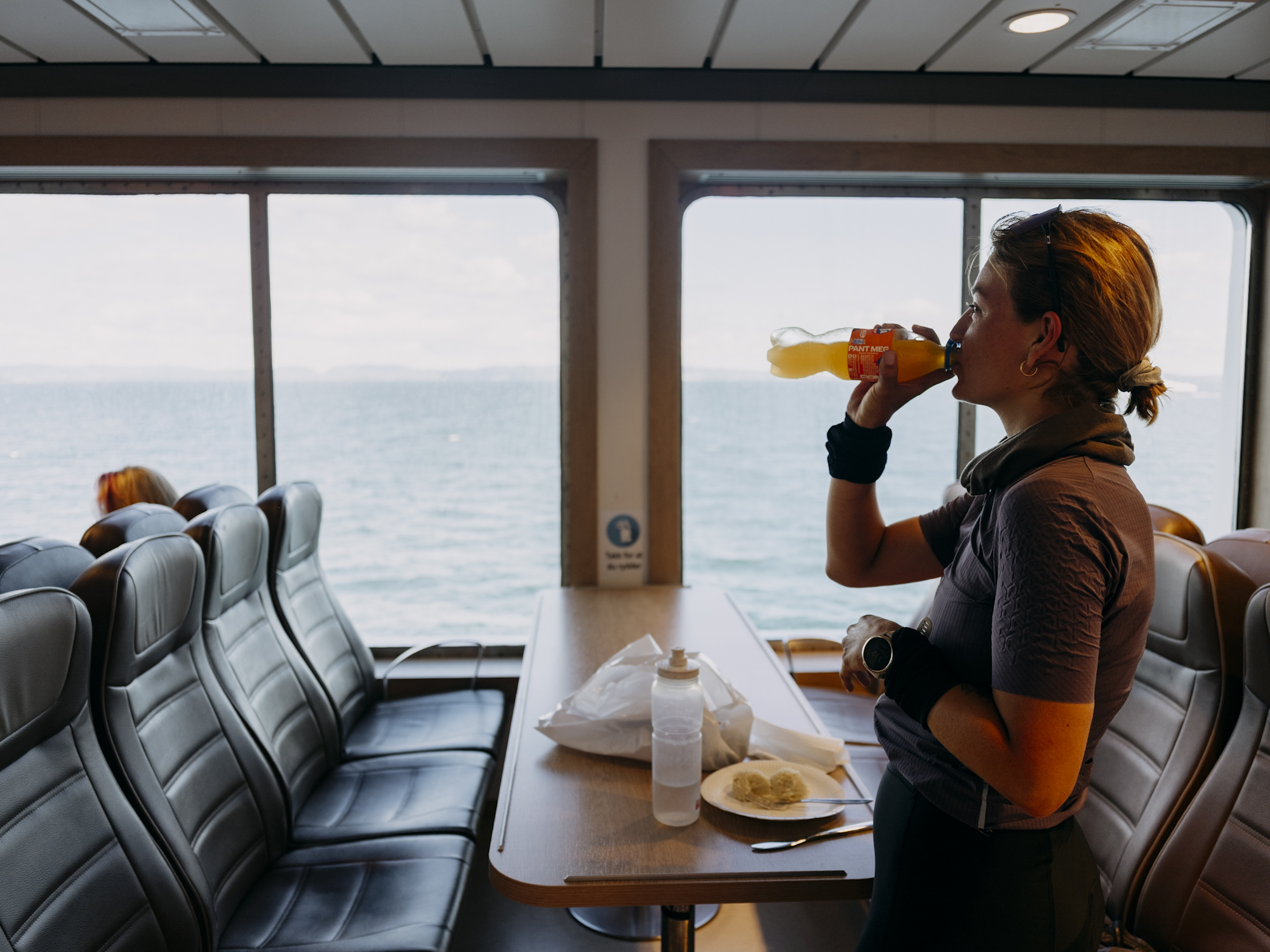
Despite a consistent stint within the FLINTA top ten, Larissa confessed that her racing instincts might need some honing. “I always feel bad when I pass people”, she admitted. If that’s the case, then her remorse today must have been off the charts. Overnight, she’d made great strides through the FLINTA field, halving her position on the leaderboard. Now riding in 5th position, if her streak continues, Larissa may have to become accustomed to the feeling of gaining ground.
Just ahead of Larissa, Anna Carlqvist (223) seemed in good cheer following her more avant-garde exploration of the Oslofjord ferry’s fare. Her appraisal? The best cheese sandwich since records began. Our ferries crossed paths as we headed for Horten and Anna made haste to Moss. With another voyage ahead and a string of strong riders behind, it was time for Anna to get to work.
Having missed Larissa’s crossing by a whisker, Hélène Fromenty (134) wasted no time disembarking from the next ferry. Up in Finse, a day earlier, Hélène had insisted that she was doing everything she could to avoid chasing positions, particularly so early on. “I’m not really here for racing,” she had said, “just for a good time and to perform for myself.” She did acknowledge, however, that it was difficult for the day’s events not to impact ambitions. “With Jana as the super-favourite, I thought maybe I could try for top five, top ten, but now it’s a bit different.”
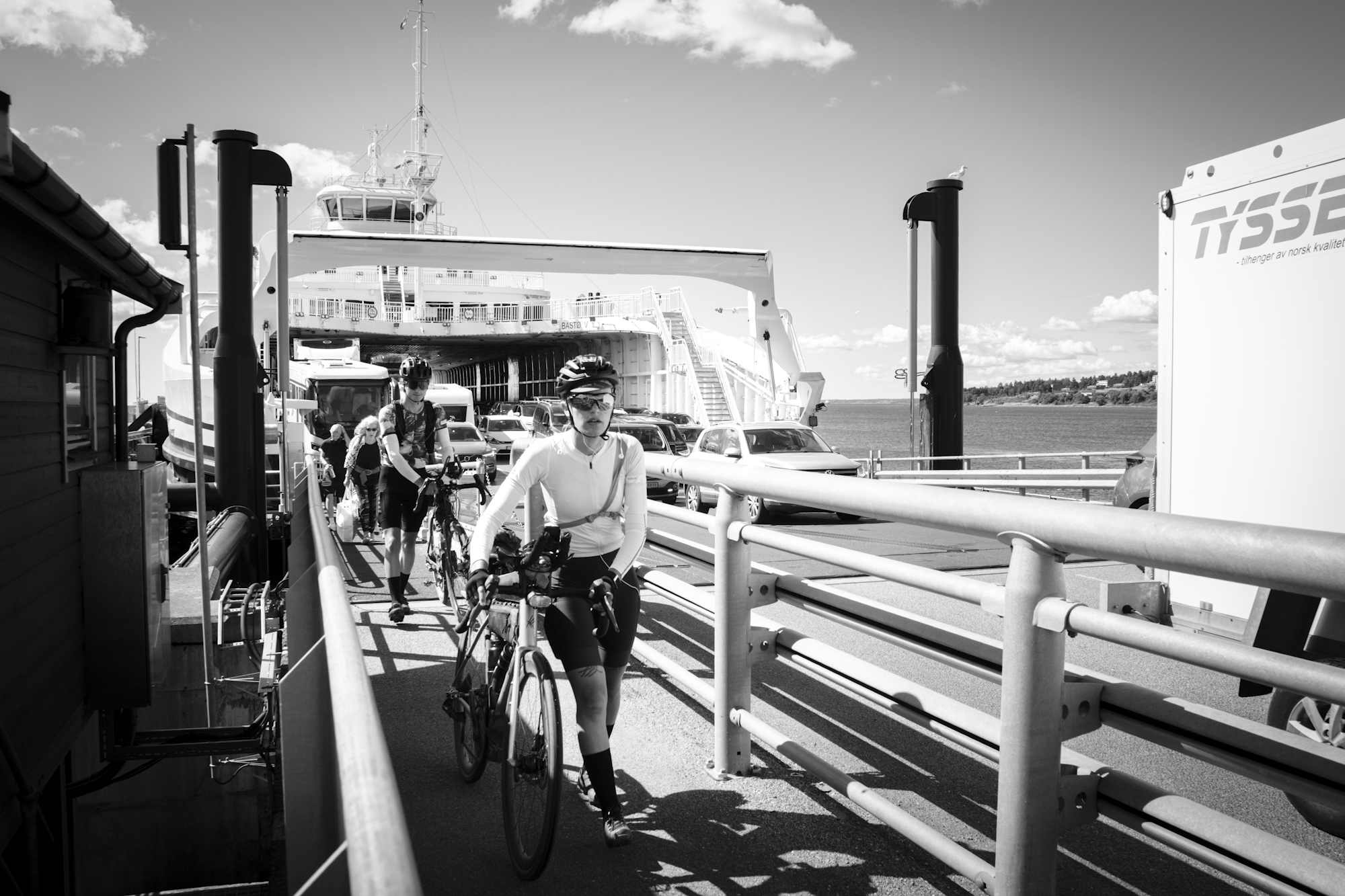
As Hélène whizzed past us on the quay at Moss, her efforts not to race were plainly growing less concerted. “Can’t stop!” she called out, “Ferry to catch!” We’ll have to wait and see if it’s simply departure boards dictating the tempo, or if the leaderboard, too, has begun to play its part.
Back on the Horse
There was clearly something in the air; the tang of diesel up on deck, the lap of brackish water below, whatever it was, the Oslofjord ferry was stirring the racing spirit in riders. Someone else who found their ambitions once more aroused in Moss was Martin Moritz (002). Having taken last year’s 2nd place by a comfortable margin, thanks to his sage navigation of the Adriatic, this year he was hoping to prove a worthy match for the Baltic. The Oslofjord certainly seemed a fitting undercard. And one with promising results. Arriving at 19:04-and-a-half for his 19:05CEST crossing, he wasted no time at the dock, riding straight onto the ferry to dismount as the stern lifted and the ship set sail.
Across the Oslofjord, with ferries running near-constantly between Horten and Moss – halting only for a brief hiatus between midnight and 5am, while sailors bed down for a TCR-esque night’s kip – a missed sailing is unlikely to cost more than 15 minutes. What riders of TCRNo11 would have given for such an amenable timetable. A missed departure at this stage needn’t prove too dire.
A Delicate Dance
Yet the same can’t be said for the next. The TCR’s principal ferry this year will take riders across the Baltic sea, to one of mainland Europe’s northern seaboards. Which one, of course, will be down to each rider. There are an abundance of options, 15 by my count, some more tempting than others. In addition, there are whisperings of other crossings – old ways, backdoors and trade routes – that permeate the established schedule. This is the point where the race goes from checkers to chess, from brute force to logistical ballet.
.jpg)
Sprawled in a car park in Malmö this morning, Robin Gemperle (001) shared the results of his 20 hour time trial over a commiseratory breakfast. “It’s twenty-one past ten,” he began, between mouthfuls of croissant, “last boarding was at ten.” Another bite. “It’s sad.”
Not, however, too sad. Forty minutes later and Robin was back in motion, safely aboard the next scheduled crossing – his lost time a mere drop in the briney water of his 12-hour Baltic advantage. After an eight-hour rest on the crossing, Robin docked in Poland, refreshed and ready to draw out his lead a little further. But only a little. Part of his plan has always been to use a chunk of the time he’d carved out to catch up on some overdue rest. The race has only just begun; a continent still stretches ahead. In the TCR, a sustainable strategy is the only strategy – as Robin well knows.
A Baltic Backlog
Laying chase to their escaping leader, the pursuing pack spent the night battling headwinds through Sweden, and the day battling Sweden in their head. Boring was the unanimous verdict. The fjords were a tough act to follow. In Sweden it’s about going the distance, not about the beautiful landscape,” summarised Christoph Strasser (005), “It’s a fast section of the route.” As a classic rouleur, however, I suspect this will suit the Austrian far better than the Norwegian mountains.
Omar Di Felice (195) – a seasoned racer who, despite crashes, injuries and tough personal circumstance, has made it to the start line this year – had a similarly dour perspective on the race’s second country. Navigating Götenberg, he concluded, was like building Ikea furniture. A complex and infuriating task, that leaves you with precious little more than a sour memory. The day hardly improved. “Another ferry, another country, and now it’s raining,” he lamented.
While a little further back, Omar was still aiming for an evening sailing, albeit a slightly later one.
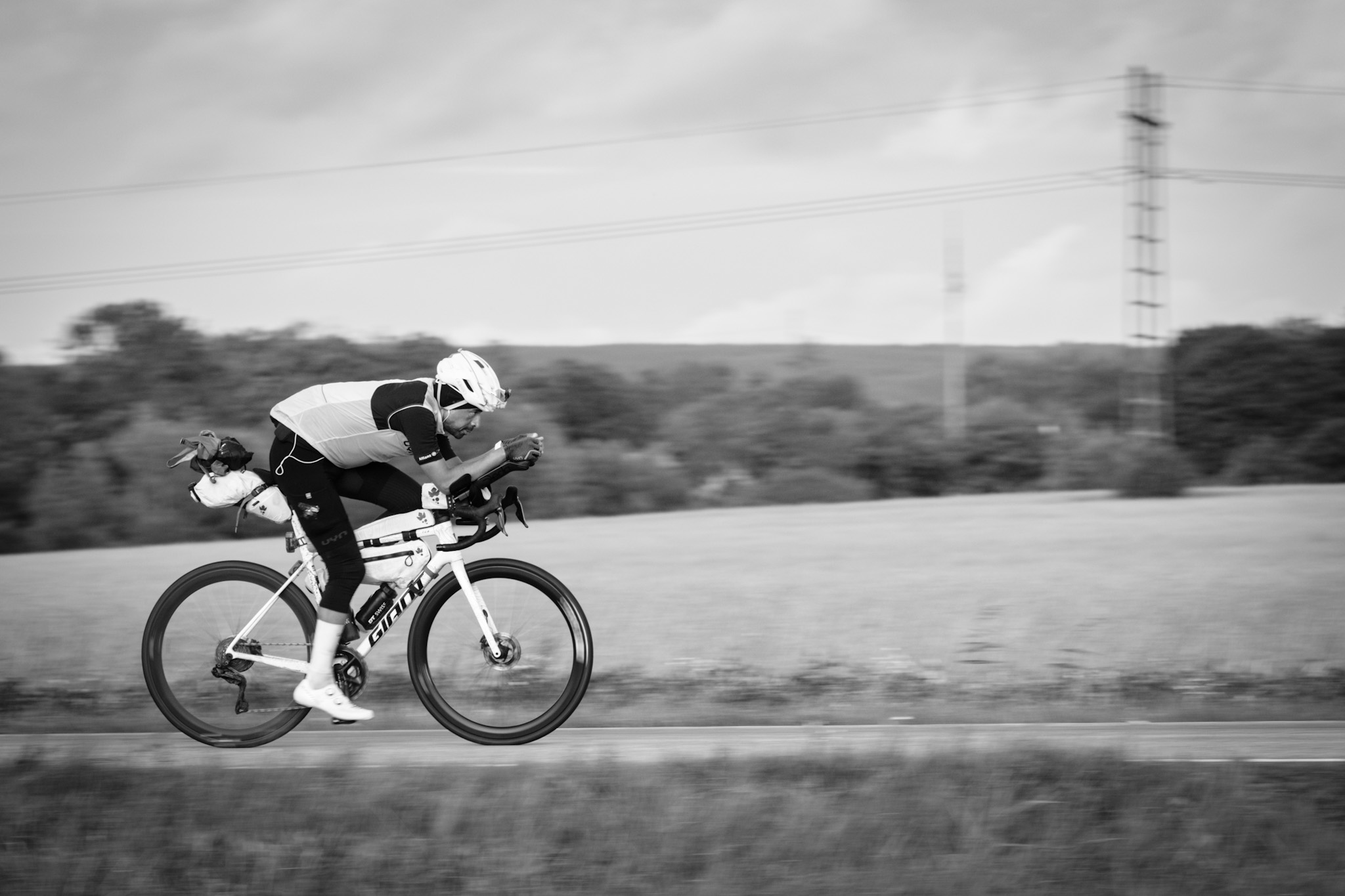
Despite seeking refuge behind his windscreen, Robert Müller (037) also suffered a drenching on his journey south. Having missed the chance to book onto the Trellebourg crossing favoured by the leading quartet, Robert was forced to adjust plans, and struck out, instead, east for Ystad. His race so far – laid bare in a statistical triplet: 1600 km, 16,500 m of elevation, and 3660 minutes in the saddle – had been a punishing opening act. With hotel slippers at the ready, Robert hung up his sodden kit in the cabin and tucked into bed for the night. The morning would see Aerobert unleashed on Polish soil.
Jocelyn Roth (114) had allowed the day’s eventual tailwind to push him gently towards the evening’s ferry, having spent the night battling the invisible adversary down the Swedish coast. Arriving first to Trellebourg’s terminal, he enjoyed a rare half hour to sit and relax while the other riders on his tail caught up. By 21:00CEST, Jocelyn, as well as Christoph, Max Agut (051) and Nicolas Chatelet (126) had all set sail.
The familiar damming of the coastline had begun. Riders will now pool, slowly, around the ports only to be sluiced from the shore with each sailing, washed out into the Baltic Sea.
The Eleventh Hour
Control Point 1 closed this morning at 11:00CEST. With 363 of our 392 riders securing their brevet stamps before cut off, the relatively early control seems to have done what it was intended to do: tempt riders through the cold northern nights with the promise of progress.
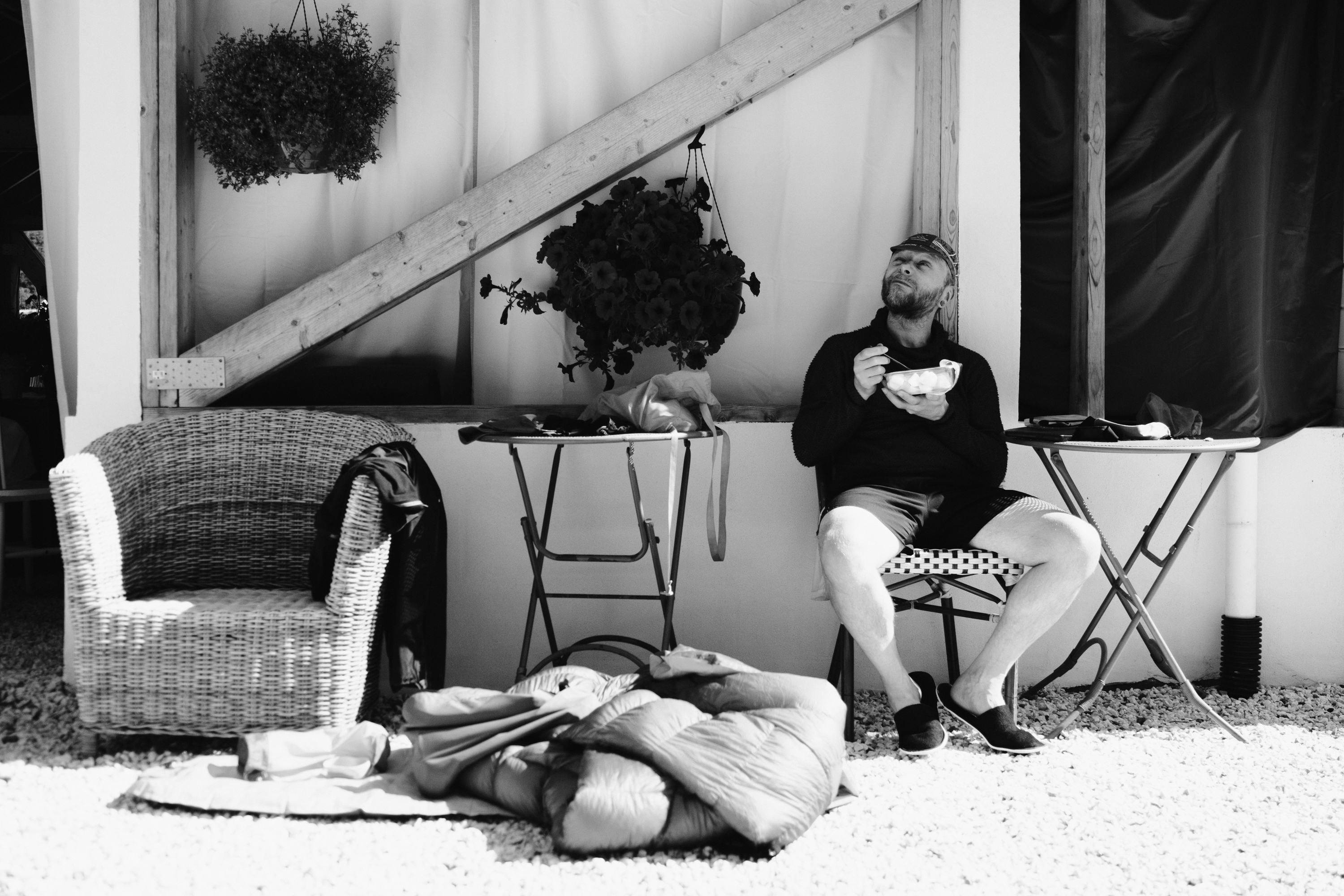
Compared to other editions – TCRNo10, for instance, whose first control in Slovenia lay ~1200 km from the Roubaix start line – Flåm’s control was a salient landmark for riders, anchoring them to the race as they settled into their rhythm. For most of our field, the TCR will be by far their longest race to date, and for a good number, just reaching the second control will be pushing them into uncharted territory. The first control was designed to offer a more tangible target at a distance that will feel marginally more accessible.
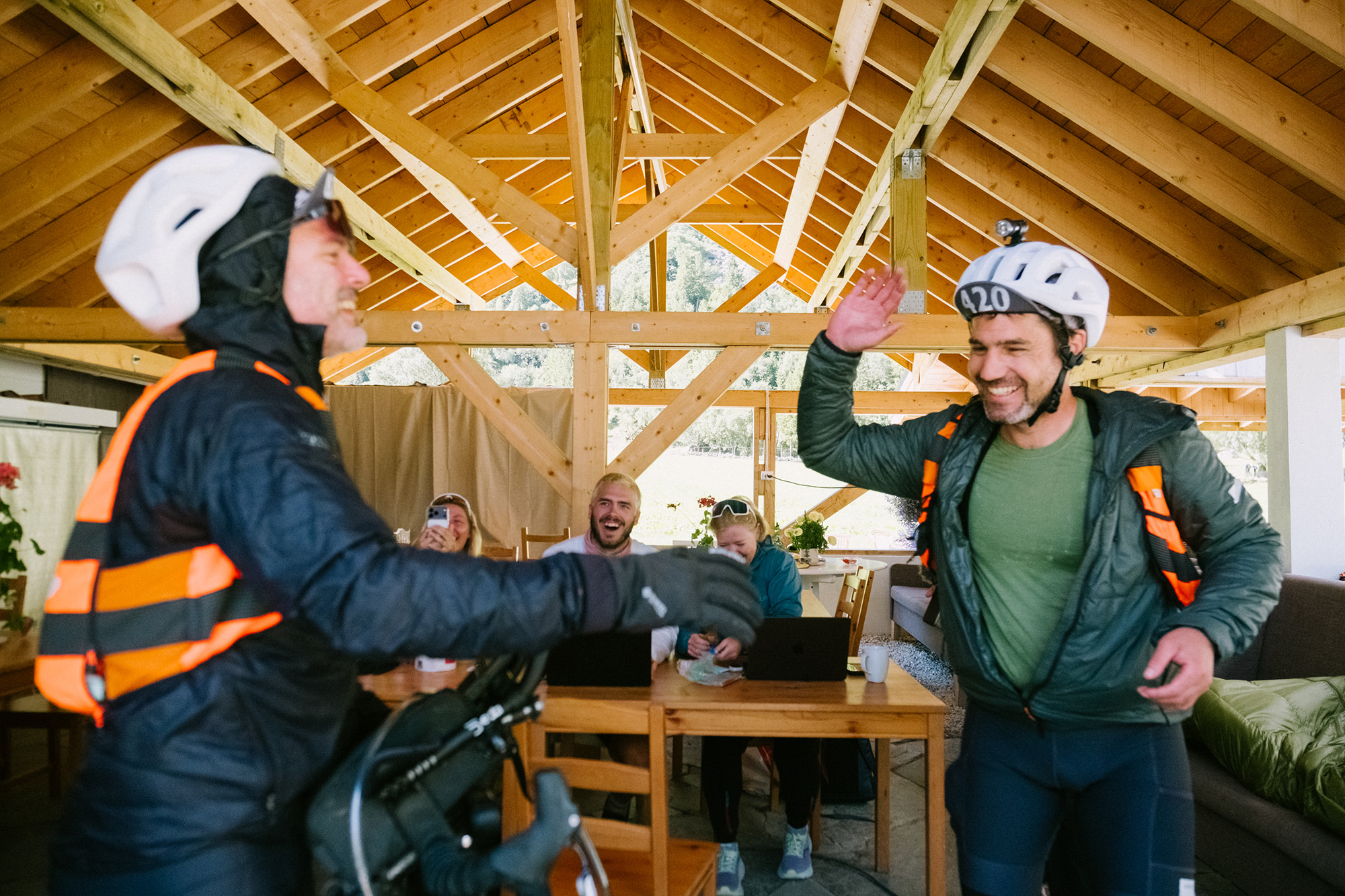
As the morning passed and the eleventh hour approached, volunteers at CP1 noticed two blue dots inching towards Flåm. Distances were mapped, average speeds considered – napkin calculations had it too close to call. It would be incredibly tight. At 10:59CEST, two bikes were spotted in the distance, barrelling down the gravel driveway towards the control, contrails of dust kicked up in their wake. The seconds ticked by. As the riders approached, hands delved into jersey pockets, snatching at brevet cards which were thrown down – alleycat style – onto the desk before the volunteers. The clock was consulted. 10:59:59. Björn Frey (420a) and Michael Hunziker (420b) were still racing within the General Classification.
Knee Pain No Gain
It seems the mountains of Norway left some with an unwanted souvenir. Throughout the field, tales of knee pain abounded.
The afternoon brought sad tidings from our roving reporters. Jon Endres (00b) had scratched. With his knee pain worsening, and the 100 km to the Horten ferry a herculean prospect, he gracefully bowed out, leaving Andrew Phillips (00a) to continue alone – hunting positions for sheer sport from his vantage point beyond the confines of the General Classification.
Similar news reached us late in the day from another pair racing outside of GC. Christian Holweck (014), now riding as a pair with Jana Kesenheimer (010), had been struggling with knee pain since the race’s opening bars. At first, it had seemed manageable. But now, with things quickly deteriorating, the pair were forced to take an extended rest at a hotel just south of the Swedish border. Only time will tell if their journey together in this race will meet a premature end.