Day 2 // The Big Questions
July 22, 2026
Words by Jake Thorpe
Photos by Sam Dugon and Tomás Montes
No Room at the Inn
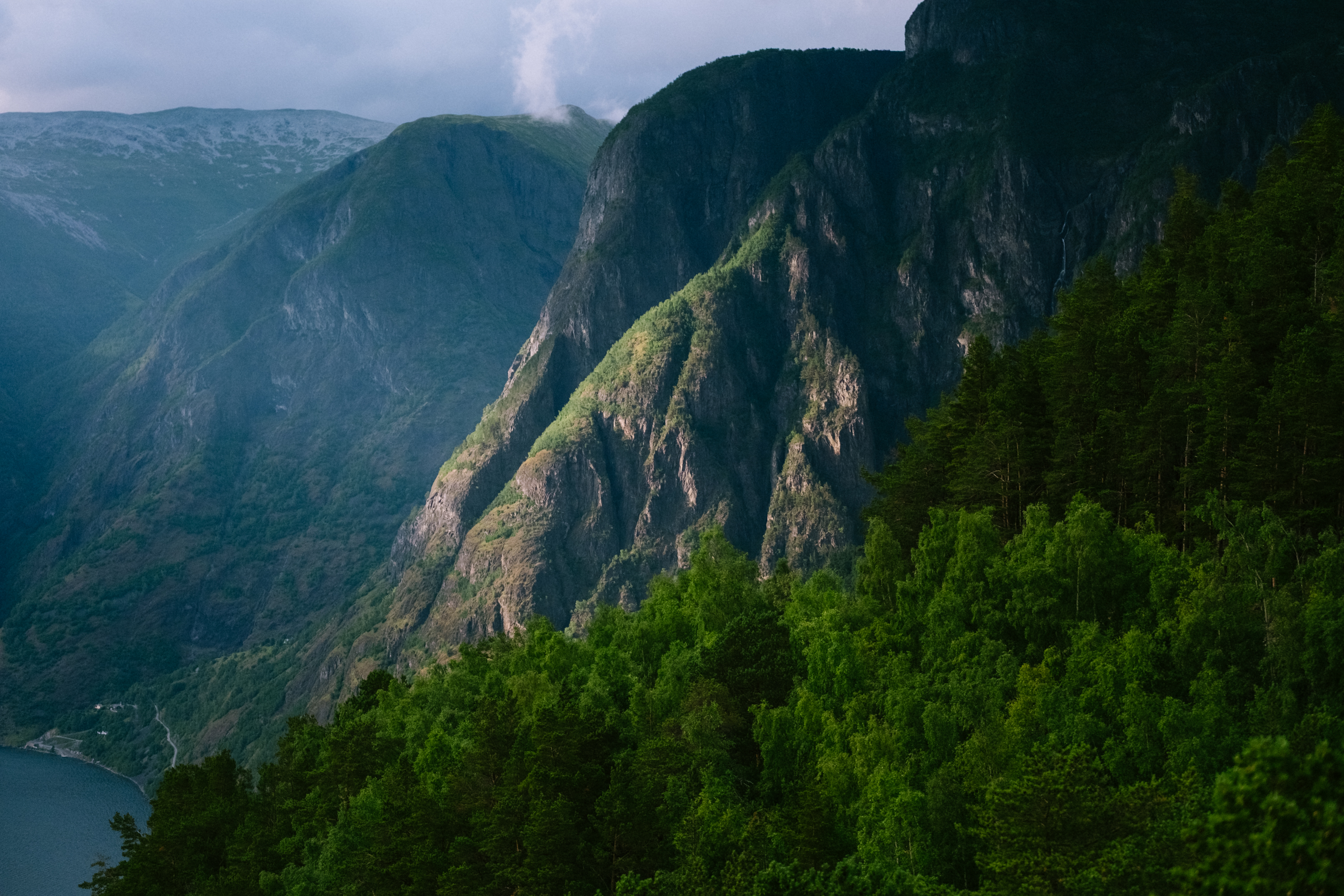
As our team approached Flåm, weaving beneath the blunt, forested spurs of the surrounding mountains, the sheer scale of the place revealed itself. A cruise ship, titanic in any other setting, seemed almost incidental beneath the immense walls of the fjord. Great sheets of gneiss swept from nearby summits straight down to the shoreline – an ancient amphitheatre now a hub of summer tourism.
This spelled trouble for riders. Rooms at the control point were fully booked till October, as was everything else within a sensible radius. Even our own race team were forced to cast a wide net in the search for accommodation, eventually bedding down nearly two hours from Flåm in a remote hut with no running water and limited electricity.
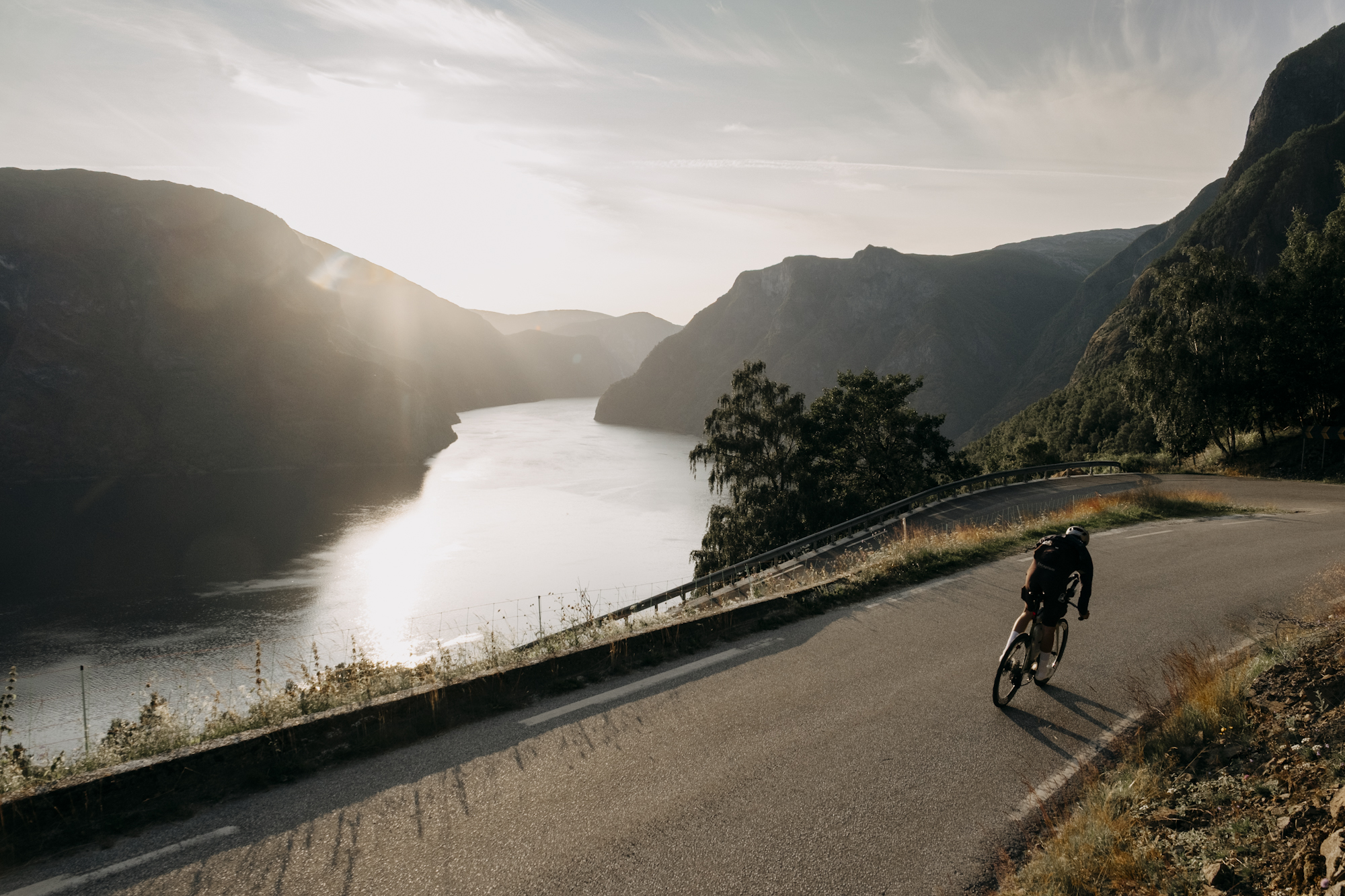
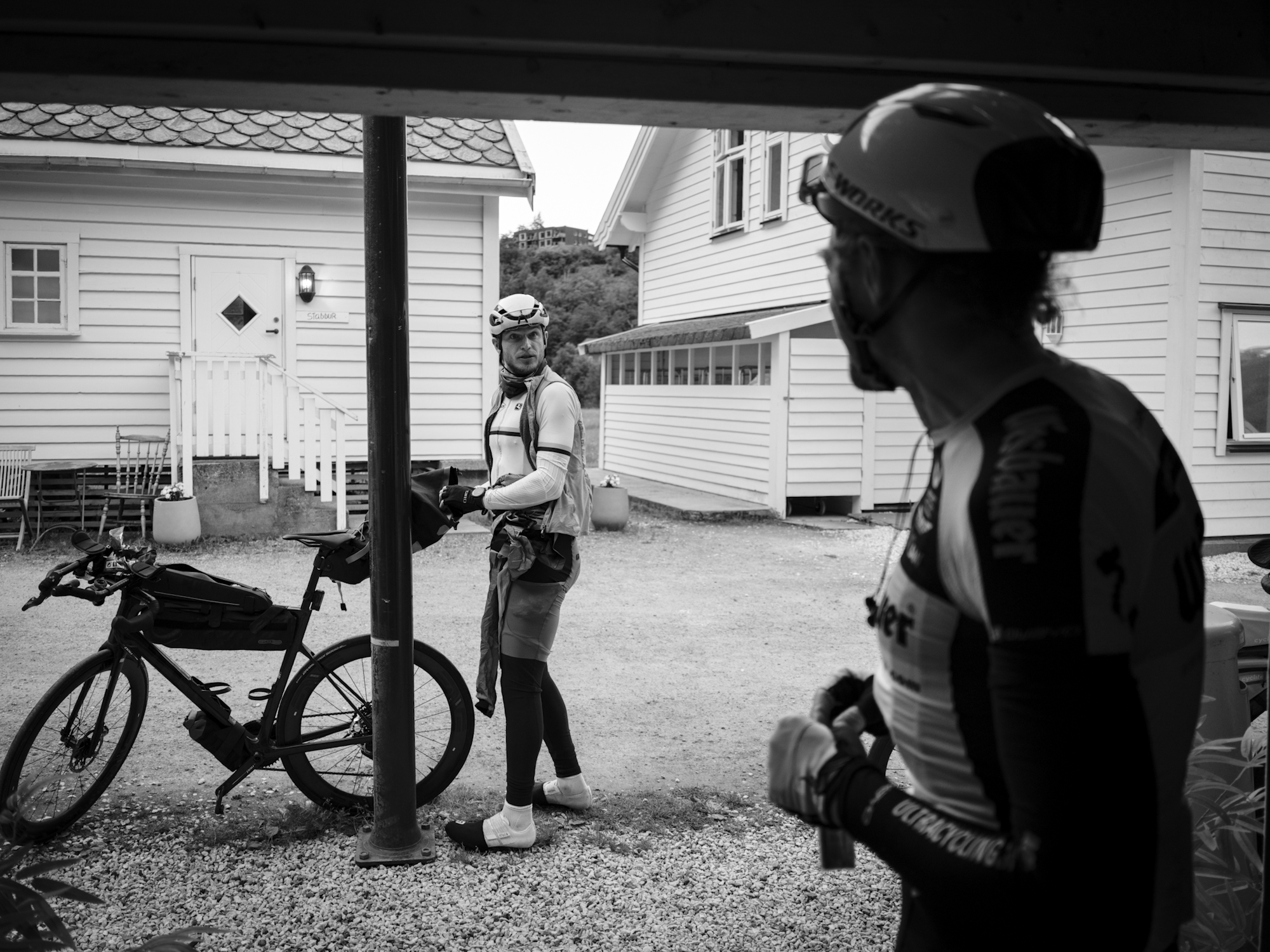
But not before we’d welcomed the leading pack as they took the race’s first brevet stamps. Having edged ahead of Robin Gemperle (001) to see him open up the first control, we waited to see who’d follow. Up on the pass, Race Director David Ayre and photographer Tomás Montes watched in astonishment as Max Agut (051) and Nicolas Chatelet (126) soared down the mountain's sweeping curves, less than 30 seconds apart.
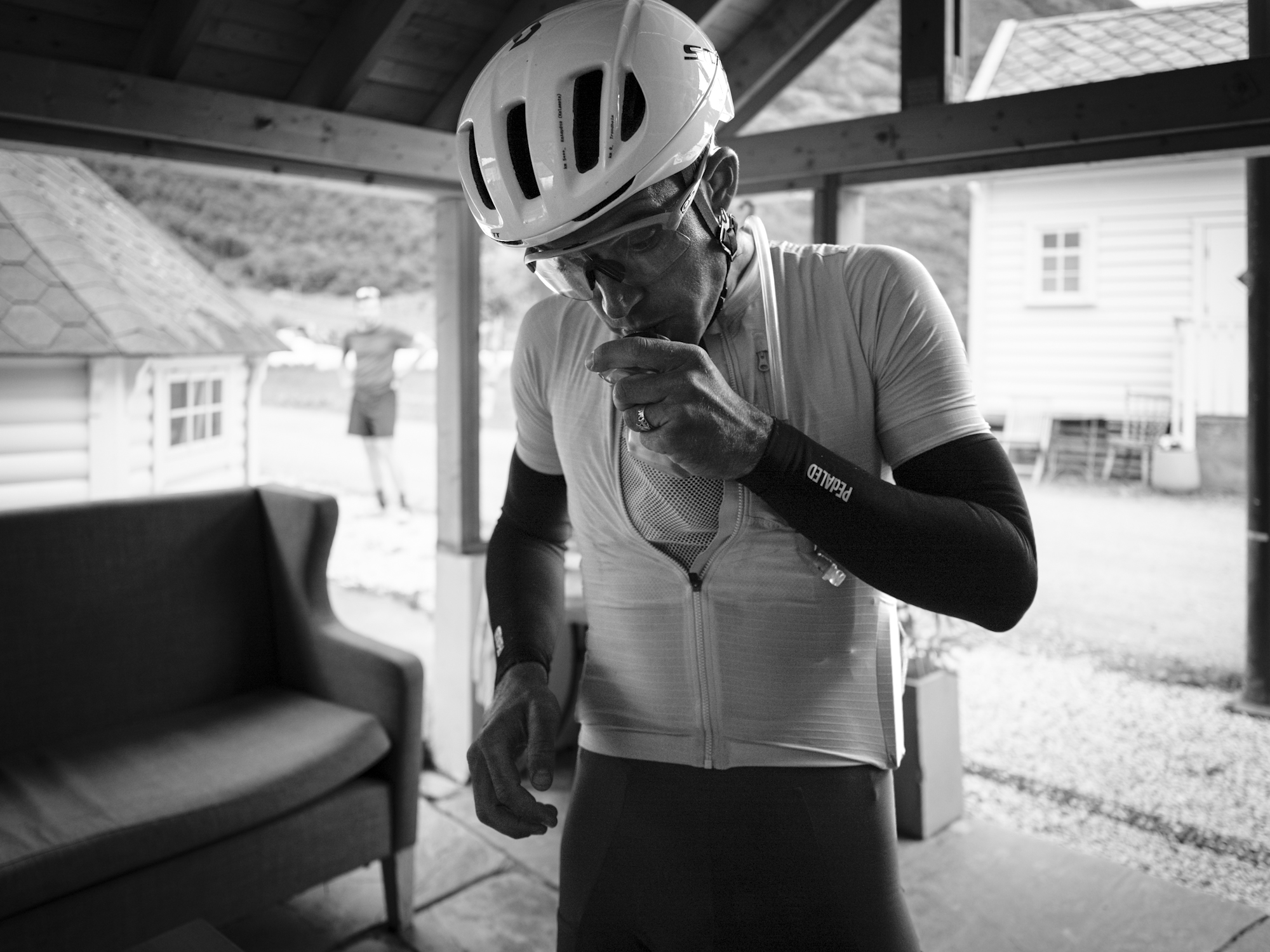
Max arrived first, claiming the CP’s second stamp. He was only able to offer a concise summary of the preceding hours – “Hard.” – before Nicolas rolled in. The Frenchman had clearly opted to renew his strategy of TCRNo11: a blistering start, little sleep, and as much time as possible spent in the saddle. Today, however, he had been forced briefly to forgo forward motion after his Garmin leapt from its mount on a bumpy descent. Following a 20 minute search for where it might have landed, he found it, down but not out, a cracked screen and an improvised new mount the only evidence of its brief escape. Nicolas was soon fast asleep, wrapped in his rescue blanket on a nearby sofa – a short nap before the coming night shift.

Jocelyn Roth (114) came next, followed closely by Christoph Strasser (005) – both imbued with a deep sense of gratitude for the landscape through which they were riding. Christoph seemed in particularly good spirits. Spotting Jocelyn, he joked, “I wanted to catch you for the whole climb, but when I saw the views, I forgot about you.” Speaking of his race and its emerging strategy, Christoph maintained his optimism. “Last year I was, I think, 25th or 30th to the first checkpoint,” he reflected, “but this year I’m really happy.” As a well-known metronome, the sprint starts – very much a feature of the modern TCR – are less Christoph’s territory. And yet, he was keeping pace. The crucial thing was, he acknowledged, that his start wasn’t coming at the expense of the rest of his race.
Resourceful Myopia
Pressing on in search of a mountain hut to bed down for the night, Christoph passed Robert Müller (037), retracing his steps in search of the first control. With his GPS battery flat, Robert had relied on instinct to carry him the last 5 km to the CP. In the case of Robert Müller, however, instinct is a curious thing. It was instinct that saw him cross a snow-covered Pyrenean pass in hotel slippers during TPRNo4, in a bid to save his cleats. It was instinct that drove him to empty a municipal wheelie bin to shelter from a storm during his winning ride there two years earlier. And it was instinct that carried him from that finish line to the start of the Two Volcano Sprint, bedding down on beaches along the way, only to eventually surrender victory by forgetting to disembark from the race’s final ferry – condemned, instead, to sail the crossing three times.

This year, instinct had also inspired some rather intriguing equipment choices. His heavily modified bike – codename: Aerobert – has been attracting attention far and wide. The eccentric ensemble, employing a prolific use of duct tape, includes a salad-bowl-esque forward fairing, a modified tail bag, and an improvised disc wheel. As he arrived with his peculiar contraption, 6th to CP1, volunteer Mia Madsen stood watching, aghast. “It looks like something you’d wear at the hair salon!” she exclaimed, eyeing Robert’s cockpit.
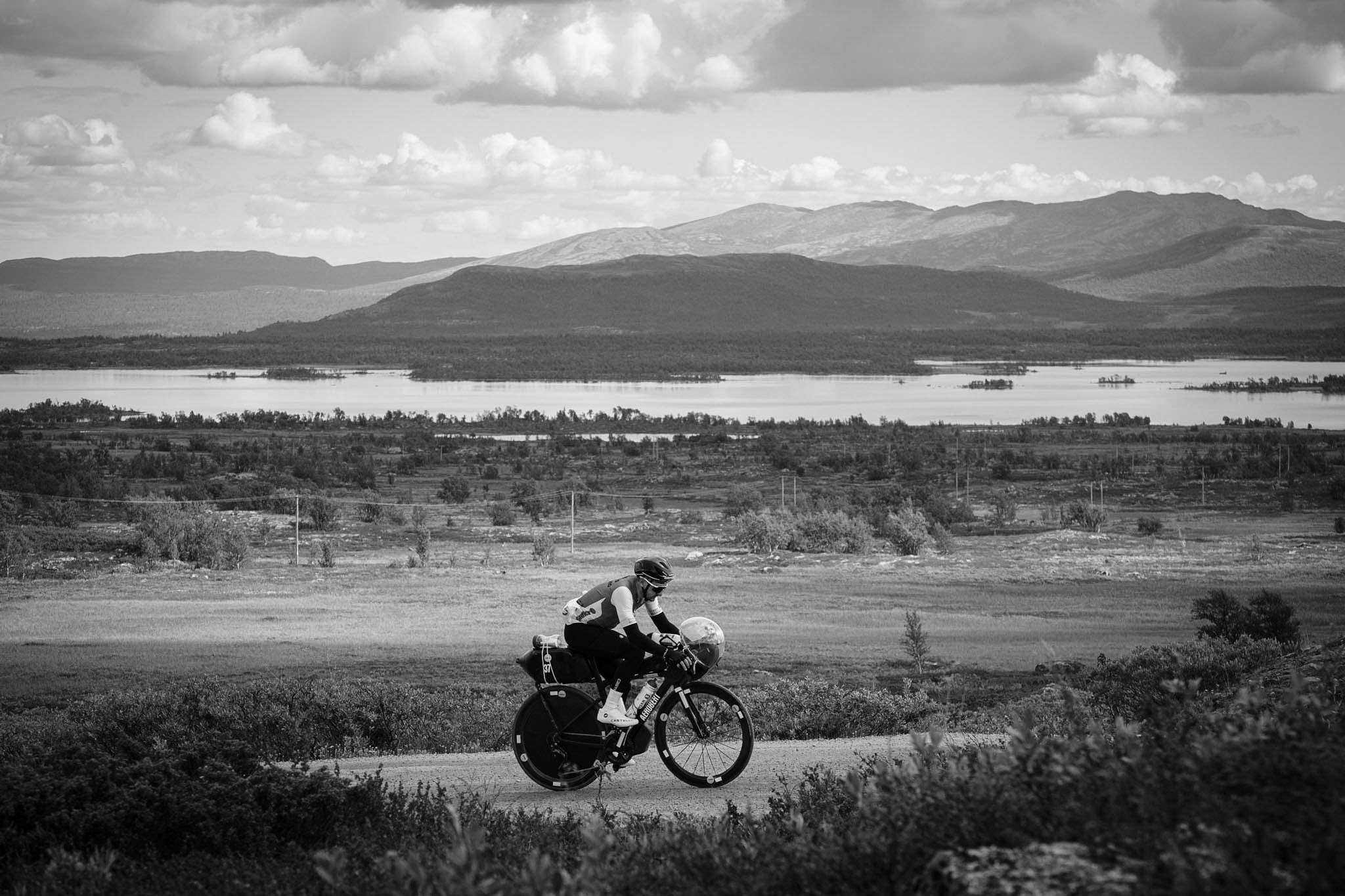
Robert, when we spoke, was a little down on his own designs. “It’s too heavy,” he complained. “I don’t know why, but it’s very very heavy.” I glanced at the fairing, the disc, the copious lashings of tape. The phrase ‘Elementary’ sprung to mind. On the subject of sleep, despite me drawing his attention to the cluster of bins behind the CP, Robert had a plan. On his journey to Trondheim, he had identified train stations, open late, as a potential racing refuge. At least they’d offer some respite from the cold. The night before, nearer the arctic circle, he had noticed a frost suffusing his salad bowl. As the only rider with a windscreen, I was surprised de-icer hadn’t made it onto his kit list.
The Big Questions
Martin Moritz (002) was next to arrive. “Not so good,” was his summary. Motivation, for Martin, was a waning resource. “Up there on the plateau it’s really beautiful,” he conceded, “but I was asking myself all the time ‘Why am I not just here with a campervan doing what everybody else is doing?’” Such questions, for Martin, stirred deeper inquiry. At times like these, the why of the race often tends to surface. “Maybe it’s just a tough moment,” he continued. “I won’t scratch yet.” For Martin, Mike Hall’s eternal advice – don’t make big decisions at night – seemed appropriate.
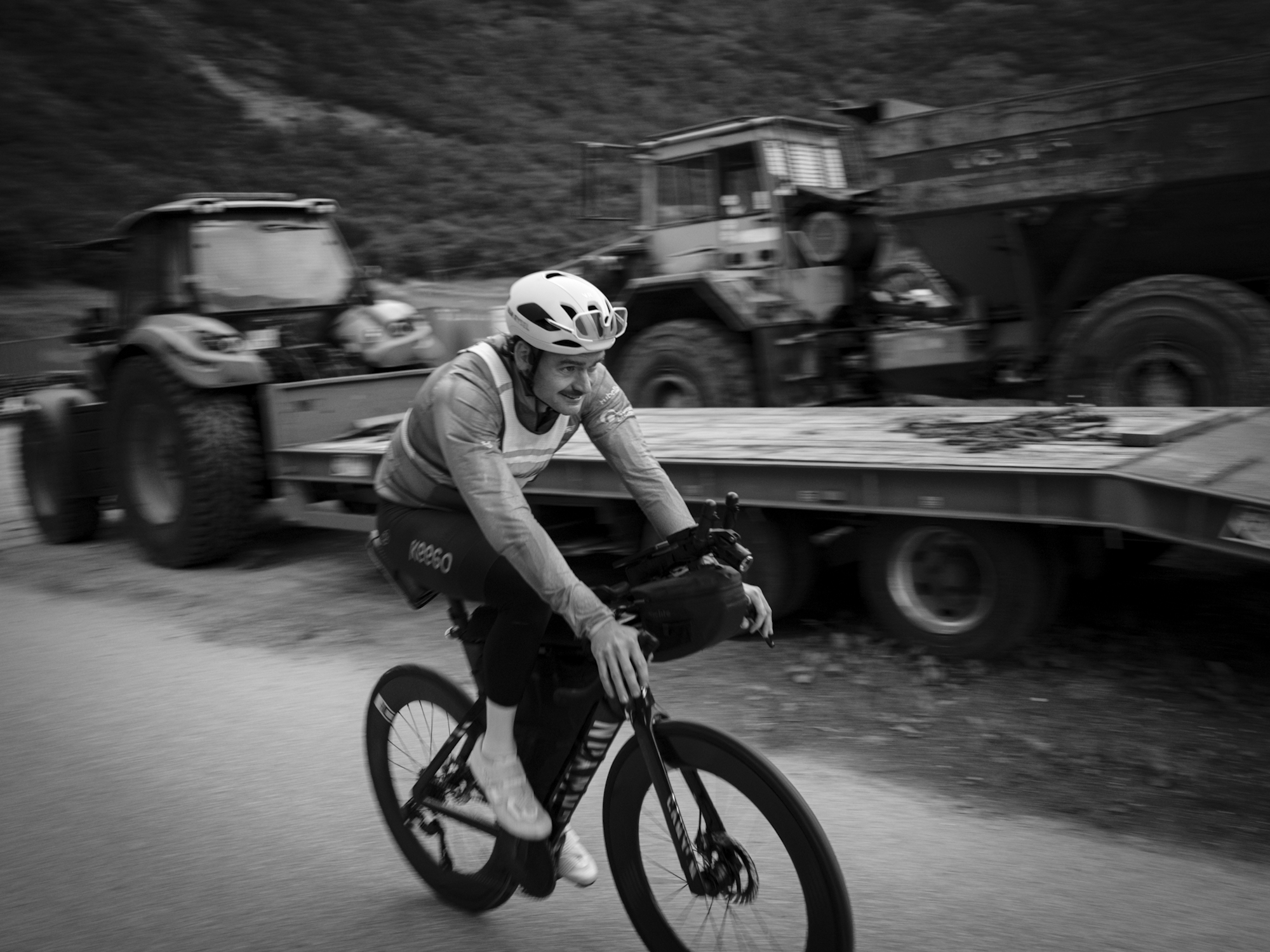
By morning, however, things appeared similarly downcast. Stopping by Finse station, a tiny mountain settlement on the edge of the Hardangervidda plateau, accessible only by rail or more pedestrian means, he admitted, “I’m not feeling it at all”. And yet, Martin’s trademark decency remained. “I absolutely want to go to Kalamata. With so many friends in the race, it would be arrogant to give up just because I’m not riding at the front.” Planning to ease off a little, and settle into a steadier rhythm, it seemed the second day would prove to be a fulcrum of Martin’s race, and, of course, his why.
A Tale of Two Cities
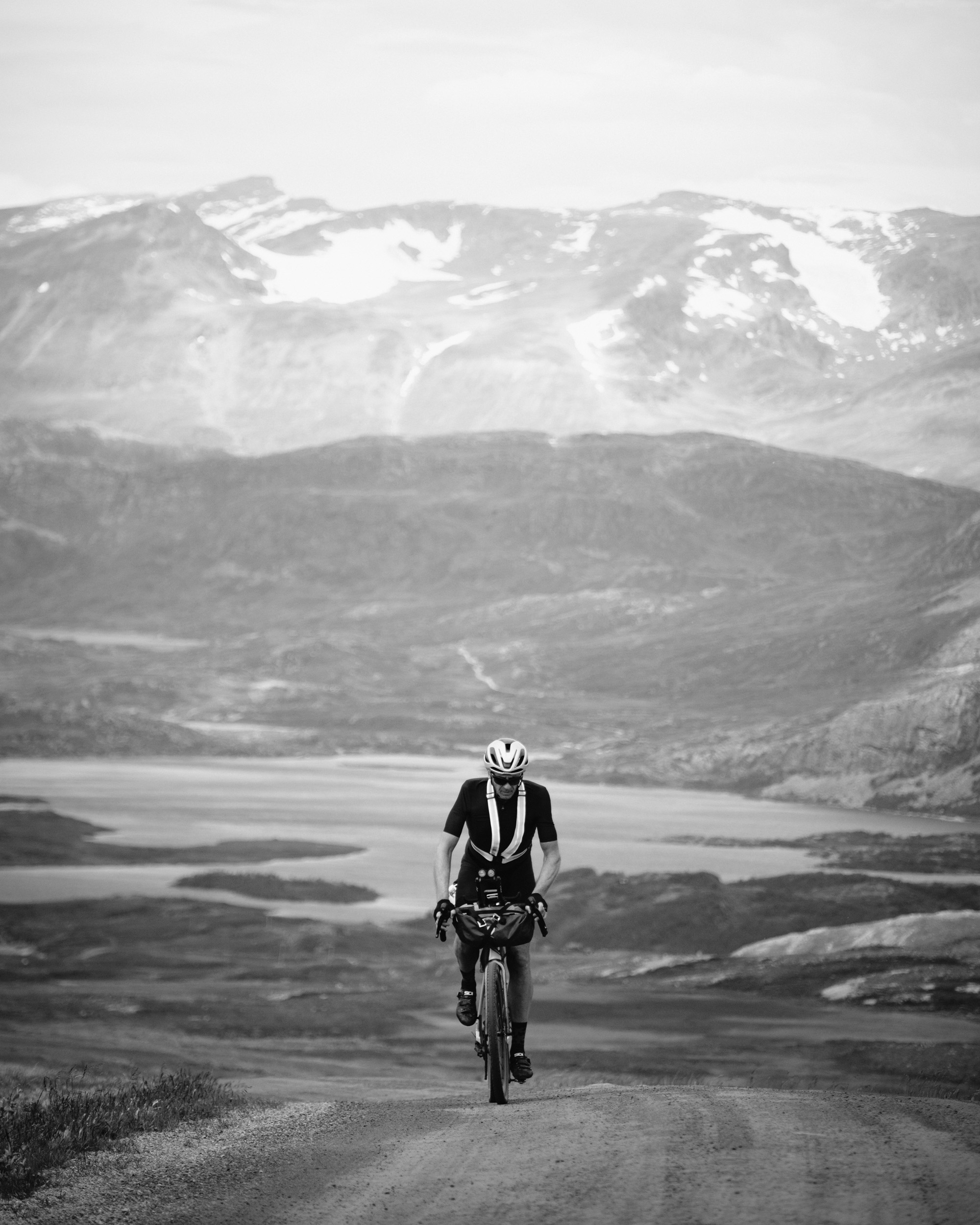
Great swings in motivation and mood are inevitable in any ultra, but perhaps never more so than on a stage as vast as the TCR. Spending the day on the treeless expanse of wind-scoured plateau through which the Rallarvegen – Parcours 1b – winds its lonely way, we witnessed this emotional pendulum swing first-hand. Beginning his latest stint of riding the evening before, after an aborted rest at a cacophonous family campsite, Riccardo Kuhar (247) had already forgotten the troubles of the night. “I’ve already said it about other parcours”, he said, reflecting on his experience of the last two editions, “but this one is the most beautiful ever.” Twice winner of Bosnia’s B-Hard race, it will be interesting to see how he fares as the race enters more familiar turf.
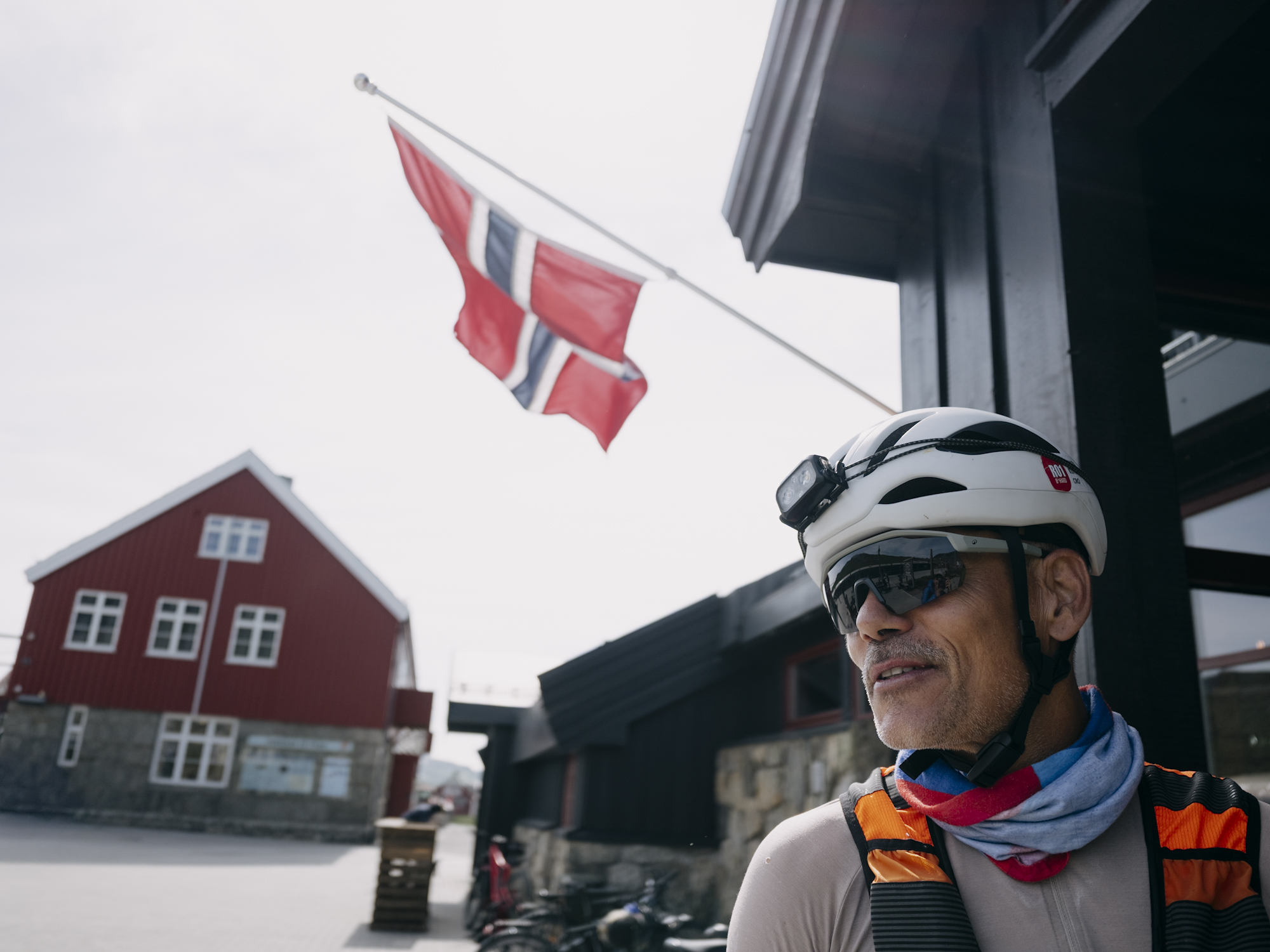
Arriving less than a minute later, Mike Fawcett (053) was a little less dewy-eyed. His synopsis of the parcours is best kept off the record – a perspective he attributes to some chronic Norwegian underfuelling. He was glad to be reminded of his own words at registration two days earlier: that the highest highs come in the wake of the lowest lows.
So Happy Together
This certainly appeared to be true for Jana Kesenheimer (010). It had been a turbulent 24 hours for the TCR’s twice-fastest woman and current leader of the FLINTA field. Knocked out of her famously unshakeable rhythm by the challenges of riding – and, crucially, trying not to ride – in proximity to her partner, Christian Holweck (014), Jana found herself forced to reflect on what she wanted from this race. After much deliberation, and a conversation at the control point in Flåm, the pair decided to withdraw from the General Classification and instead ride on together to Kalamata.
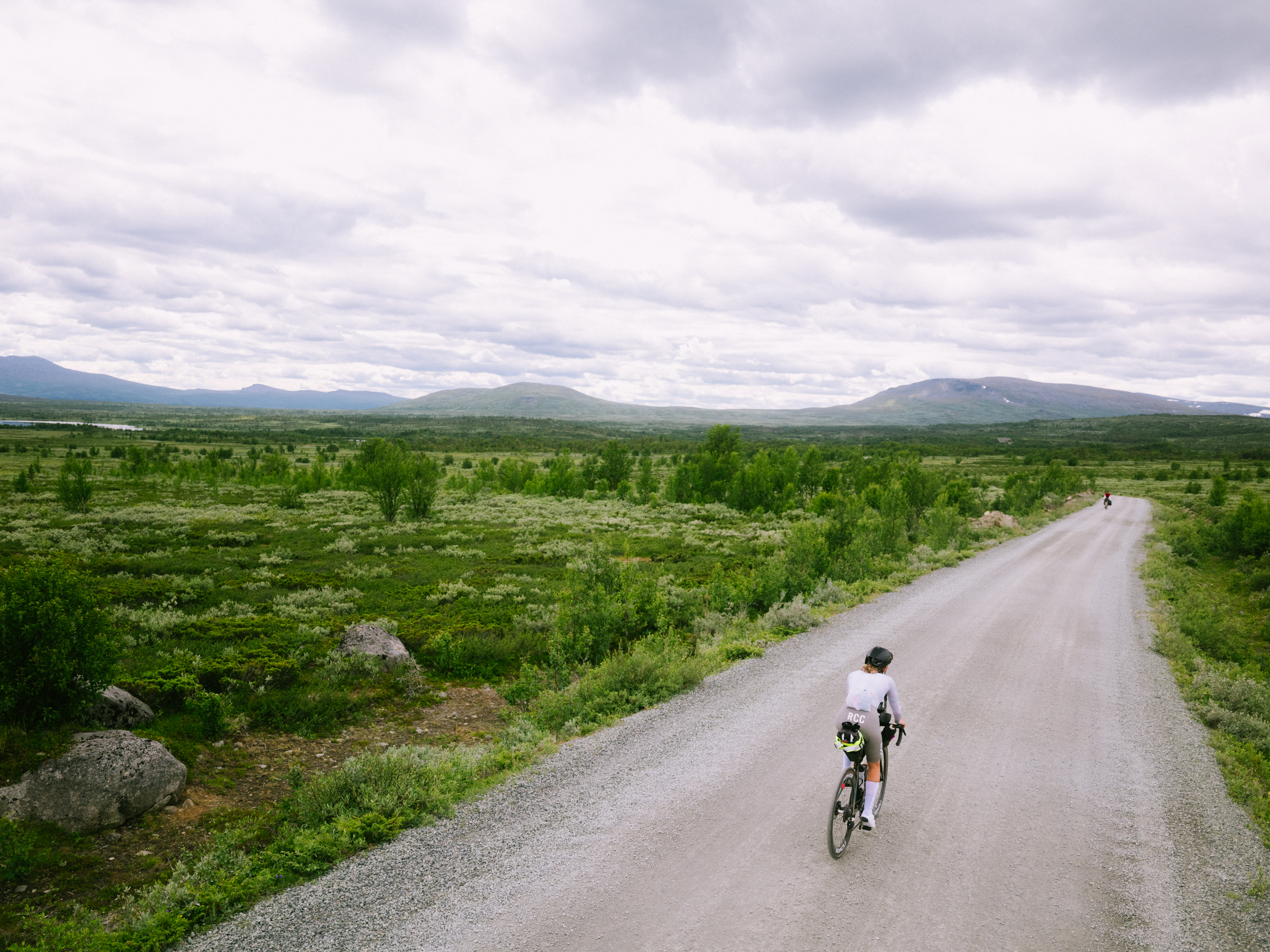
Jana explained that the pivotal moment had come the previous night. She had booked a hotel, only for the tracker to reveal that Christian appeared to be sleeping just outside, bivvying in a nearby campsite. "At that point, I thought, 'OK, this is just weird.'" For Jana, the decision was made. Now all that remained was to find out whether Christian felt the same.
This is Christian's first TCR, and he had arrived with a plan of his own. He had hoped to be quick off the blocks, build a gap to Jana, and then settle into his own race. But halfway through the opening day, a hint of knee pain began to creep in, forcing him to ease his pace. "It was very naïve," he laughed. Trying to get ahead of Jana Kesenheimer in a Transcontinental race is surely an exercise in futility. Luckily for Christian, he no longer has to.
The only decision left to make was whose route they would follow. Christian was quick to defer to Jana's better judgement. That way, if anything went wrong, he joked, he could absolve himself of all responsibility. Yet whichever route they choose, one thing seems certain: they won't hang about. The pair still intend to ride a rigorous schedule of 18-hour days, motivated by nothing more than the simple pleasure of making swift progress. Who knows? Perhaps we're witnessing the genesis of ultra-cycling's next great pairs partnership.
.jpg)
By the time we caught up with them in Finse, after the race’s early turmoil, for Jana and Christian, the emotional pendulum had begun to swing back the other way. Settled in their decision and excited for the adventure ahead, they rolled on side by side, ready to discover what the rest of the continent holds in store.
Shoulder to Shoulder
Jana and Christian’s decision, of course, has wider implications. With her commanding lead in the FLINTA field now nullified, the category has been blown wide open. By mid-morning, after 680 km on the road, the seven leading FLINTA riders remained separated by little more than 2 km.
Camille Albisser (290), pleased to be leading the group along the Rallarvegen, was nevertheless measured in her appraisal of the race so far. “I’m not going crazy about it,” she explained. “There’s still a very long way to ride.” Checking the tracker sparingly, Camille admitted it was interesting to watch the FLINTA race unfold – although she seemed more invested in following the progress of her friends than monitoring her own position, several of whom were pushing towards the sharp end of their own categories. Her plan was simple: press on and find a bed for the night. After a pummelling at the hands of the day’s gravel, she was relieved to be returning to smoother ground.
.jpg)
Next to leave the parcours was Lea Hamberger (404), swiftly followed by Sarah Bosslet (120). Neither showed much intention of easing the pace. Perhaps, at this stage, they were feeling less philosophical about positions than Camille. As someone whose mood rises in parallel with the road, Lea had been revelling in the highlands of southern Norway. As the road flattens through Sweden, it will be interesting to see how her pacing adapts.
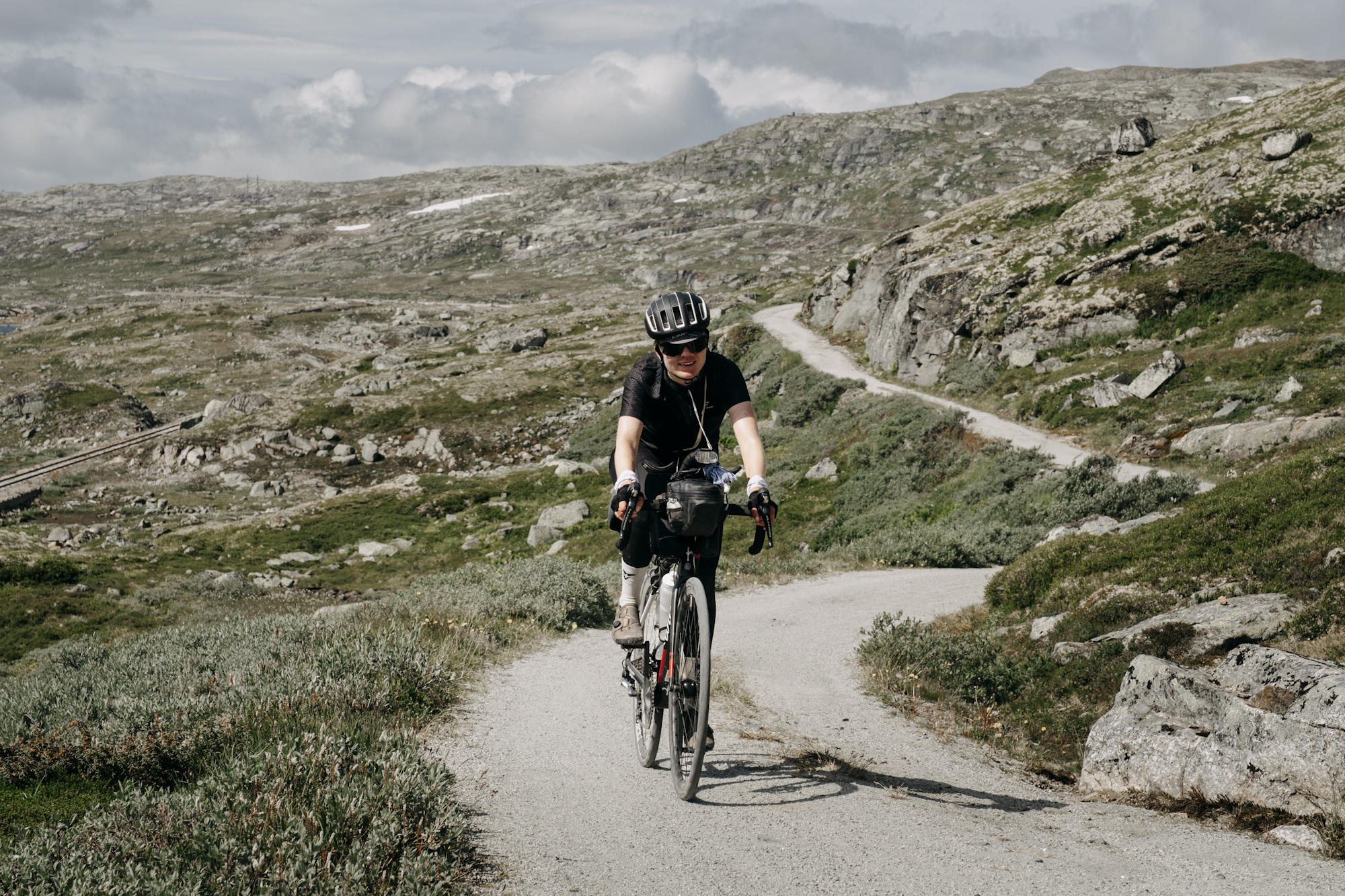
Then came Hannah Hiecke (314), blissfully unaware that the FLINTA race had just tightened considerably – and that her own position within it had quietly strengthened. In fact, Hannah appeared to be under the strange impression that she currently sat somewhere around 200th in the General Classification, rather than the 45th position she had earned at Flåm’s control. Yet Hannah remained nothing but delighted, her hopes of being in the front half of the race, in her mind, fulfilled. Her next glimpse of the tracker may make for a very pleasant surprise.
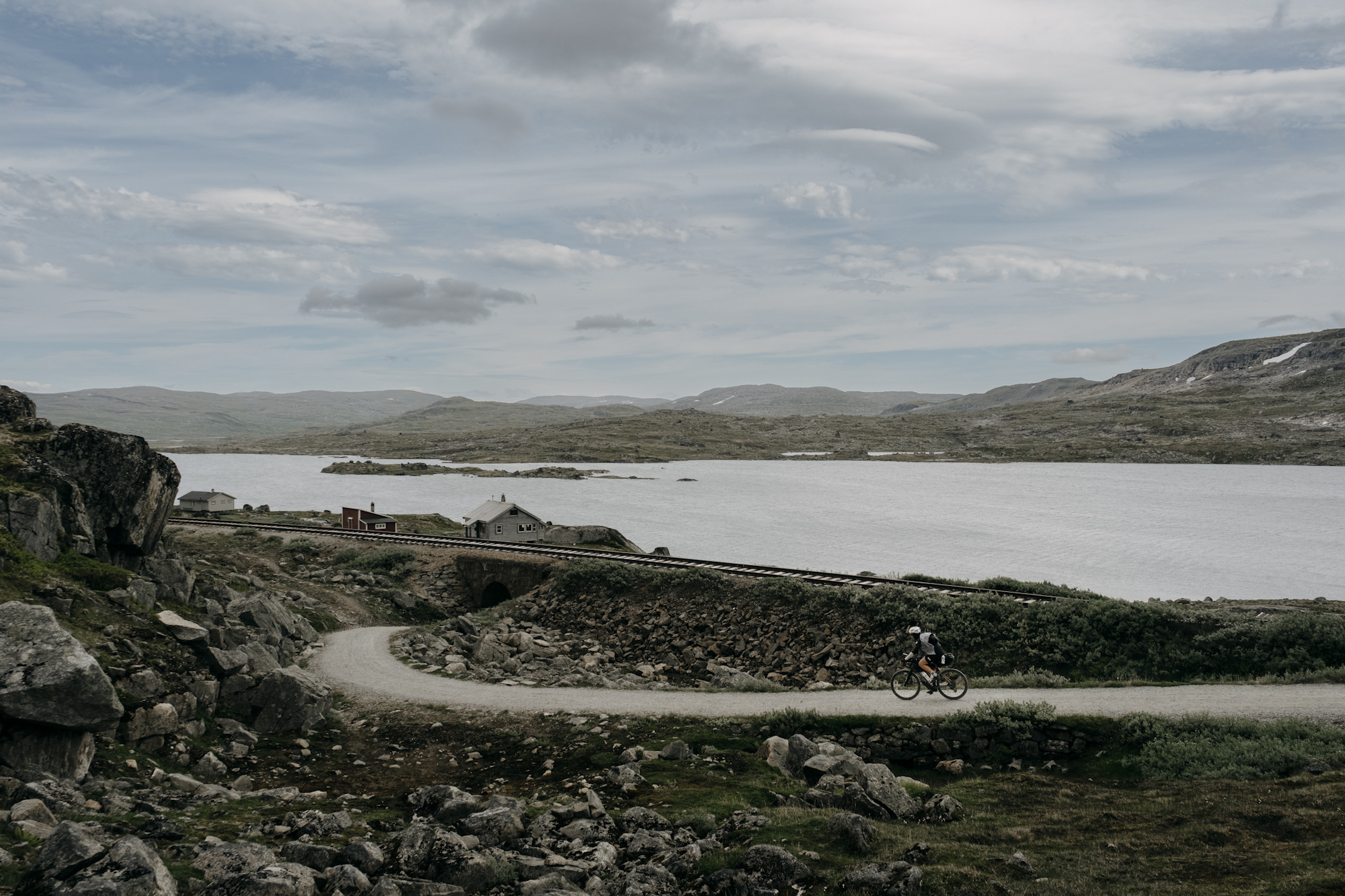
Throughout the remainder of the day, all ten leading FLINTA riders passed through the first parcours. Some, like Hélène Fromenty (134), were determined not to race, not to track, and not to disrupt their own rhythm. Others, like Anna Carlqvist (223), while enjoying the field’s leapfrogging, felt eagerness tempered by the 4,000 km of riding still to come. Nicole van Batenburg (029), however, never one to hide her racing ambitions, appeared energised by the prospect of a more tightly packed field. As she prepared her supplies for the night, a renewed determination seemed to settle over the Dutch rider. Time will tell how our mercurial pack will arrange itself over the coming days.
.jpg)
Kalamata Awaits
Within the general classification, Wojciech Wronka (095) was the 10th rider to CP1. As one of our bursary riders this year, Wojtek is fast demonstrating just why the scheme exists. This was no early overexuberance. Wojtek is an experienced racer, and one who knows the pace he can sustain. By evening, he had crossed the Oslofjord and was fast approaching the Swedish border, holding ground in the leading dozen riders. We’re excited to see what the Polish powerhouse has in store for us as the race progresses.
As Wojtek charged down the skerry coast of Hvaler, Jack Wright (052) was bringing their second day in the saddle to a close, bedding down at the end of Parcours 1b in Finse. Having battled through a rough stretch of routing that forced a lengthy dismount on the approach to the first section of split parcours, Jack marked their return to rideable terrain in style – with the mother of all breakfasts, spread across two plates.
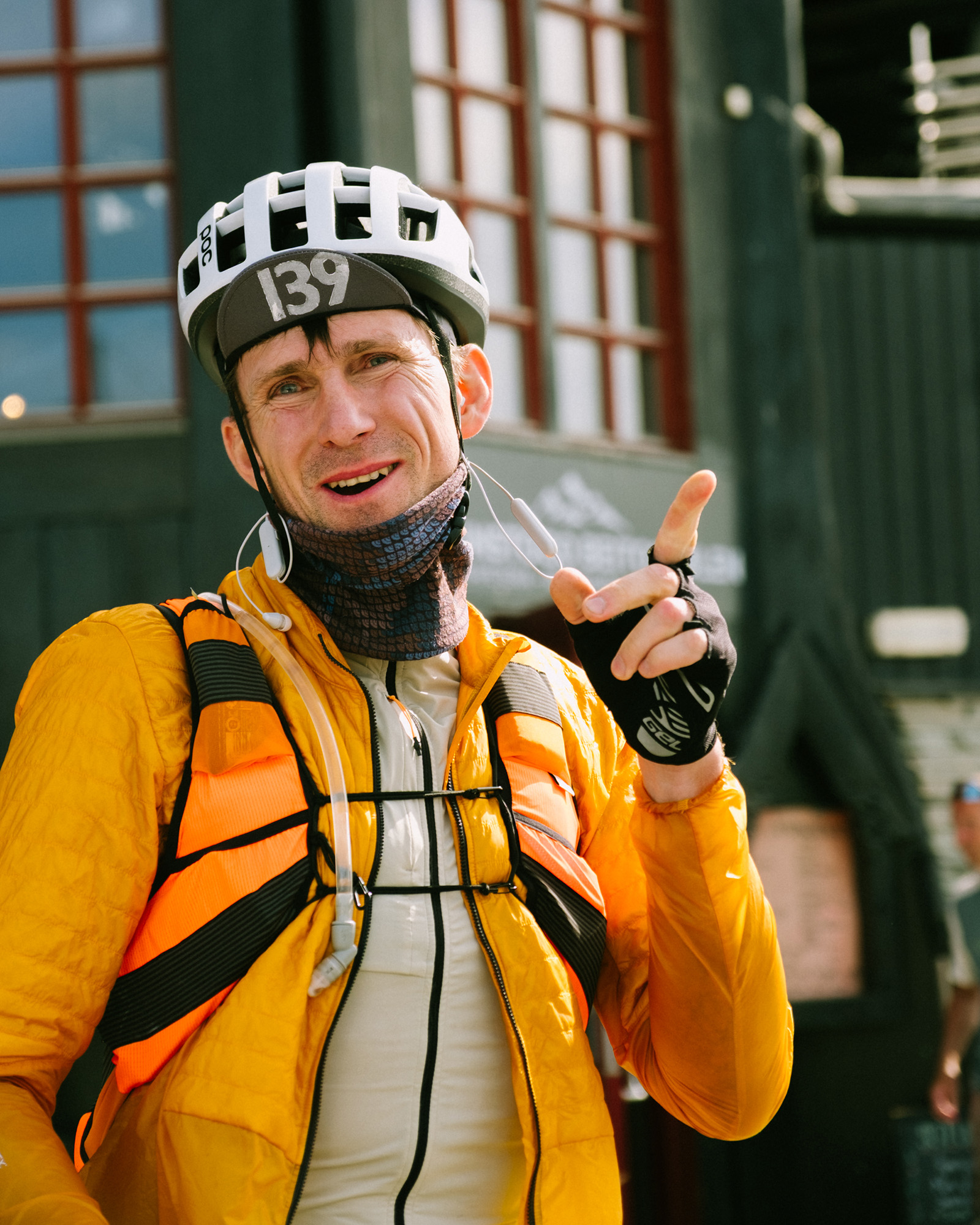
Maksym Matvieiev (139) was spotted by Control Car 2 in good spirits on the Myølkevegen, despite a cold first night. To economise, he's bivvying as much as possible – a prospect that should only grow more pleasant as the race heads south. As night fell, Maksym was closing in on the first control, hoping to bag his race's first stamp before bedtime.
Małgorzata Gryszczuk (415a), along with her pair Kinga Perzyńska (415b), had similar ambitions, as did fellow bursary recipient Luca Bessems (214). “My partner had a huge crisis so we’re riding at her pace,” Małgosia updated us, “but Kalamata is waiting.” With all five bursary riders now 600 km closer to that finish line, we’ll be following the progress of our bursary riders with interest.
My Big Beautiful Race
Today, why seems to have been a particularly persistent question. The realities of the road have begun to assert themselves; harsh northern conditions have materialised; and the pace of the race has refused to relent.
Tasked with exploring that very question, our roving reporters Andrew Phillips (00a) and Jon Endres (00b) have spent Norway’s longer climbs interrogating their own motivations. Andrew’s latest revelation? That beneath the race organiser lurks a hunter. As it turns out, what he describes as “the primal instinct” – that inner switch flicked when the chase begins – is one of Andrew’s own answers. Jon seemed less convinced. All he feels as his partner’s primal urges take hold is the sudden inconvenience of a surge of power disrupting their harmonious cadence. With prey spotted on the horizon, Andrew gives chase.
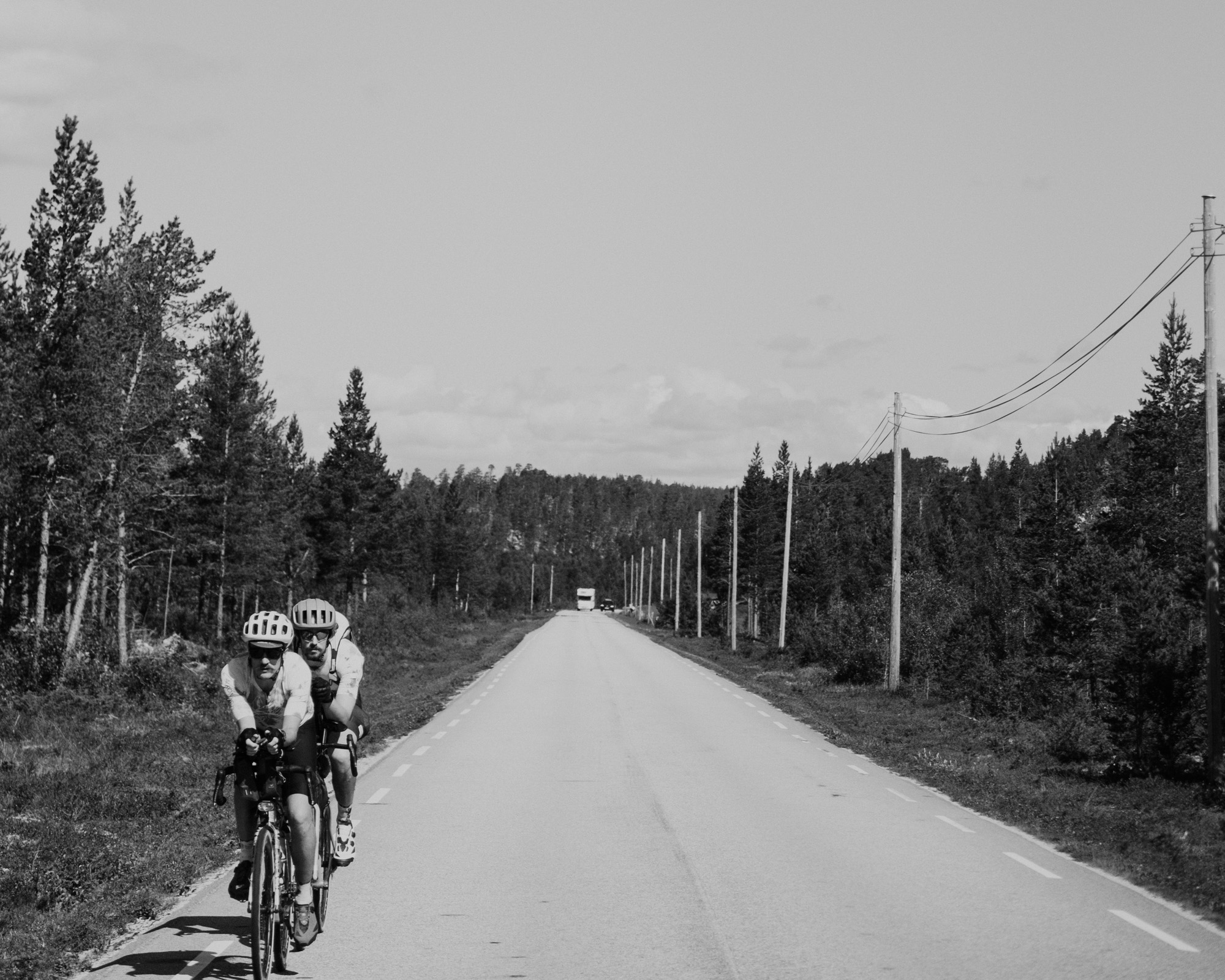
As for Jon’s own why, “Beautiful race, big race, long race; not for me,” was his verdict six years ago when asked by his now racing partner. He’s beginning to wonder if he was right all along. Yet, for now, that question has been obscured by more immediate concerns. An unexpected bout of knee pain – more than a mere niggle – has conspired to dampen his spirits. At the moment, as Andrew sagely observed, it seems that, for Jon, it is “more of a problem of how than a problem of why.”
By evening, however, with expectations recalibrated and plans adjusted, the pair were once again making steady progress, drinking in Rallarvegen’s final vistas as the last light drained from the Hardangervidda.
All in a Day (or Two)’s Work
But what of Robin Gemperle (001)? During the first 48 hours of the race, Robin has beaten the tempo. First to Flåm’s control, first to the Oslofjord, and, barring any misfortune, first to the Baltic Sea, our Swiss whippet shows no sign of easing off. But what happens when he is no longer the one in the driving seat? When the rhythm of his race must bend to the unyielding departure boards of the Swedish ferries? We won’t have to wait long to find out. For now, staying on schedule demands only one small favour: a 30 km/h average speed for the next 20 hours.