Day 16 // Separate, But Connected
August 5, 2026
.JPG)
Words by Jake Thorpe
Photos by Matt Grayson, Michael Drummond, Sam Dugon, Tomás Montes and Weronika Szalas
One of Ours?
In the bathroom of the ferry from Patras to Bari – the first leg of my return to the UK – a man washes his feet in the sink, working soap carefully between each toe. It reminds me of another running joke we shared in Control Car 1 as we journeyed south through Europe. Every time we spotted a cyclist, whether a pimpled youth on a paper round or a dignified dame riding upright behind Dutch handlebars, one of us was bound to ask the question: “Is that one of ours?” And so I wondered, as I watched the lathering of soap on skin in sink – surely the preserve of the TCR cyclist – Is that one of ours? But no, not this time.
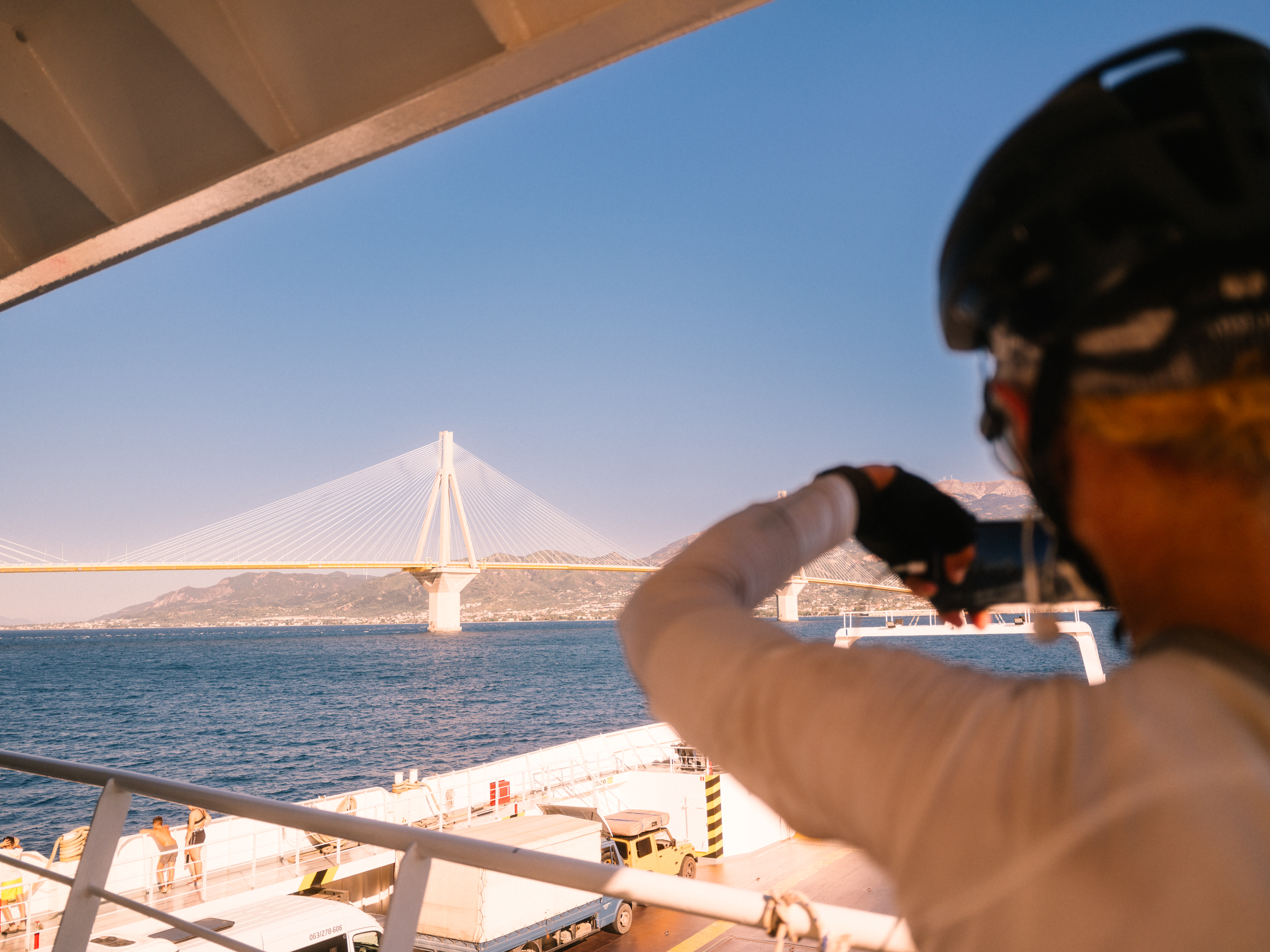
Yet from up on deck, looking back along the coastal road from Patras, I caught the glint of a reflective vest, and the silhouette of a cyclist sporting the unmistakable profile of a pair of aero bars. One of ours. As many of the tales of the coming days trend towards our finish line, and the return journeys of riders from Greece, it’s important to remember that many of ours are still out there, racing hard for CP cutoffs and personal goals alike, or simply taking the time to enjoy the adventure of a bike ride across a continent.
Time Team
On the Patras-Bari ferry, I found myself sharing passage with Ulf Bannick (297) – one of ours – who had concluded his race two days ago, before cycling the 200 km back to Patras to begin his low-carbon travel home. Reflecting on his decision to travel back overland, Ulf admitted, “For me, it wasn’t really something to decide. When it’s possible to avoid a flight I do.”
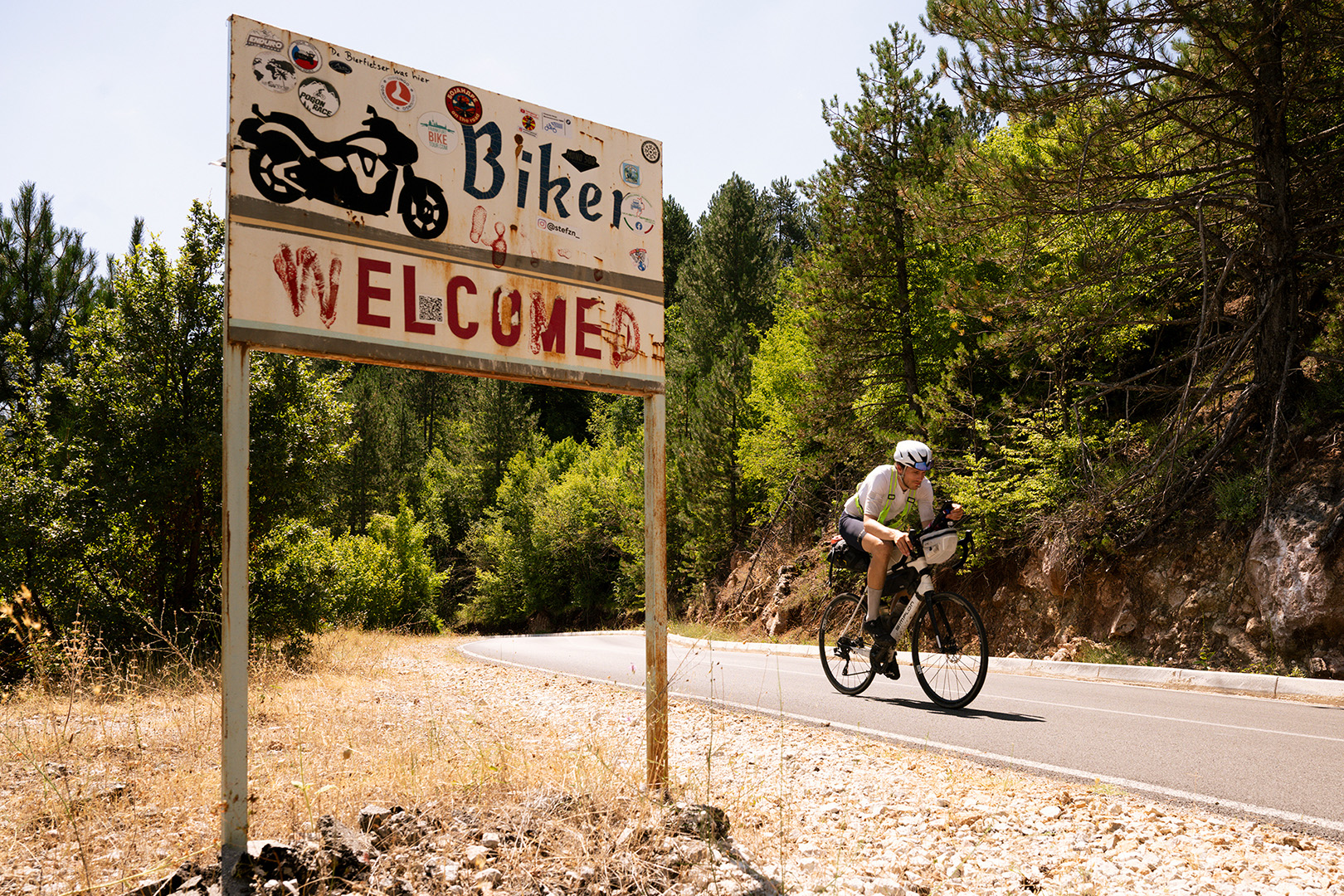
But the decision – or lack thereof, in Ulf’s case – rarely boils down to a simple equation. Ulf explained that another rider had been crunching the numbers a day earlier in Kalamata, calculating the relative footprint of his low-carbon commute. “It was 70% less than flying, and yeah, that’s good, but on the other hand, it also costs time, right? For example, I started on Tuesday morning at 5 a.m. and I’ll arrive home on Thursday at 6 p.m.”
So why, I wondered, had the choice been so obvious? Of what, beyond moral fibre, did his instinct consist? “I don’t process it actively,” Ulf explained, describing the way the race settles in retrospect during his journey, “but I think there’s something happening subconsciously that smooths the transition between racing and normal life.” The enforced processing time of the journey was, for him, slow travel’s greatest gift.
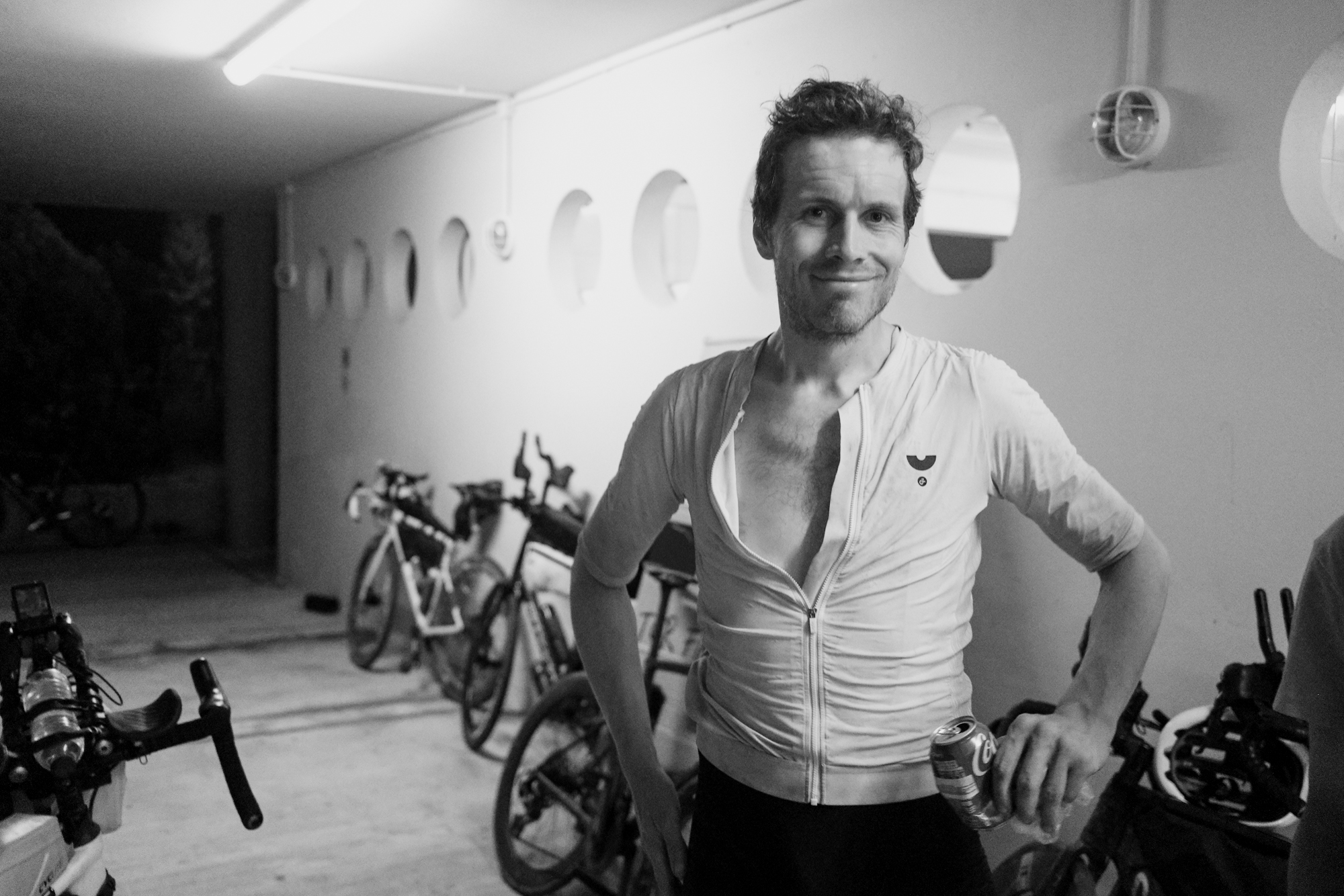
That, of course, as well as the vital post-race task of sorting through the catalogue of accumulated photos. “It’s funny, it’s always so hard to remember the race,” Ulf smiled, “I was talking yesterday with some riders about the parcours and I was already mixing them up!”
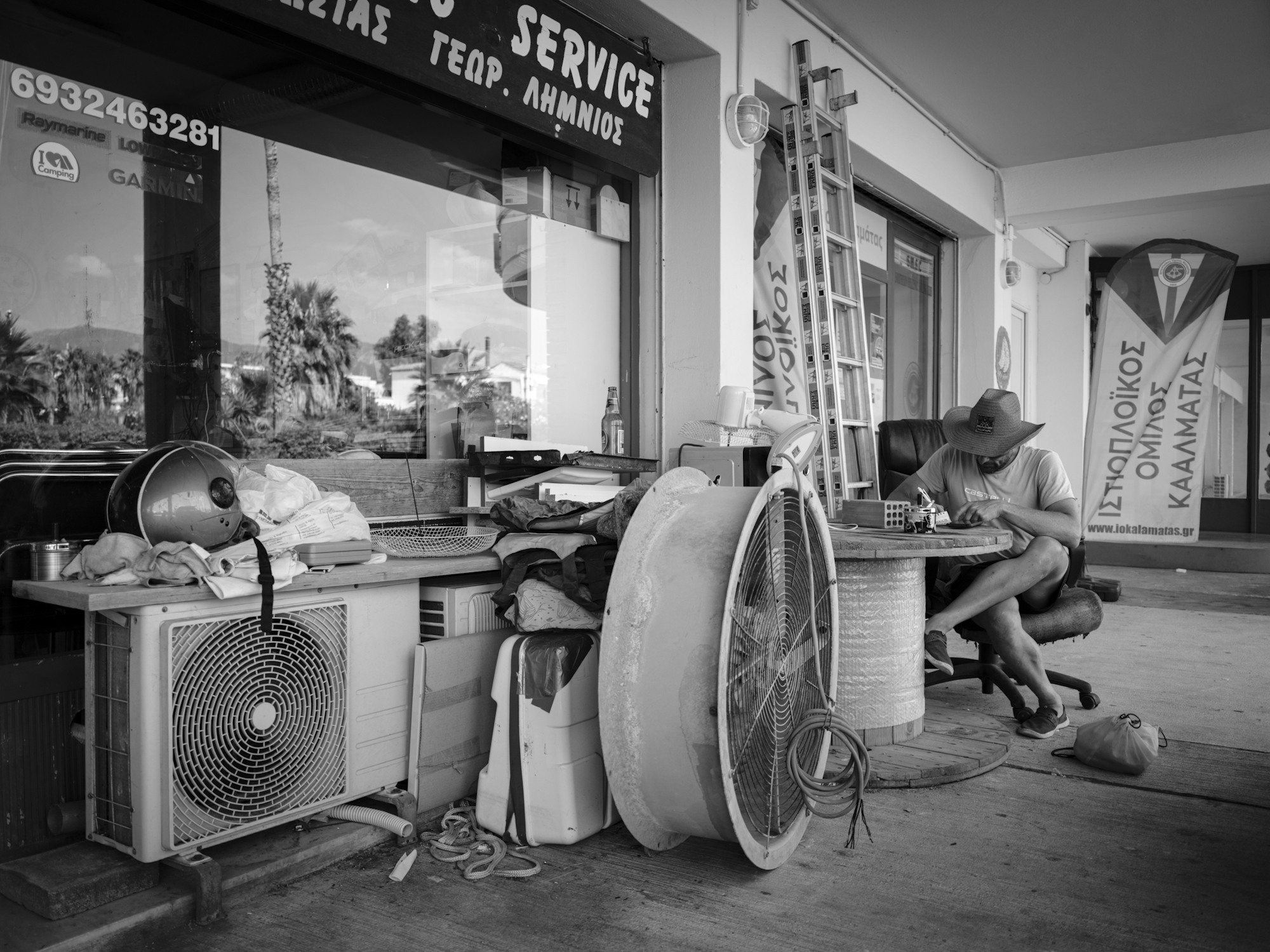
Making a concerted effort to crystallise the chronology of his own race, Robert Müller (037) had been putting his time in Kalamata to good use. Hunched over his phone in the corner of Skipper's Café, his red cowboy hat – one of the more avant-garde items of finish-line fashion – pushed back, Robert pored over his route's GPX files, noting down the thoughts, feelings, and observations that surfaced as he retraced his journey south. It struck me as a worthwhile endeavour: an attempt to stop the experience collapsing into a handful of highlights and lowlights; an attempt to preserve the nuance of a bike ride across a continent.
Good, Sad, Happy, Bad
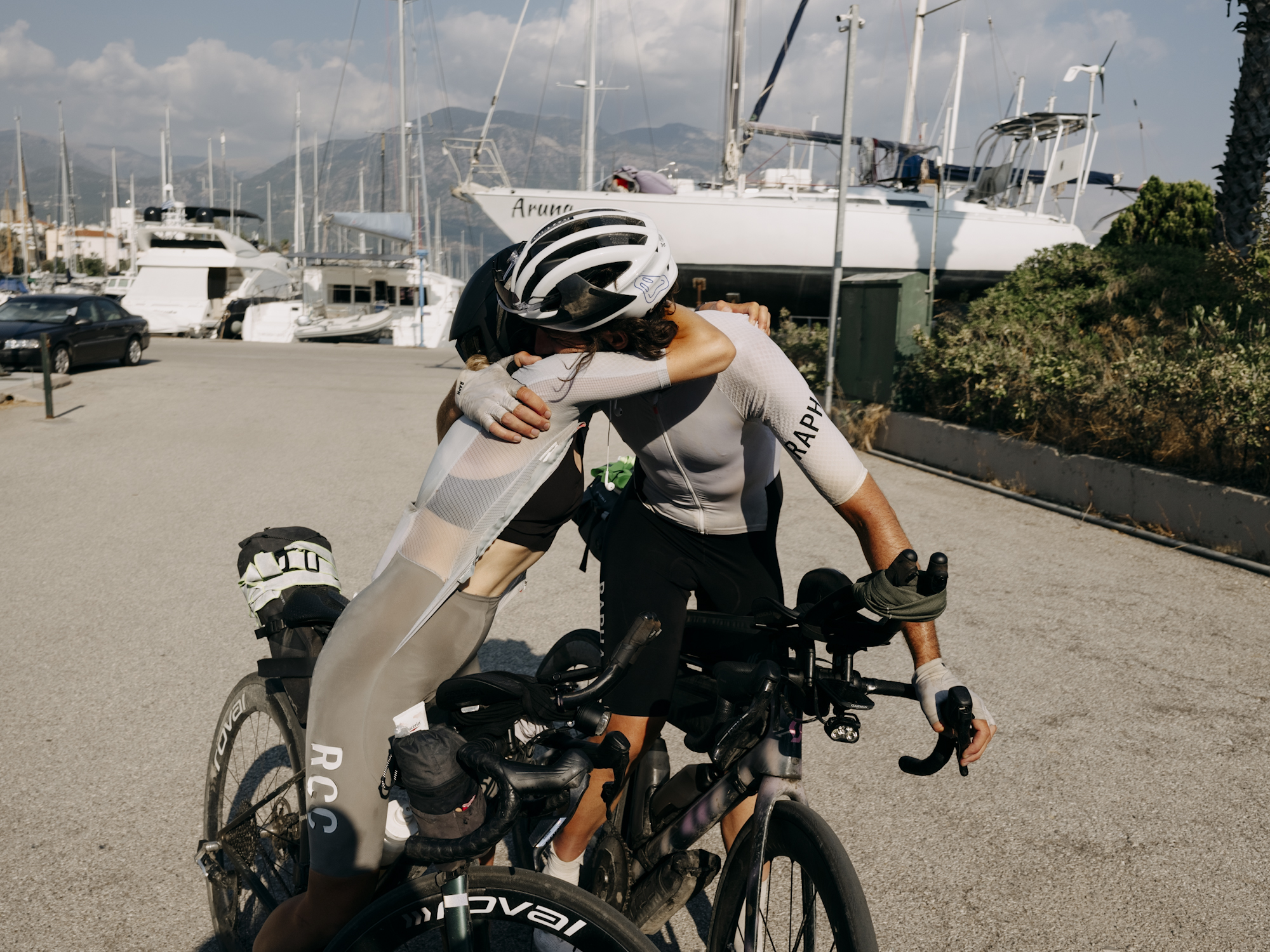
Also beginning their long homeward journey, Jana Kesenheimer (010) and Christian Holweck (014) were discovering some of the occasional pitfalls of low-carbon travel, in a world that isn’t always built to accommodate it. Having carefully cocooned their dismantled bikes in a chrysalis of cling-film and cardboard, they reached the security gates only to be asked to unwrap them again, in order to prove that inside were, indeed, bikes. This was, understandably, frustrating. Having satisfied the guards with a glimpse of spoke and saddle, the pair were eventually allowed to embark, casting off to close the chapter on an emotionally weighty few weeks.
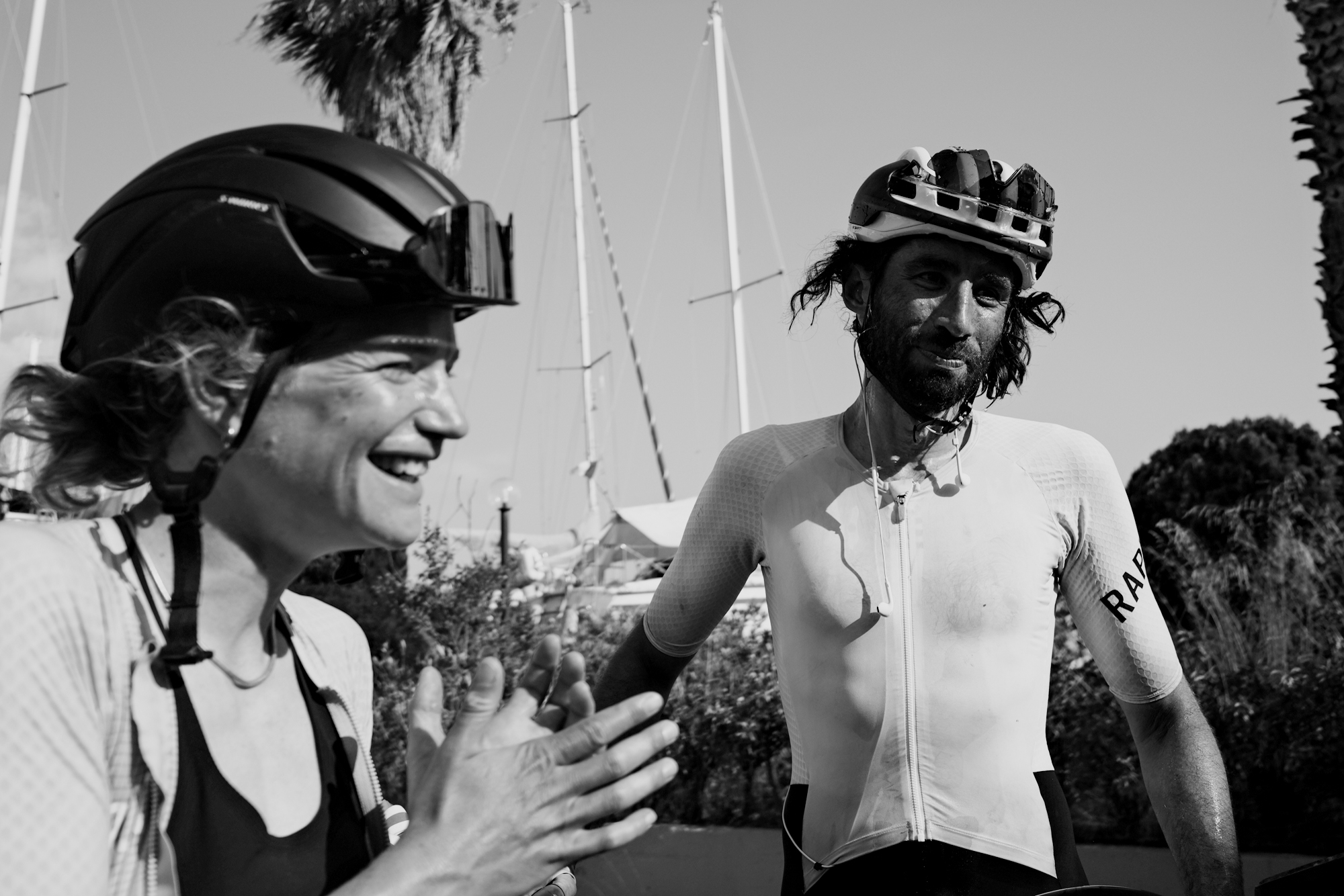
With the early decision to drop out of GC and ride the rest of the way to Greece as a pair, I was interested to hear how the choice had settled for Jana and Christian in hindsight. Having arrived in Kalamata on Sunday, the resounding verdict from the pair on the finish line was: “too many plot twists!”
The start had been fraught: the emotional strain leading up to the decision was swiftly followed by Christian’s knee pain, which cast their journey as a pair into doubt. By the middle, Jana and Christian had found their rhythm; happily “Pac-Man-ing” their way through the field, the competitive instinct still surfaced, even without a race to contest. But with a case of severe sunstroke for Christian spelling yet another extended rest in Ancient Olympia, the closing bars of their shared adventure had been anything but legato. Their race, it struck me, had followed the inverse rhythm of their fellow outside-of-GC rider, Andrew Phillips (00a). Andrew’s Good, Bad, Good became their Bad, Good, Bad.
For Christian, Jana’s company had been essential. “It felt a bit like a supported TCR, I would say,” he joked. “But honestly, without her, I don’t think I would have made it. I mean, if you’re suffering, and you have someone close to you supporting you, it makes it bearable.” It also gave Christian a reason to ride on – something to help him through his lowest moments. “It gives you a purpose,” he explained, “because, after all, I really wanted to make it happen that we both arrived.”
The couple also acknowledged the unique challenges of pairs riding. “If you think that riding the TCR solo is a lot of problem solving,” Jana observed, “then just add another person.” True synchronisation is rare. “If you have a low, then the other person takes it too – it puts you both down. But if you have a high, it’s so rare that both of you are on that high together.”
The Privilege of Choice
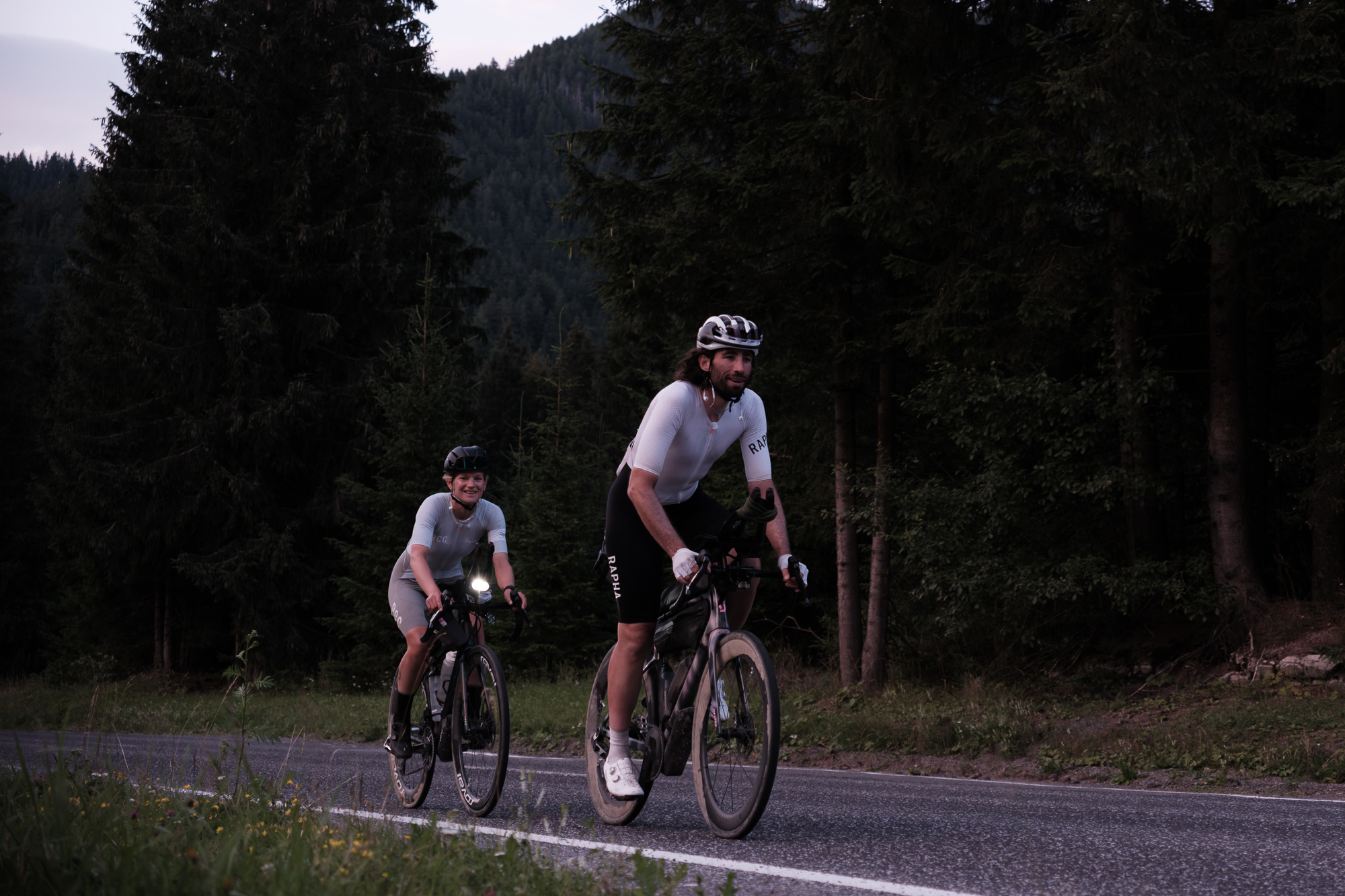
Yet throughout, one particular thought had reassured Jana that the choice to ride with Christian had been the right one. “I also thought of Sarah,” Jana explained, “because if she could have made the decision to ride with Mohit, she would definitely have chosen that. I thought about that a lot; it’s a privilege, having the opportunity to share it.”
Going with the Gut
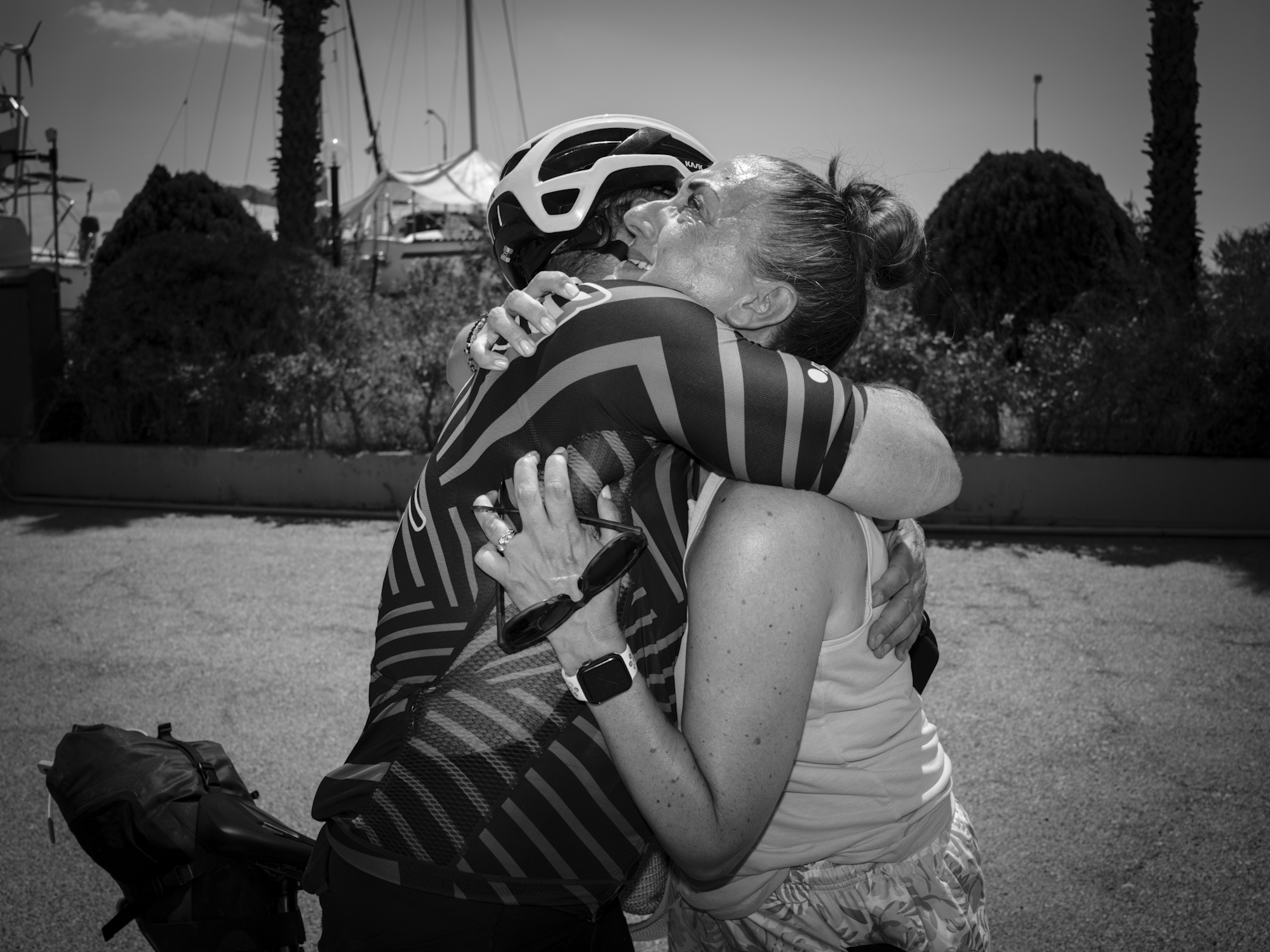
As evening fell, Hannah Hiecke (314) rolled into Kalamata to complete the FLINTA top 10. Arriving to a surprise welcome from her mum, Hannah felt the emotional release of the finish line wash over her. “I really grew in that race. I’m a super emotional person, so it’s worth a lot.”
When an unexpected period arrived early in the race, Hannah was forced to draw on the experience she had accumulated through previous races. “I did a race last year,” Hannah reflected, “and I didn’t listen to my body at all, which wasn’t good. But it was a good lesson.” Rather than falling victim to the same mistake, Hannah had made the decision to listen to her body and rest.
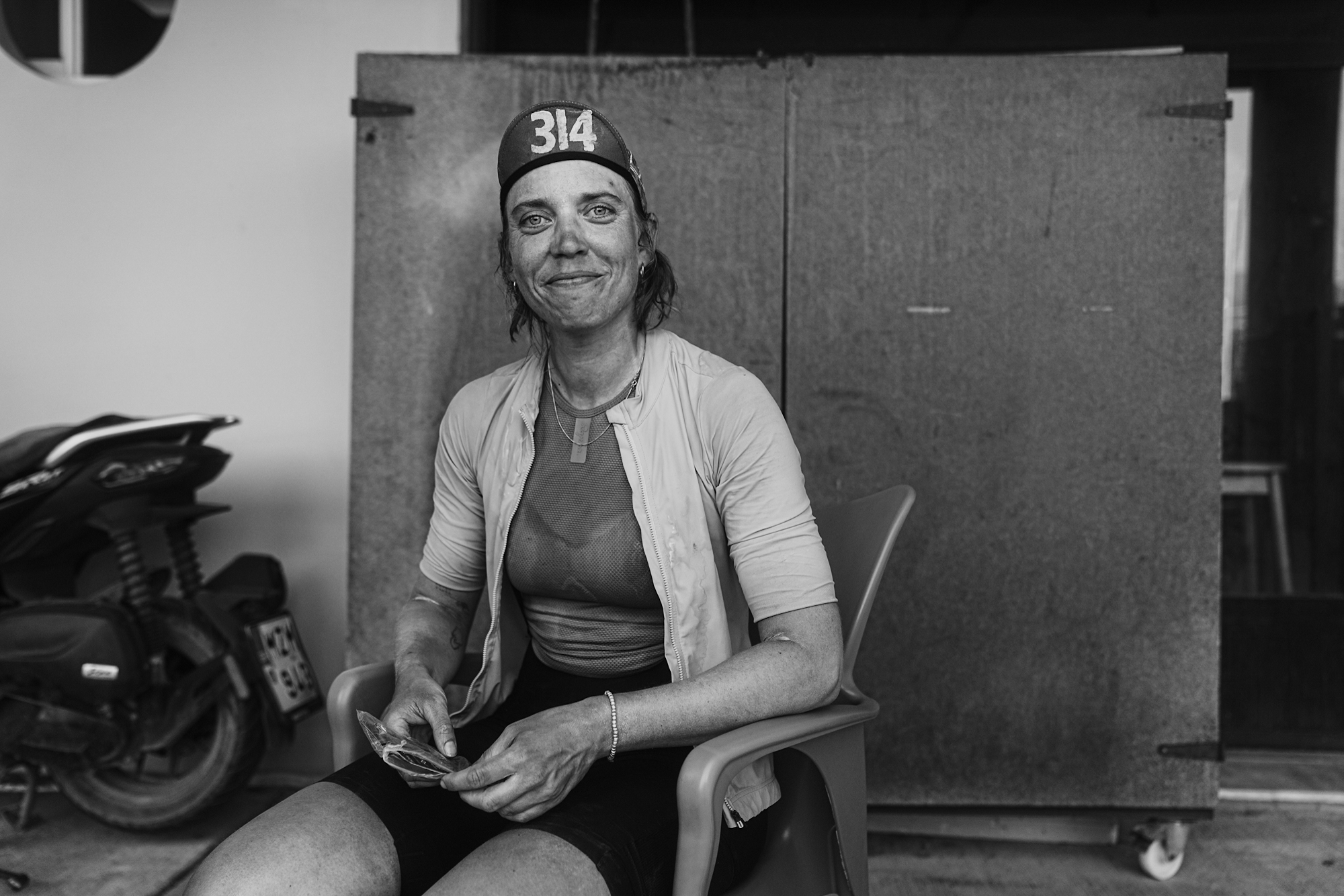
In fact, this was the greatest lesson of her race this year. “I learnt this year that I can trust my gut. Ahead of every decision, I always have a feeling or intuition, and yeah, I’m happy to be listening to it even more than before.” Trusting her own instincts also helped Hannah to cope with the decision fatigue that comes while racing. Going with the gut, she explained, doesn’t feel like making a decision at all.
Separate, but Connected
On Parcours 1b, along Norway's Rallarvegen, the leading ten FLINTA riders had been separated by just a few kilometres. By the finish line in Kalamata, that same group spanned three and a half days. But while the race had dispersed, the sense of connection between riders remained steadfast throughout.
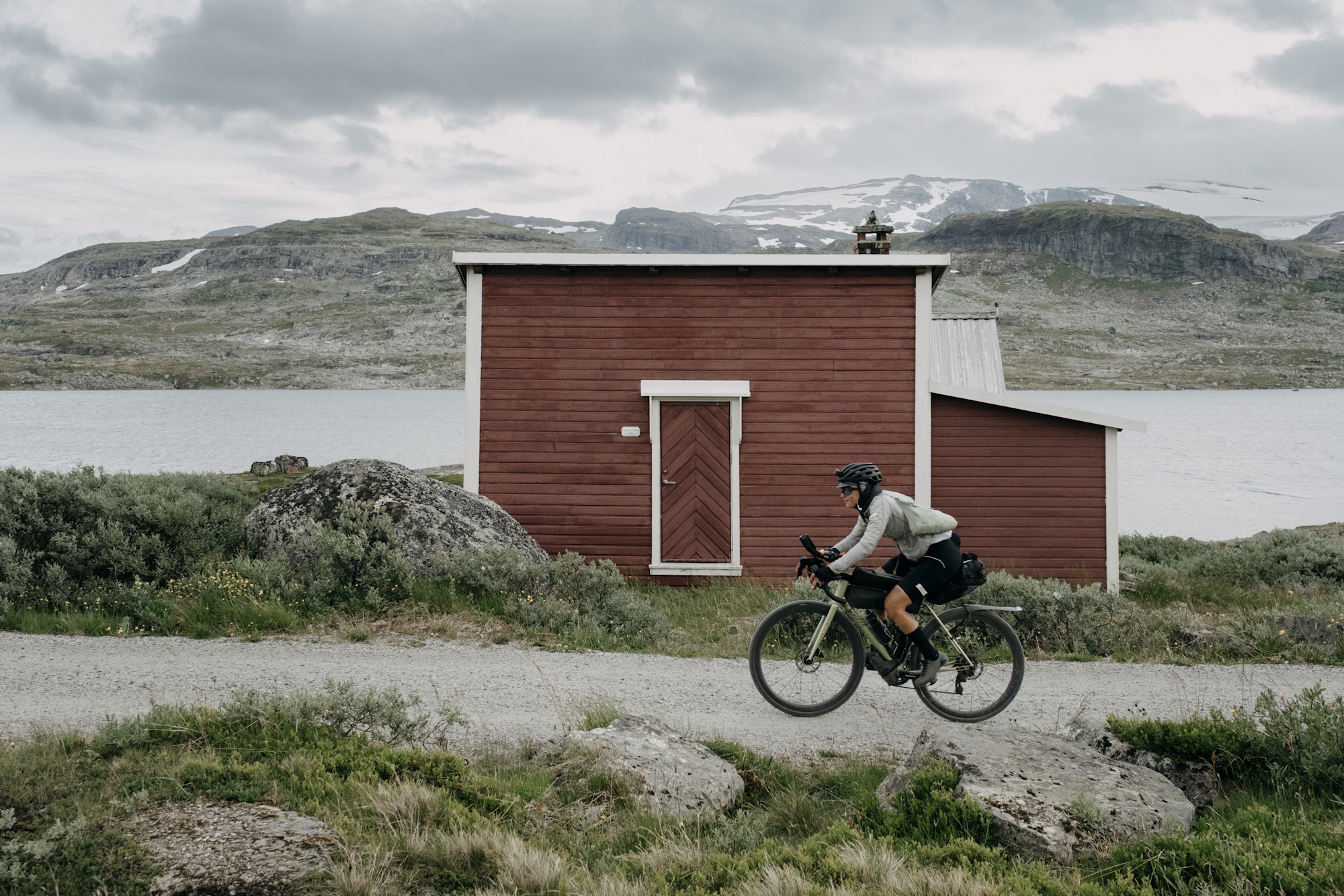
Jana had enjoyed watching the FLINTA race unfold, appreciating the closeness and camaraderie of the contest. “Having that kind of neck-and-neck race, I know how much it helps to give it all,” she acknowledged. “It feels different to race against other genders; it feels more equal. I think having a real FLINTA category is more inclusive, it’s definitely what’s needed.”
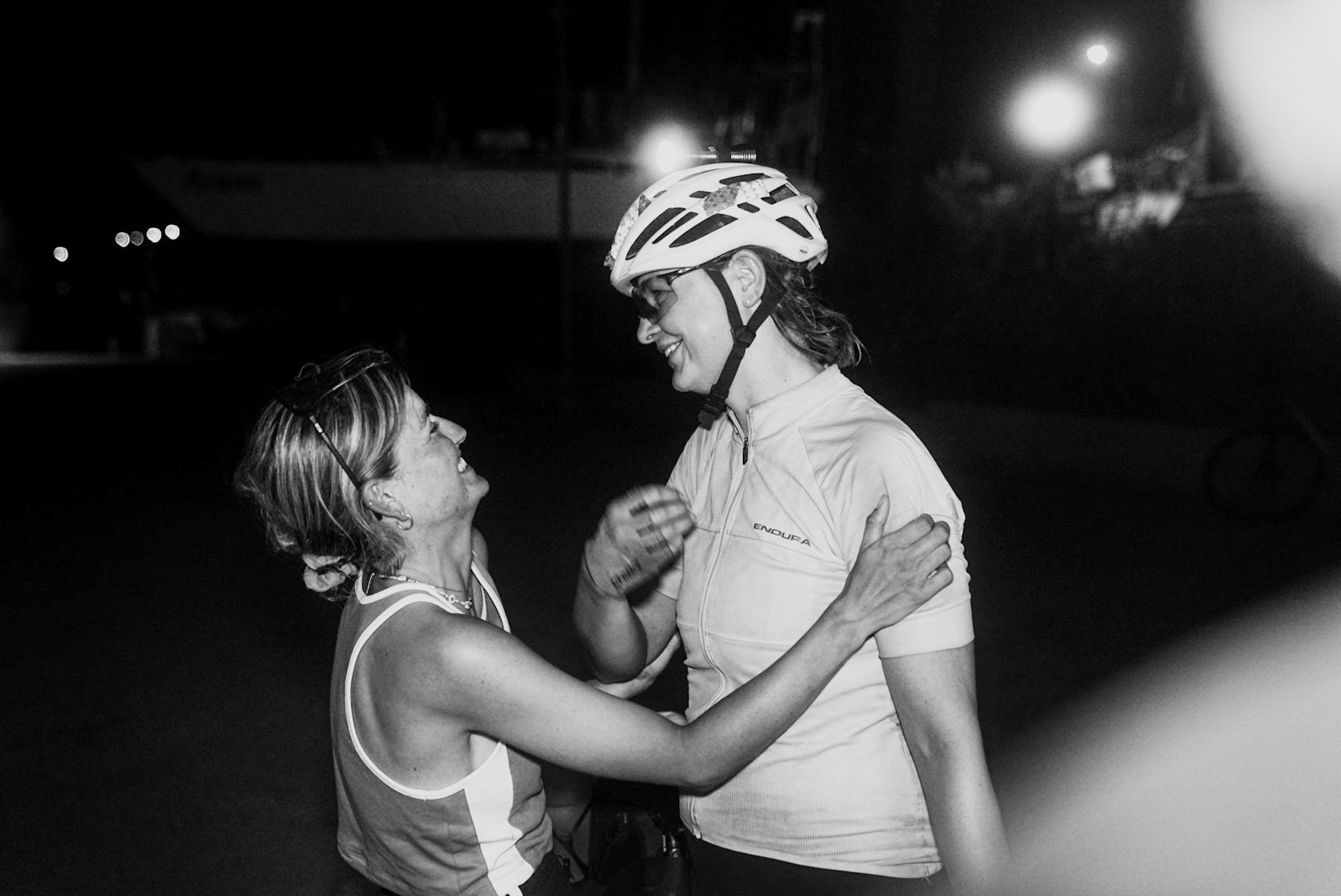
As if to prove the point, with night closing in, Larissa Sauter (066) arrived to a fanfare of assembled riders. Friends with our other Larissa, third-place FLINTA finisher Larissa Unsinn (346), the pair had signed up to the TCR together – a friendship born on a bikepacking trip through Peru that had carried them towards another continent-spanning adventure: an adventure shared in spirit, if not in proximity. Separate, but connected.
Also sharing a separate but connected journey, Matthew Falconer (253), the race’s resident avian presence, was greeted by his fiancée, Sarah, at the finish line of his 7th transcontinental attempt. The Birdman appeared to have enjoyed this edition immensely, despite it being far longer than any of those that had come before. Crediting this enjoyment, in part, to the less race-focussed approach he’d opted for this year – avoiding all-nighters and midnight starts for the most parts, unless ferries or heatwaves were involved – his main draw south had been reuniting with Sarah.
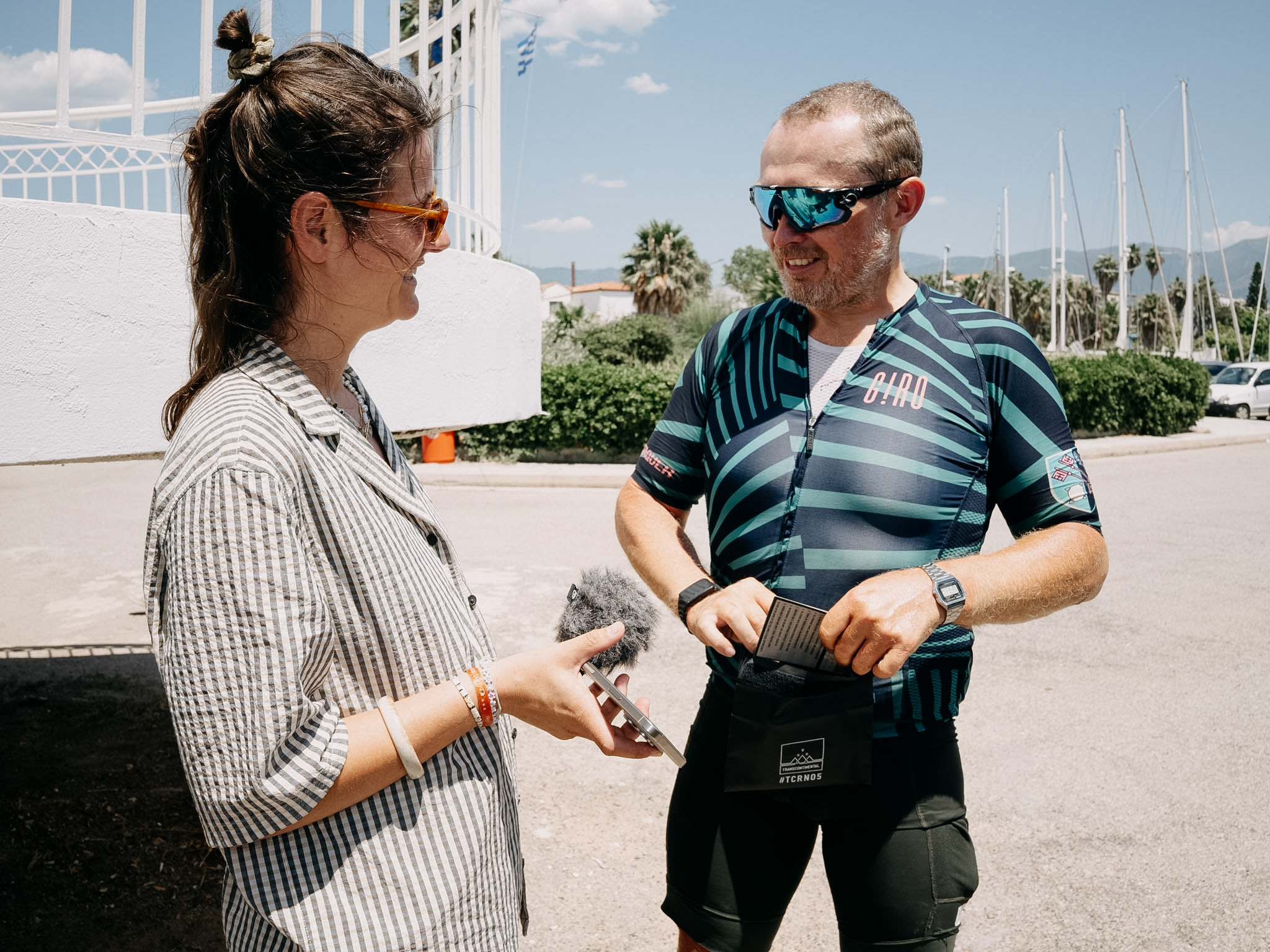
For her part, Sarah found the finish line profoundly emotional. “It takes you back to everything that you’ve watched for two-and-a-half weeks, every single moment of stress. They’re such powerful feelings.” But by far the prevailing emotion was pride. “He’s always so positive,” she shared, “He’s just a ray of sunshine all the time. Even when his feet hurt, when his saddle sores have saddle sores, and it just looks like it could be absolute hell, he’s always smiling. It’s incredible. I am so proud of him.”