
Day 12 // Be More Mower
August 1, 2026
Words by Jake Thorpe
Photos by Matt Grayson, Michael Drummond, Tomás Montes, and Sam Dugon
Window Shopping
As Martin Moritz (002) arrived in Kalamata, a message flashed up on his GPS. End Ride? Without hesitation, Martin confirmed. “I was ready to do that days ago,” he sighed.
It has not been an easy race for the returning runner-up. His performance last year cast a long shadow – one, it seems, Martin has spent much of this race trying to escape. The obvious question, for me, was why he came back.
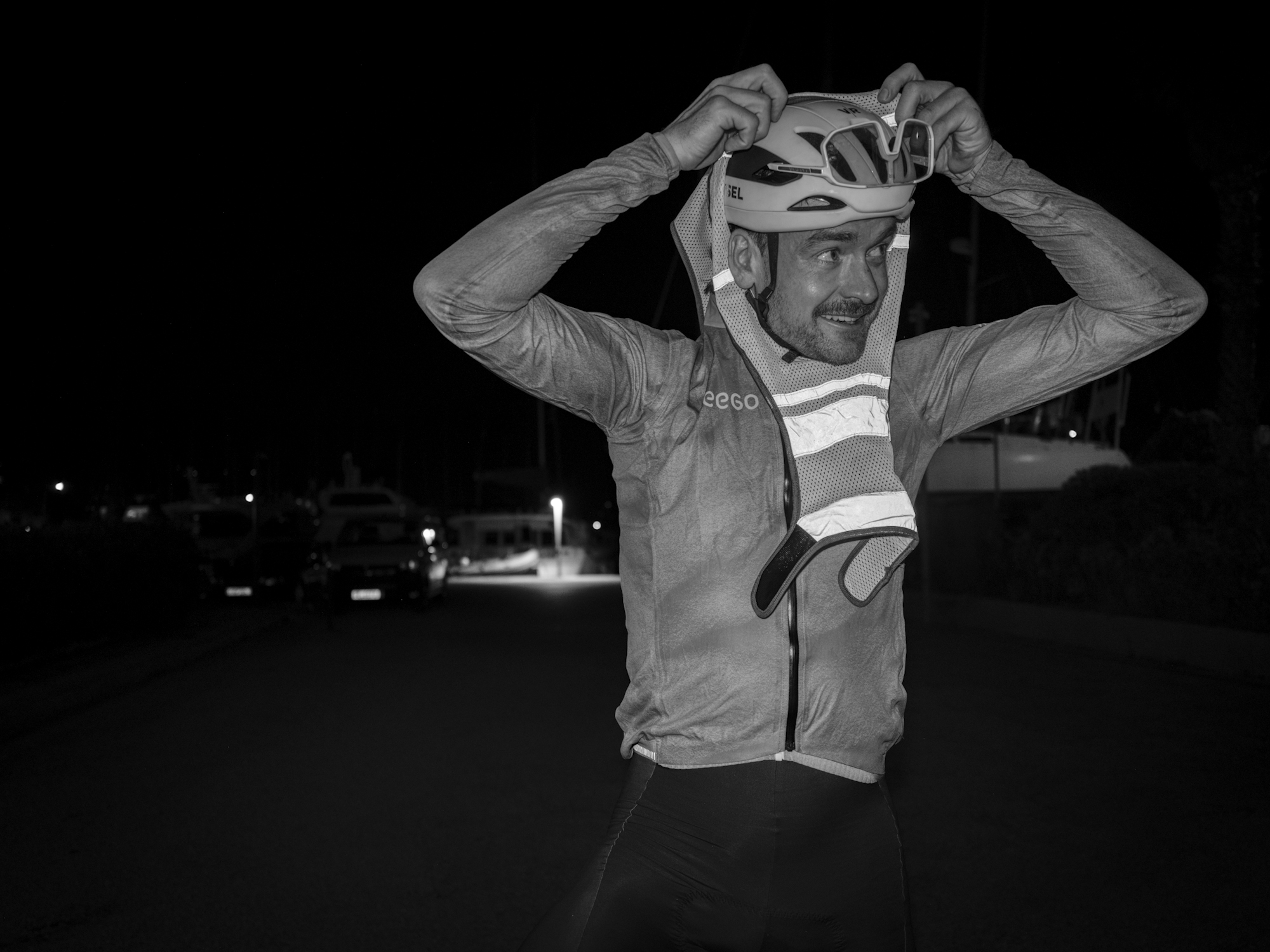
“I’ve been asking that myself quite often these last days,” Martin admitted. “I mean, there’s nothing greater than riding through a whole continent,” he continued. “This is freedom for me, and experience, especially this year: so many countries, so many border crossings; the contrast of the really cold north and now, down here, sweating all day. It all just feels so huge. It feels like a lifetime.”
I could completely understand – it’s the same thing that draws so many of us to two-wheeled travel. But Martin’s answer didn’t quite resolve the question. If experience and freedom were his currency, why choose to spend them at the TCR? Why not simply tour through Europe? Inevitably, the question returned. Why race?
Again, this was far from the first time that thought had crossed Martin’s mind in recent days. “I thought quite often during this race that I will never go that deep again,” he admitted. “I don’t want to ride at night; I don’t want to be uncomfortable; I don’t want to be on busy streets in Bosnia where dogs are barking at you. You don’t have to do that if you go at your own pace.” I awaited the but.
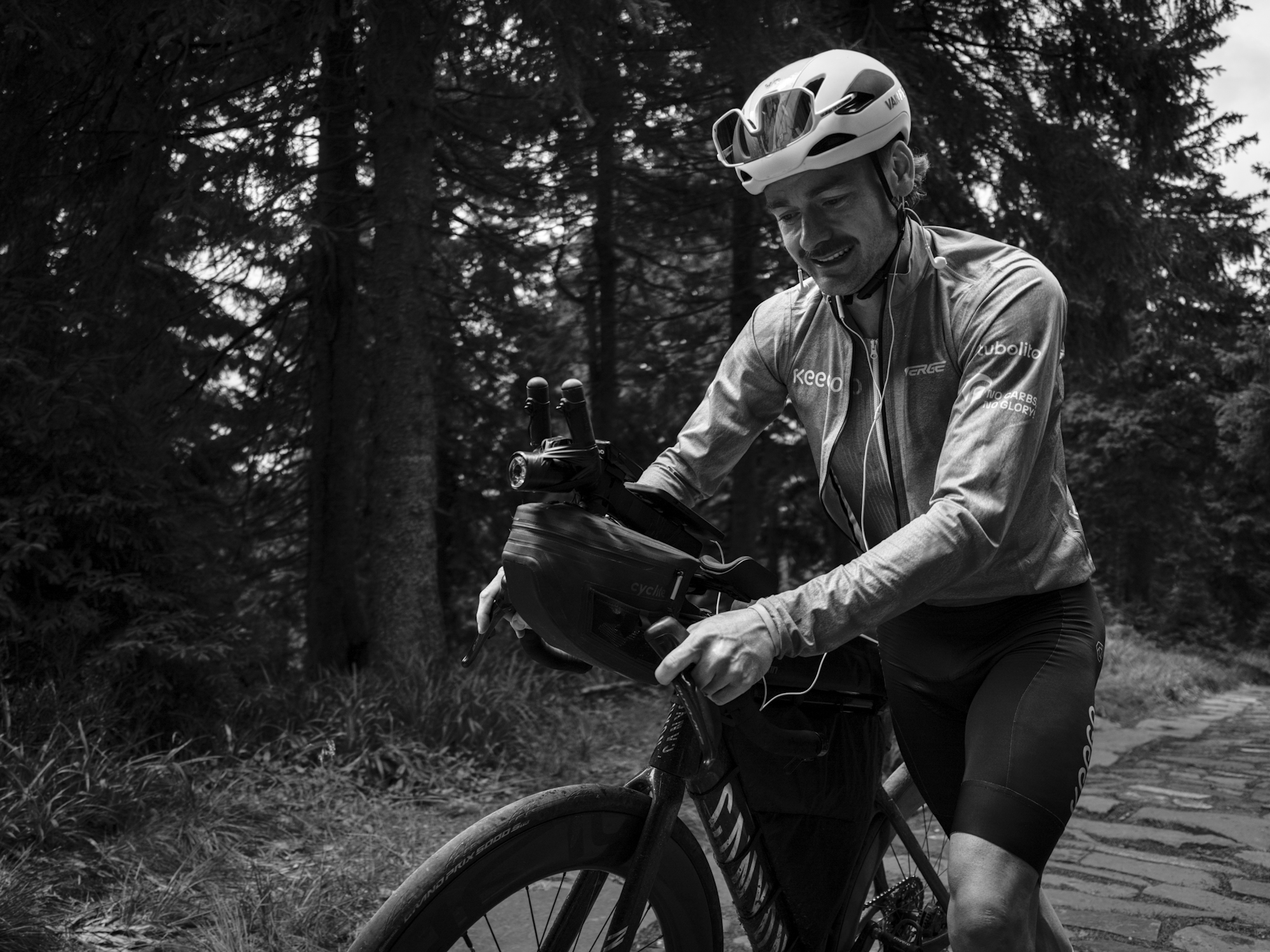
After a pause, Martin continued. “On the other hand, racing is what gets me going. I’ve always compared myself to other people, especially in sports, and that’s what’s triggering me, it’s making me go; it can lead to extreme highs, and the combination, of course, is great.”
We’ve seen it first hand. The competitive edge pushed Martin, last year, to ride the race of a lifetime – arriving first to the Adriatic and its decisive ferry. And this year, despite having to process the emotional feedback of racing not only against other riders, but against his own expectations too, that same edge pushed him on to arrive 5th in Kalamata.
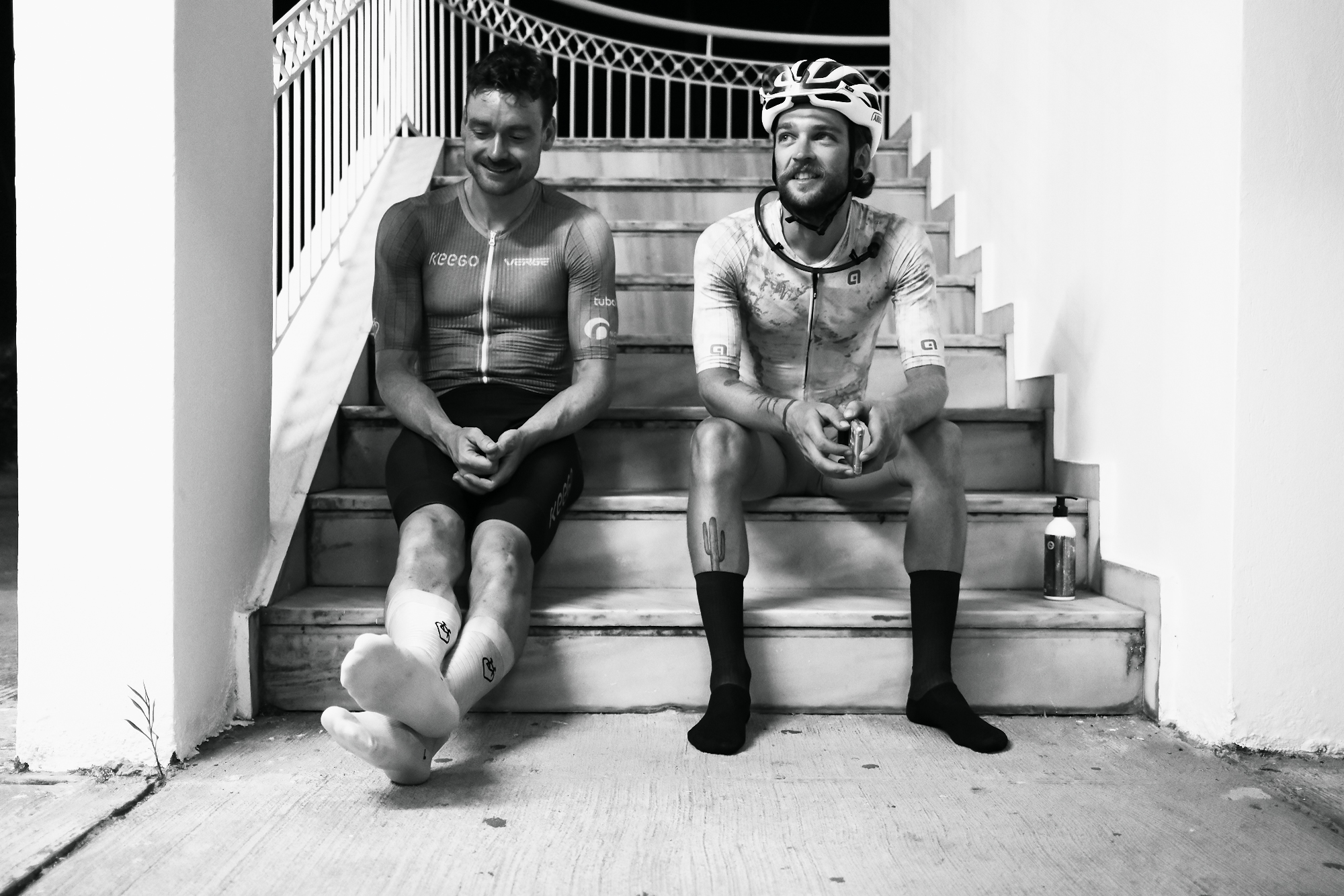
The opportunity cost of such speed, of course, can be a depth of experience. “There were so many places I wanted to stay and have a look at – like Olympia this afternoon,” Martin acknowledged. “It’s kind of sad that you pass by so swiftly.” But if nothing else, riding across a continent in just over 11 days makes for some excellent window shopping. I’ve no doubt that, in due course, Martin will retrace some of his steps – spending a little more of his currency in the places he’s visited this race, just slightly slower.
Tales from the Top Ten
With Martin closing out the top five just before midnight, throughout the day, riders trickled in to fill out the top ten. Each brought with them their own story, their own insights, forged in the crucible of the race.
Manual Rudaz (004) arrived in the early hours to claim 6th. He, like Martin, had been riding beneath the shadow of an outstanding performance last year. “Every single pedal stroke was hard to give this year,” he reflected, at the finish line. “I wanted to give up on day one.” But somehow, Manu had pushed on. “You’re here because you wanted to be here,” he reminded himself, “there is no obligation to continue.” That simple reframing – harnessing the power and the privilege that comes with a choice – had been enough to keep Manu’s pedals turning.
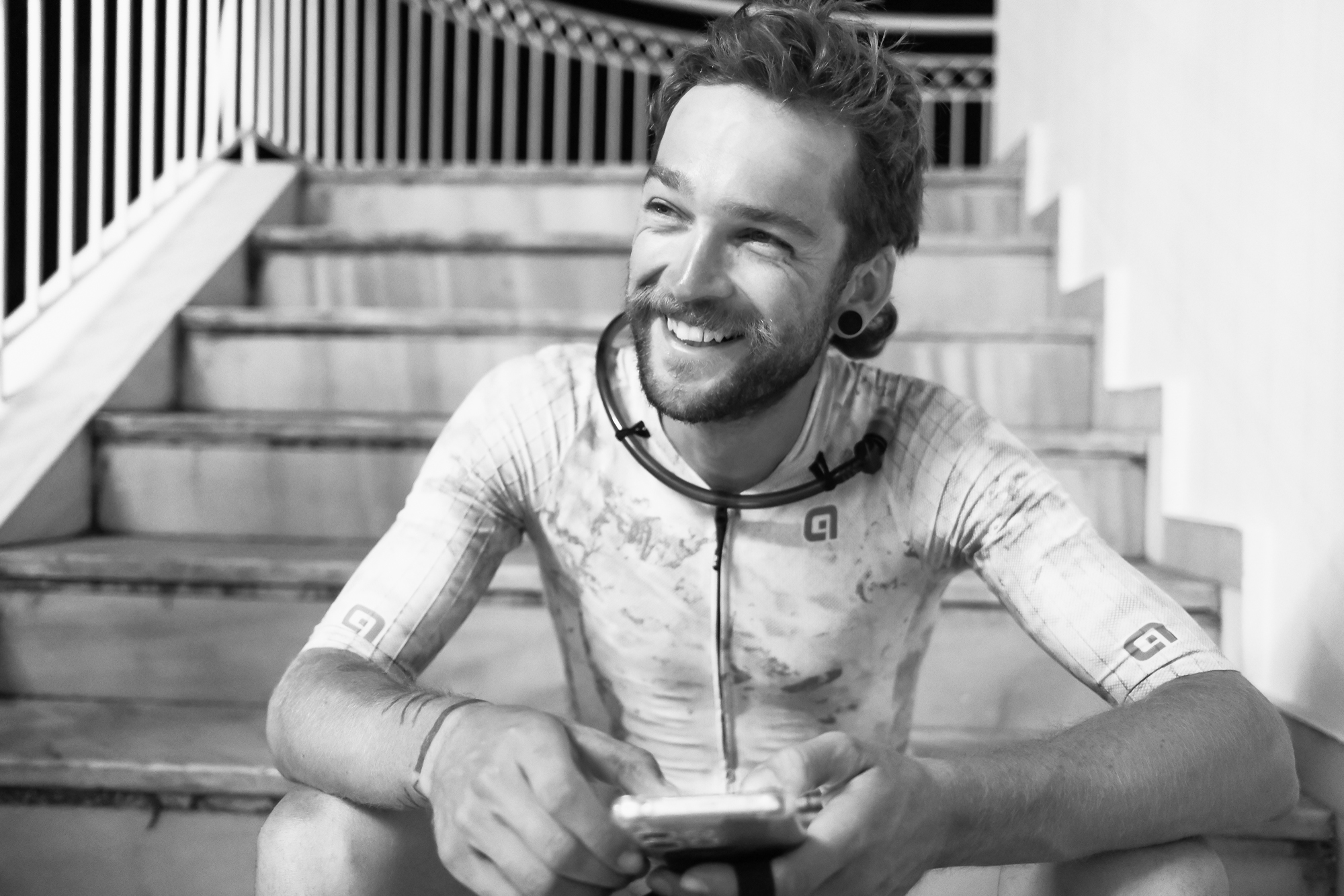
His big toes, however, Fred (right) and Joe (left), were afforded no such luxury; they were along for the ride whether they liked it or not. And they did not. Having lost all feeling on the first, bracing, Nordic night, Manu had spent the rest of his race trying to coax them out of their sulk. Now on the white sands of Kalamata, they were beginning to thaw. Perhaps they’ll accompany him on his future exploits, but at this point, they’re undecided.
Our visionary innovator, Robert Müller (037), arrived next, greeted by his parents. They’d travelled to Kalamata to surprise him – their first time joining him on one of his finish lines. It would be a world away from his usual post-race experience. “Everything is prepared,” explained his dad before Robert arrived. “There is a bed, a shower, pasta for him, cooked by his mother.” After more than 11 days sleeping under the stars, without once showering or washing his clothes, fuelled only by the dense, sun-baked gruel of cheesy cous-cous, I suspect the surprise could hardly have been more welcome.
.jpg)
They were both huge supporters of Robert’s racing. Housing his bikes and his workshop – or laboratory, as it might more accurately be described – they were clearly very proud of all that their eldest son has achieved. Flicking through pictures of Robert’s various two-wheeled exploits, his dad landed on a grainy shot of a 2005 finish line leaderboard. In second, Mark Cavendish, in fourteenth, Robert Müller; two legends of the sport, each in their own particular ways. Robert is the antidote to ultra-cycling’s gradual professionalisation. It is a privilege to tell his stories.
Then came Thomas Boury (337). Taking in the gravity of this experience, Thomas reflected that, before the race, he had felt his motivation was less a desire, and more a compulsion. He needed this race. And, along the way, he feels he has discovered why. “In the past few years, I think I’ve lost a bit of self-esteem, a little confidence,” Thomas explained, “and somehow I knew that undertaking this challenge would help me gather some of it back.” It had. “I’ve not felt so proud in a long time,” he concluded. As the memories of the race fade, that’s one souvenir that will be sticking around.
.jpg)
“Ok, I didn’t get my third third,” Tim de Witte (003), 9th to Kalamata, joked on arrival. “But three times three is nine, right, so it kind of works.” Besides his kangaroo-pouch fuelling innovation – a case of convergent evolution with our race winner, Robin – Tim’s key learning from his latest TCR boiled down to a single switch: from ultra-racing, to what he’s coined “ultra-pacing”. It wasn't about riding slowly, so much as relinquishing the tyranny of the clock. Tim argues that the experience changes when you ride at an ultra pace, without any designs on a position in the race. “I think a lot of the people further back in the field have an experience which is as valuable, maybe even more valuable than the ones in front, because they really experience the road, they bivouac in the strangest places, and they really see everything in a more realistic way, rather than staying in a hotel and then being annoyed that the person is too slow checking you in.”
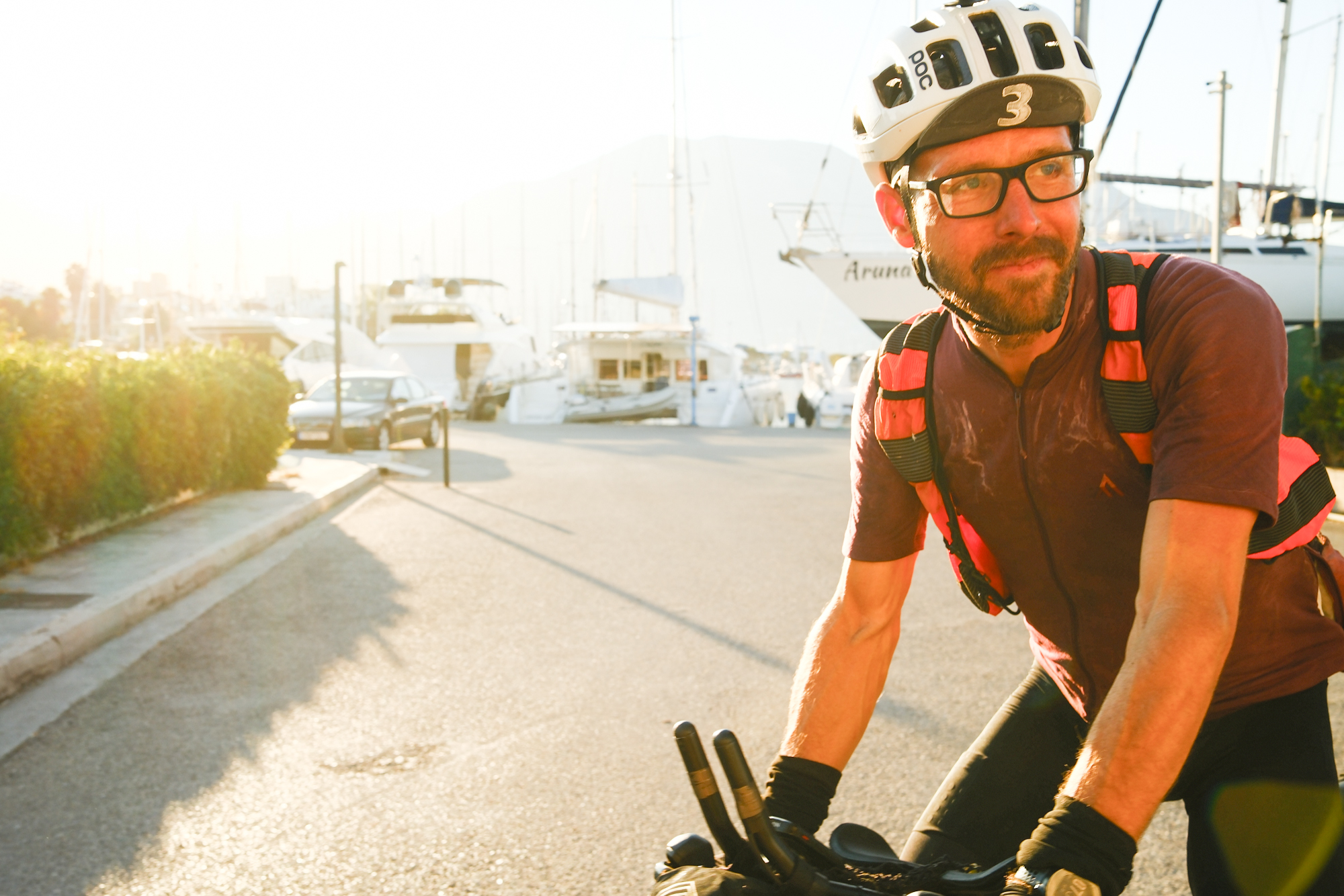
“A few years ago, I had the time, the energy and the money to prepare and to train, but at one point, you have to say, okay, it's been enough. I'm really happy with what I’ve achieved,” Tim concluded. If he did choose to race again, Tim would do things differently. “I would go for a more bohemian approach,” he mused. Trading efficiency for experience, he hopes, might bring a different kind of satisfaction to pushing things at the sharp end. “Okay, your race might take longer, but at the end of your ride, maybe it's more fun, maybe you get more out of it.”
.jpg)
This trade is something 10th place rider Jonas Verest (368) became well acquainted with during his enforced sojourn in Kukës to replace a split crank. In a winding tale of happenstance and humanity, Jonas managed to find a solution: a Franken-crank made up of parts stripped from the bikes of two generous Albanian cyclists. “It was crazy, this moment in Kukës,” Jonas reflected, “you’re in a race, you’re locked in, and suddenly you kind of emerge from this into some crazy human experience; it was quite fun.” The pull of the contest is strong, for Jonas, but it speaks to his character that losing a spot on the rolling podium was far outweighed by the experience that followed. “It’s all part of the adventure,” he concluded. While the race may be measured in days, hours, and minutes, it’s moments like Jonas’ in Kukës that really define the experience.
Take a Walk on the Wild Side
Seemingly trialling “ultra-pacing” ahead of its mainstream launch, Katharina Wirth (199) has allowed a slightly wilder side to creep into her race since Sarajevo. Early on, she had employed a more conservative strategy. “It’s my first race,” she explained, “so I didn’t know how my body would feel after 12 days.” But then, having extended her daily distances through Hungary, only to feel, by the evening, that she wanted to push on, Katharina realised that she was craving a change of pace. “I remember thinking: this kind of sucks, it feels so tame and boring” – a wild synopsis of a 280 km ride. “I felt in so much control still,” she reflected, “and I wanted to experience higher highs and lower lows.”
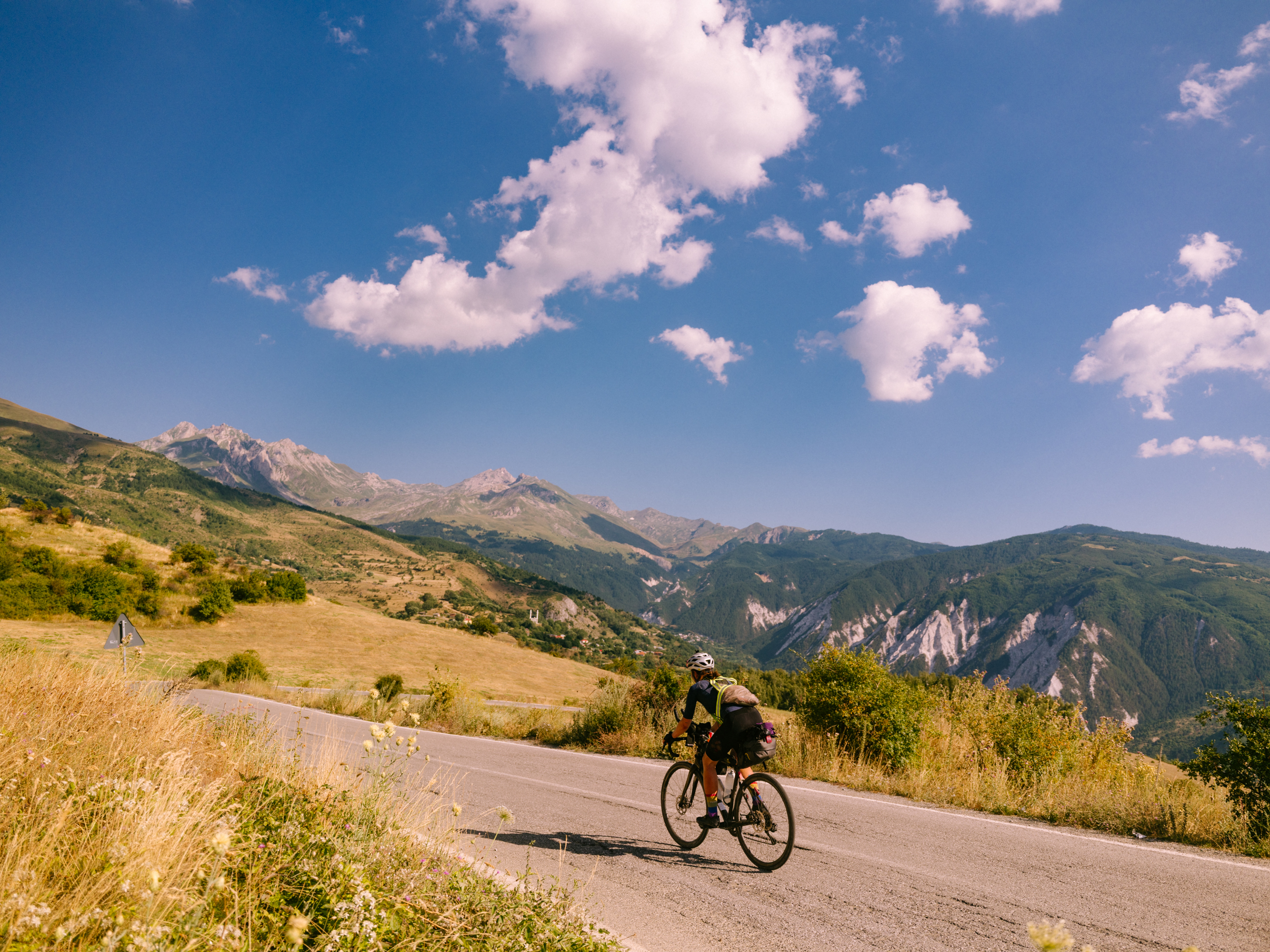
The plan began with dropping an hour of sleep, and then progressed to sleeping in stranger places. Having spent the previous night in an old wooden trailer in Montenegro, Katharina had found herself disturbed by the arrival of cars throughout the night, each searching for a spot of privacy. No longer tame. No longer boring. Chapeau, Katharina; mission accomplished. By evening, the ultra-cycling debutante was off the parcours and spearing south towards the fourth control – the final pitstop before her push down the Peloponnese.
Be More Mower
Just ahead of Katharina, also enjoying the parcours – and not for the first time – Arthur Jan (305) was spotted cruising along the paved approach to Peshkopi, having just spent a day making slightly slower progress on some Montenegrin single track. Back on Norway’s Rallarvegen, Arthur’s description of his progress up the parcours had been rather memorable. “I was almost feeling like a salmon going up the river,” he’d begun, before musing, casually “except I suppose salmon do this to mate, and nothing special happened to me on the parcours.” By Parcours 4, however, Arthur's therianthropic desires had shifted.
“Is there an animal dogs are afraid of? Because I would really like to be that,” he admitted. Across the Montenegrin gravel, he had been chased more than 30 times, and now, on the parcours, any reproductive aspirations had given way to a more immediate survival instinct. The future of the species could wait; now was the time for looking after number one.
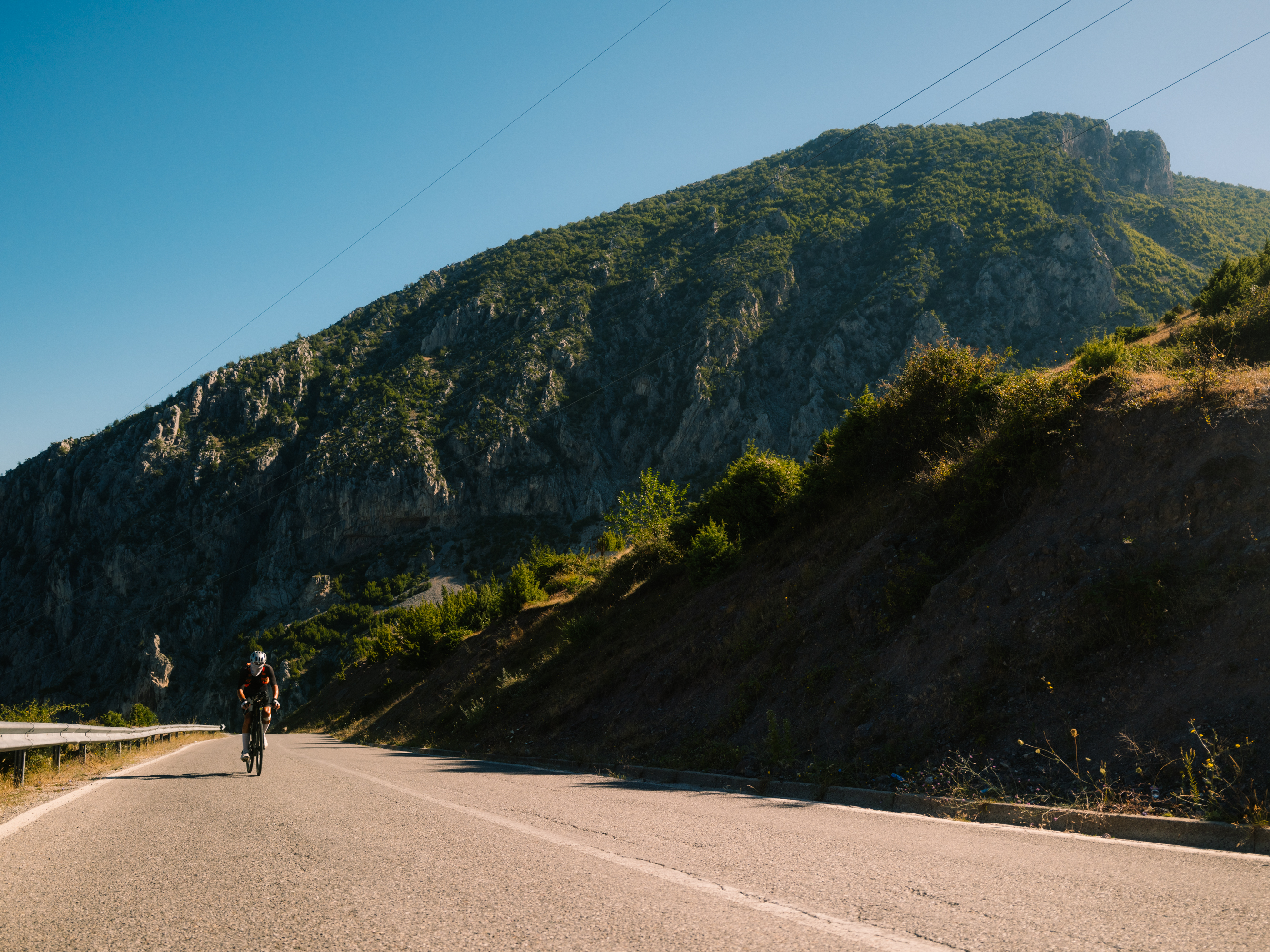
Arthur was missing Scandinavia, and not just for its temperate days, but for its meticulously mowed lawns. A striking memory for him had been watching the “small robot mowers cutting the grass, in complete silence, into perfect geometric patterns.” By this point, Arthur had decided that his life might be a little easier if this robotic compliance were extended to all more peripheral members of the household – particularly those of the canine variety. “If you can pass on my message to any dogs who might be listening, especially from Southern Europe,” he began, “guys, please stay within your lawns, stay silent, and don’t chase the passing cyclist,” – adding, for good measure, “just be more mower.” Words to live by, Arthur. Words to live by.
A Final Basting
As the race’s 12th day drew to a close, the attention, in Kalamata, settled on one particular dot, inching its away along the Finish Parcours. Sarah Bosslet (120), having maintained her lead through Greece over second-on-the-road Camille Albisser (270), looked primed to secure her first Transcontinental Race FLINTA category win. The day had been far from easy. The sun beat down with typical ferocity – 48℃ at its zenith – and combined with the headwind to conjure a good approximation of a convection oven. Sarah’s ferry across the Rion Strait sold no food, and the gradients of the Finish Parcours loomed large in prospect.
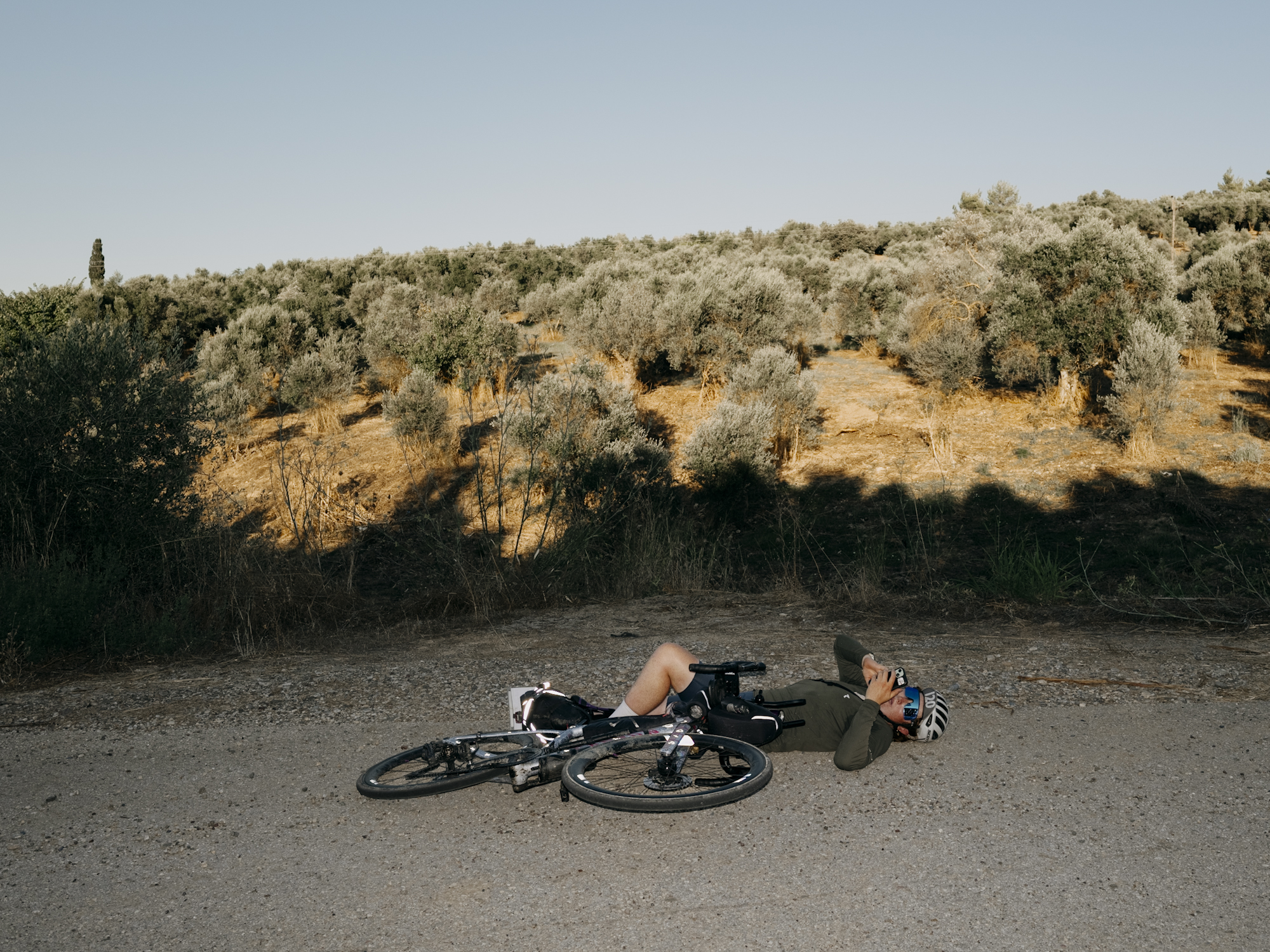
Out on the parcours, the race-leader was spotted sprawled in the shade, scrolling her phone and tucking into a tube of biscuits. Spotting Race Director David Ayre, she laughed; “you’ve really caught me at my best.” Earlier in the day, Sarah had decided to douse her socks in cool water, to help reduce the heat-induced swelling of her feet. Now, peeling them off, she balked at the pruned skin below, before quickly slipping on a dry pair for the final stretch. Fortunately, there wasn’t much more to do. The finish line, after nearly 4,800 kilometres and 12 days of racing, was waiting.