
Day 1 // Sub Zero
July 21, 2026
Words by Jake Thorpe
Photos by Sam Dugon and Tomás Montes
The Race Begins
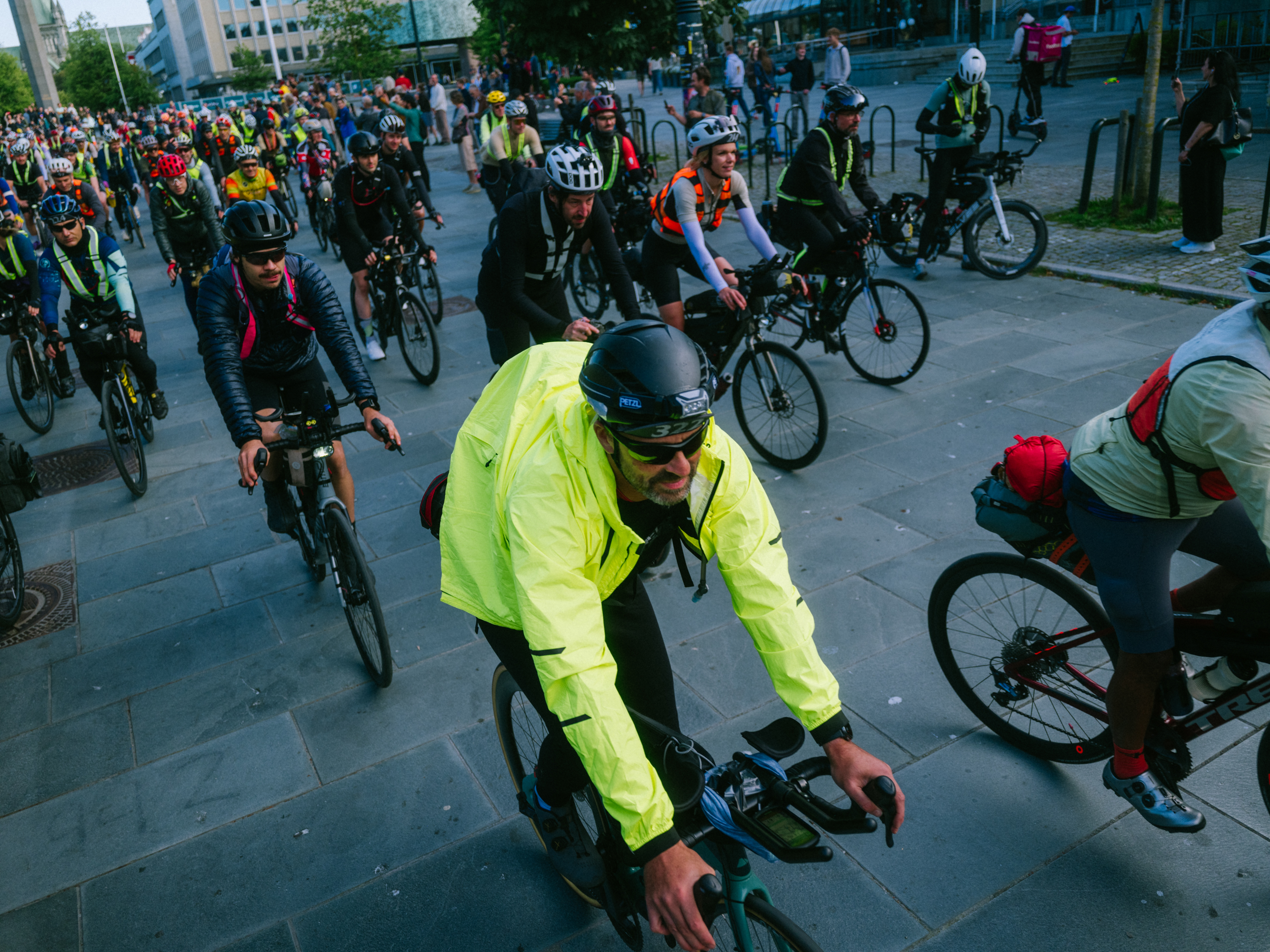
We were grateful for the neutralised start: 5 km of calm before the flag dropped and the race began. Charging along the Start Parcours, the usual suspects, as well as a smattering of newer faces, opened the taps and stormed ahead, with Robin Gemperle (001) soon finding himself embroiled in a drag race with Max Agut (051).
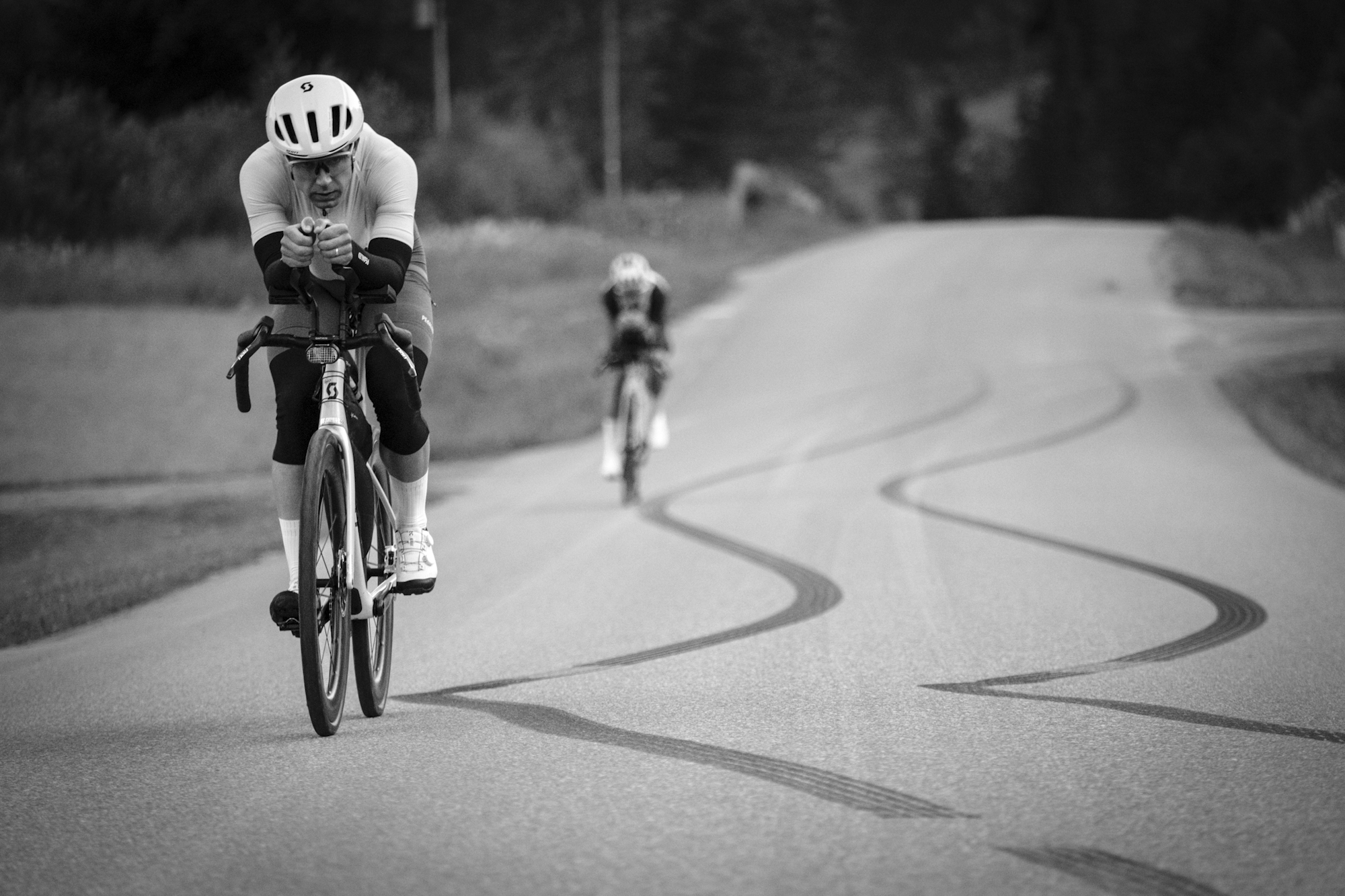
Max is making his TCR debut in the wake of an explosive entry to the sport last year. Since then, he has scythed to the top of the field with a blade that’s been whetted over three seasons of national-level racing. There’s no doubt he has an edge. Speed, perhaps more than pure grit, is fast becoming the currency of the TCR champion.
Blistering pace, hot pursuit. The race was warming up. But the Norwegian night – if we can credibly call it that – had other plans.
Sub Zero
The latitudinal span of this year’s race appeared an unwelcome prospect for those gathered in Trondheim. The elephant in the room. The ghost at the feast. With much of the field having been transplanted from warmer climes, the task of visualising cooler wealth seemed to draw underestimates from some and overestimates from others. Bare legs bristled with goosebumps as slivers of Lycra were slipped on, bridging gaps between socks and shorts.
By the night, though, riders had resorted to less elegant solutions. Dennis Wolckenhauer (308) was spotted with plastic bags tied to his feet – an insulating membrane between sock and shoe. At -2℃, every layer counts.
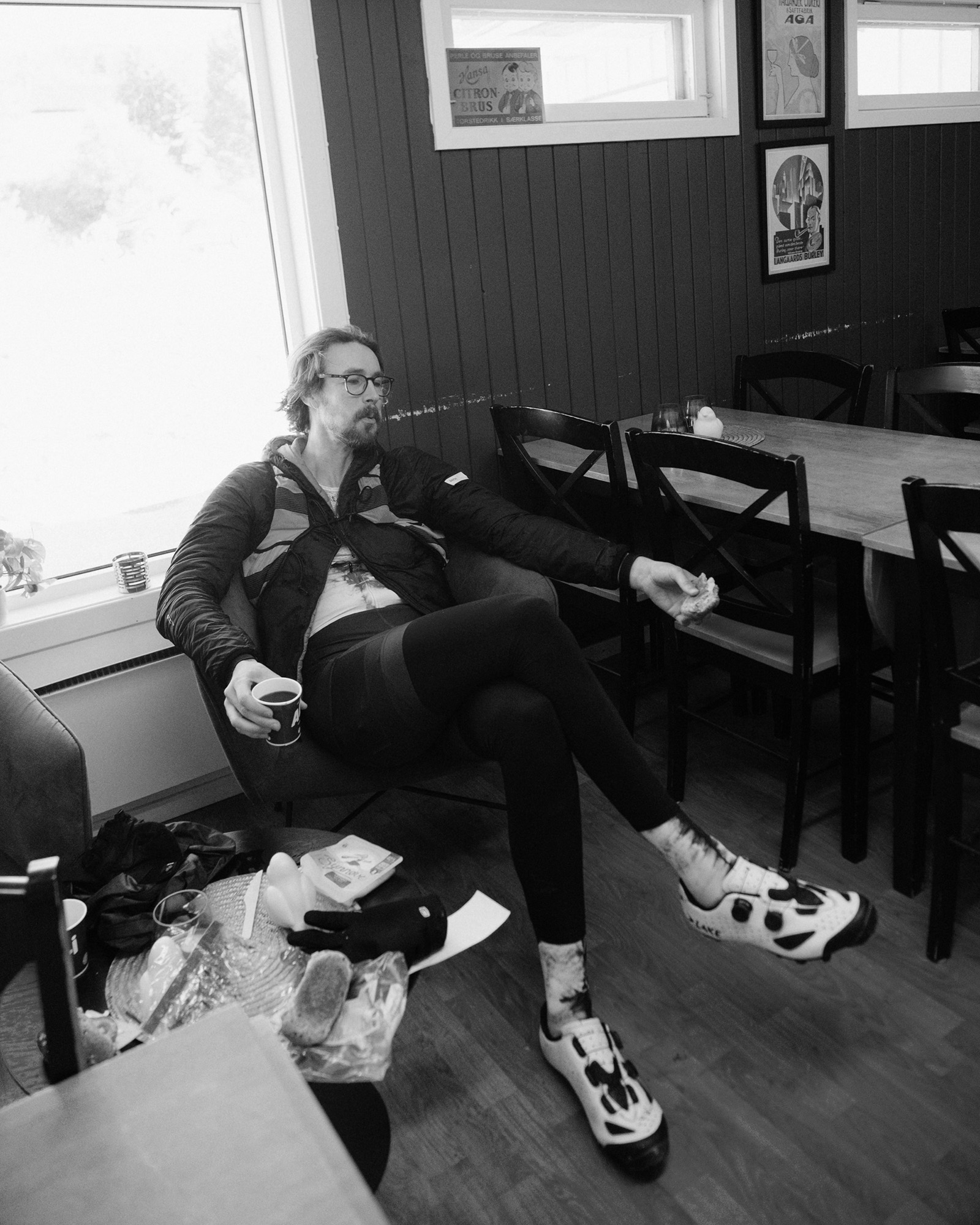
As a late-stage boon, ahead of the long, not-so-dark night, Race Director David Ayre informed riders at the briefing of an additional resupply, 148 km into the Start Parcours. The Haltdalen Coop had, contrary to any expectation, become enthralled by the race, and so had decided to keep their doors open through the night for riders to resupply at their own leisure. When riders arrived, however, it soon became clear that they’d opened unstaffed. Perhaps the employees were less enthralled than the employers. In a move reminiscent of the café raids of old, it looked possible the Haltdalen Coop that night might be a self-service free-for-all.
In fact, all was intended. It seems technology has kept pace with the ultra space. Rather than the traditional dine and dash, with race organisers left to pick up the tab, riders could only gain entry with the swipe of a bank card and leave with the scan of a valid receipt. No staff, no problem.
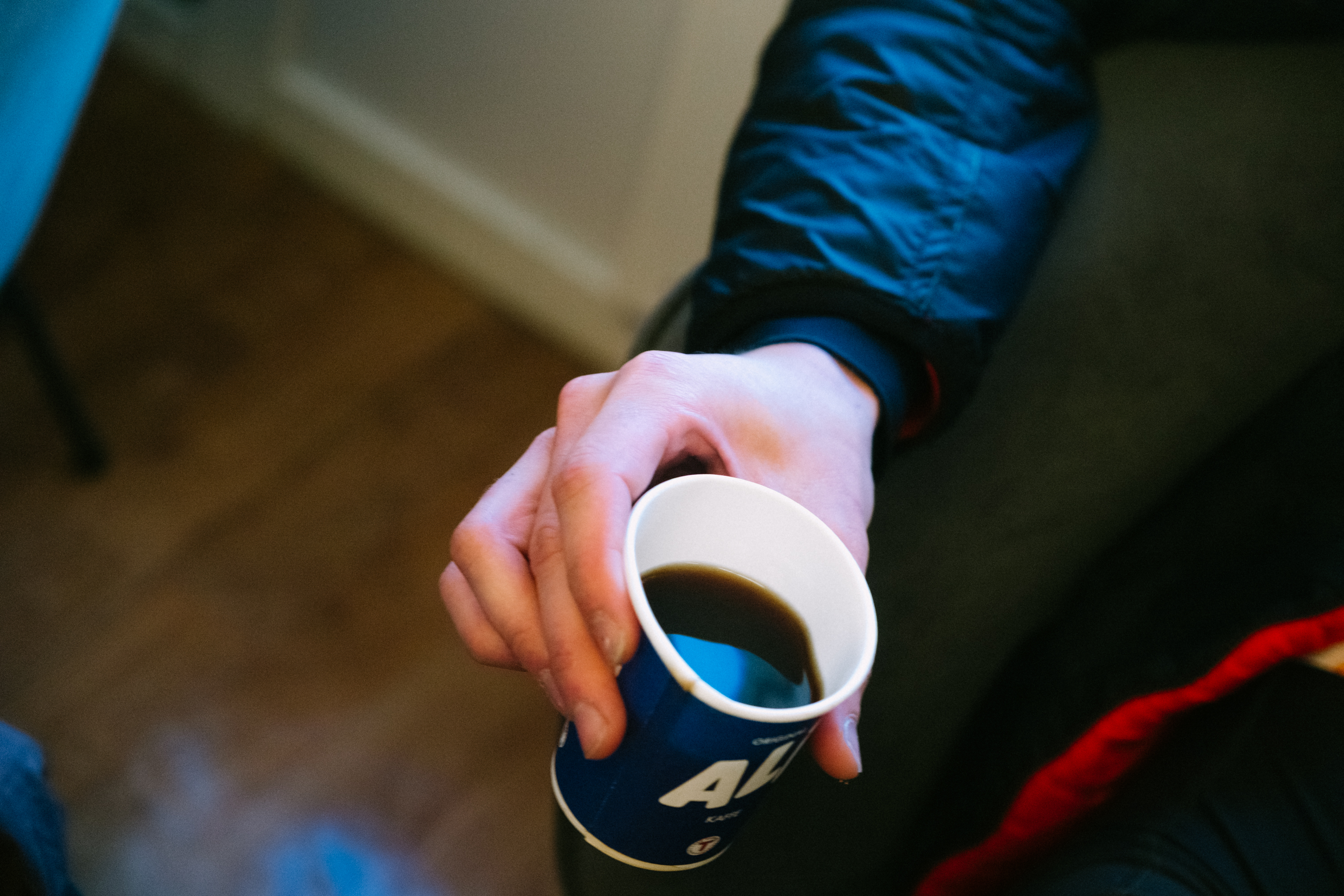
What the team at the Haltdalen Coop mightn’t have banked on is that their provision would mutate from feed stop to refuge. As the only respite from the bitter cold, many riders found it tricky to leave a heated space, and what’s more, one chocked full with edible delights.
A Nordic Paradox – or Two!
Catching up mid-morning with Jocelyn Roth (114) near the initial section of Norway’s split first parcours, it appeared that the convenience of Haltdalen’s Coop had been the exception that proved the rule. Resupply had been tough – so tough, in fact, that it had acquired a name: the Nordic Paradox. “There’s water everywhere,” he exclaimed, “but nothing to drink!” It had been a thirsty morning. The restaurant where we spoke was of limited relief; it had water, yes, but also a menu with prices that made our race team baulk. We all decided to have lunch elsewhere.
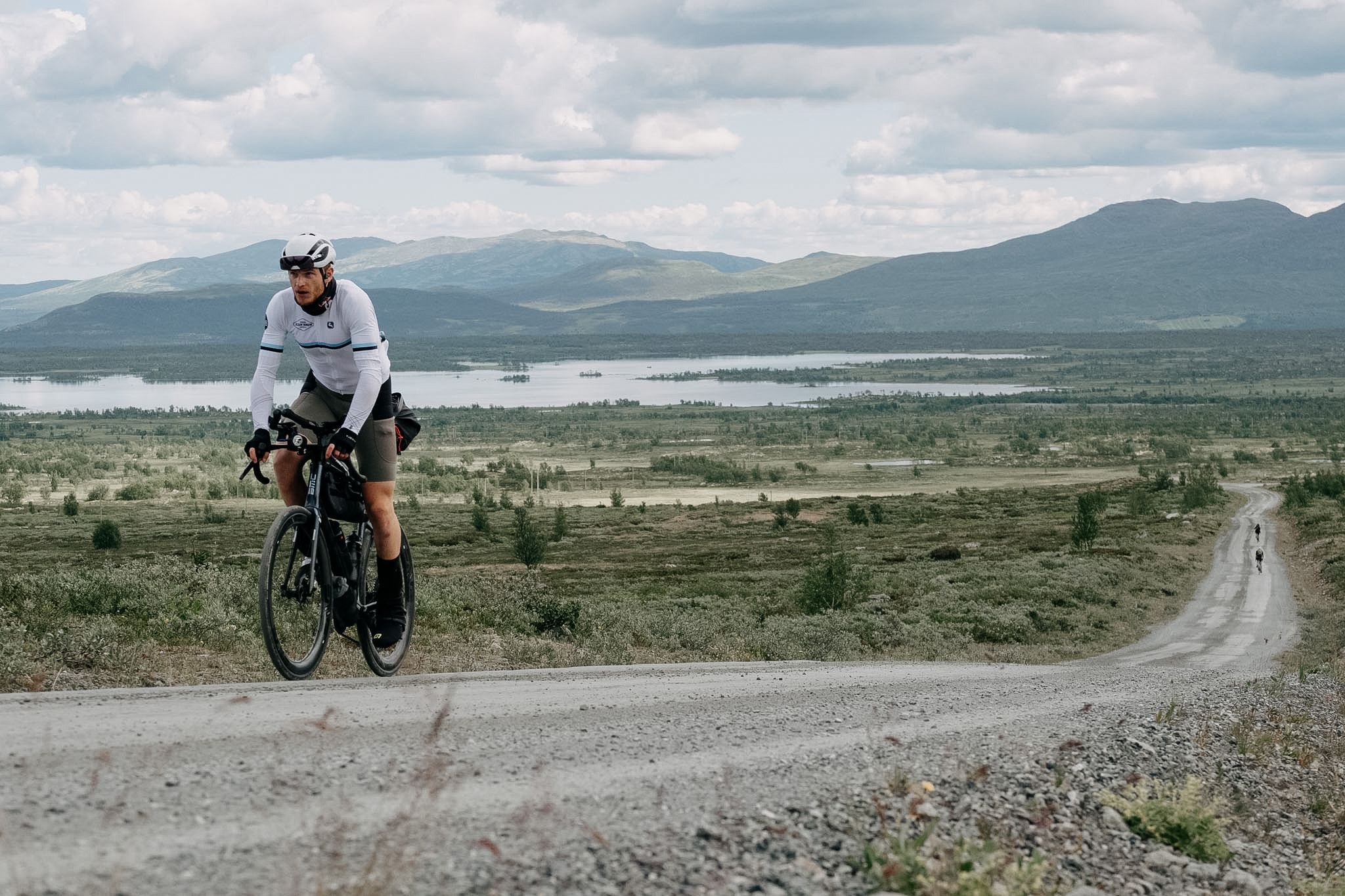
Before he left, Jocelyn filled us in on the day’s second paradox. Asked “How was the night?”, he replied, “Crazy cold.” The difficulty was, he spent most of it descending, pedalling hard to warm up only yielded a chillier breeze. There was nothing to do but to grin and bear it. Back for his second stab at a GC finish, Jocelyn finished outside of the General Classification last year, removed from 6th position following an infringement on the grounds of outside assistance. He’s certainly quick enough to be back in contention. Reflecting on his start and his emerging strategy he said, simply, “It’s always good to know that you’re in the mix, and I’m happy to know that I am.”
Reluctant Harmony
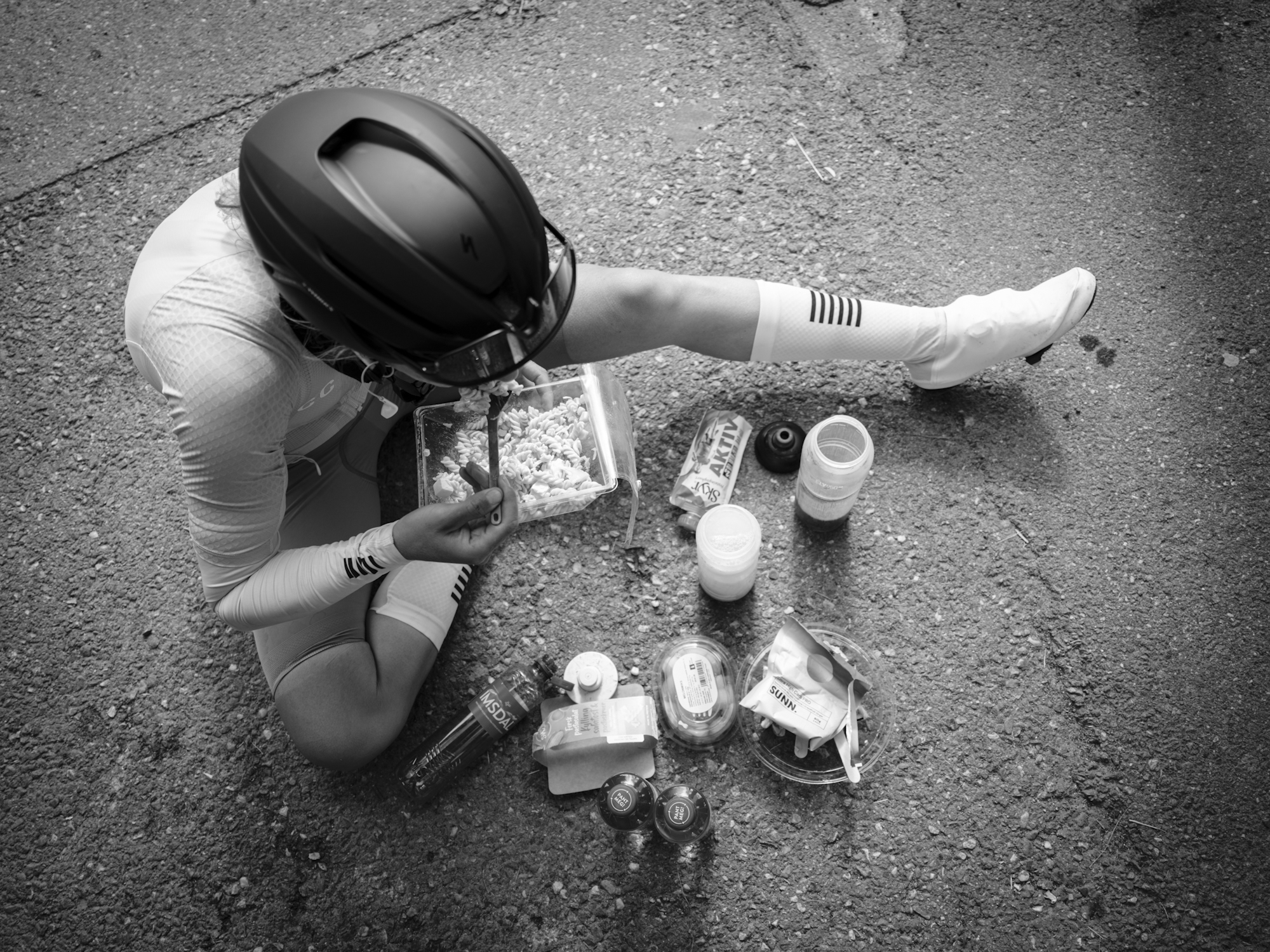
Also firmly in the mix, and for two categories, no less, by mid-morning, Jana Kesenheimer (010) sat squarely in the midst of the chasing pack, and at the head of the FLINTA field. Over a sachet of her trademark baby food – protein-boosted for the statuesque Scandinavians – Jana, too, complained of the Nordic Paradox. “You see water all the time, lakes and fjords, but you can’t find something to drink.” Lately, she’d been forced to ration. To drink, or not to drink? That was the question.
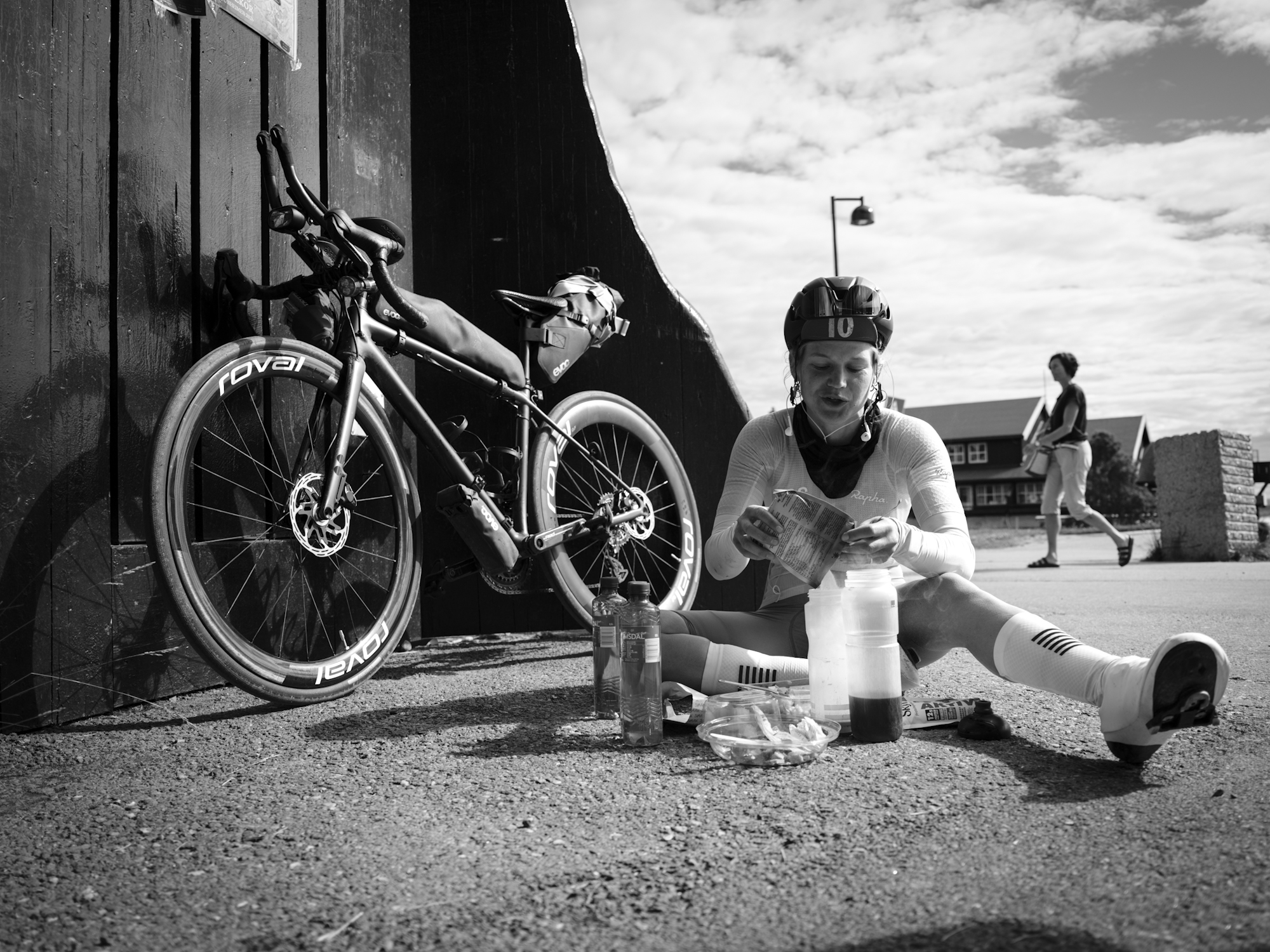
But headspace for such decisions had been limited for Jana, having spent much of the morning in turmoil over her tracker. Racing too, this year, is Christian Holweck (014), Jana’s partner. Having done much of their training in tandem, it was little wonder that the fruits would prove similar. Jana explained that they’d spent most of that morning trying to get away from one another, while still maintaining their natural cadence. Yet try as they might, they remained in step. It’s strange, she explained, trying to escape your partner. “Your instinct would be to say ‘Hey!’, have a good time, maybe lie in the grass and chill for an hour. But instead I say ‘Can we please take a photo to show we’re not riding together?’” As we saw last year with Cynthia Carson and Steven Davis, harmonising with a partner is a natural habit; it can be hard to disrupt the rhythm.
A Vanguard of Veterans, and the Odd Debutant
As dusk bled into dawn and the morning defrosted, a vanguard soon emerged. Chisled from the pack by both routing and pure haste, big hitters Max Agut (051), Nicolas Chatelet (126), Robert Müller (045), Christoph Strasser (005), and Jocelyn Roth (114) began to edge a lead.
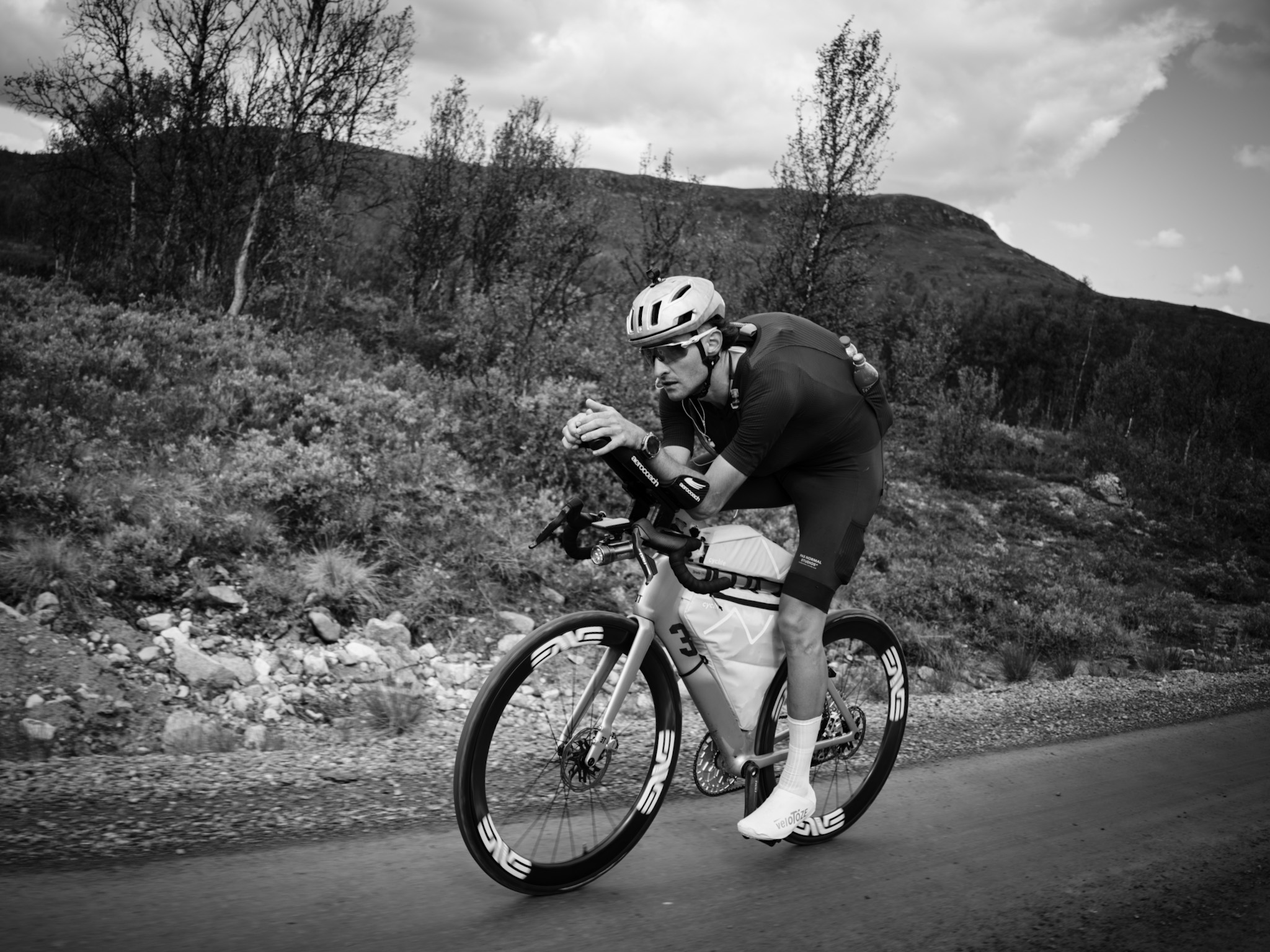
Also holding ground was Jakub Tomasik (355). Astonishingly, the 22-year-old had chosen to ride to the start of his first TCR, tracing his route through Northern Europe in reverse, as one great last-ditch recce. At race registration, Robert Müller – a relative veteran of the sport by comparison – noted the dramatic deepening of the field that’s occurred since his own debut six years earlier. He gave a nod to the younger riders pushing the realm of the possible ever further, while wondering who might establish themselves this year as a fresh face worth keeping an eye on. As a graduate of the Polish races, with ever improving results at both the Race Through and the Race Around Poland in recent years, there’s a chance Jakub might reveal himself as one of this new generation edging into the foreground of the major races.
The Mjølkevegen
The race’s first parcours is rather unassuming: 7 km of remote gravel forms the first of its two sections. This, of course, is no accident. It’s a lure. Designed to tempt riders away from tarmac, the parcours forms just a snippet of a much longer gravel route, the Mjølkevegen – the historic milk road carving a trade path down from the high Valdres mountain pastures to the valleys below. The familiar dilemma returns: direct and unpaved, or longer and smoother? Already we’ve seen riders opt for each, but by far the majority have gone direct.
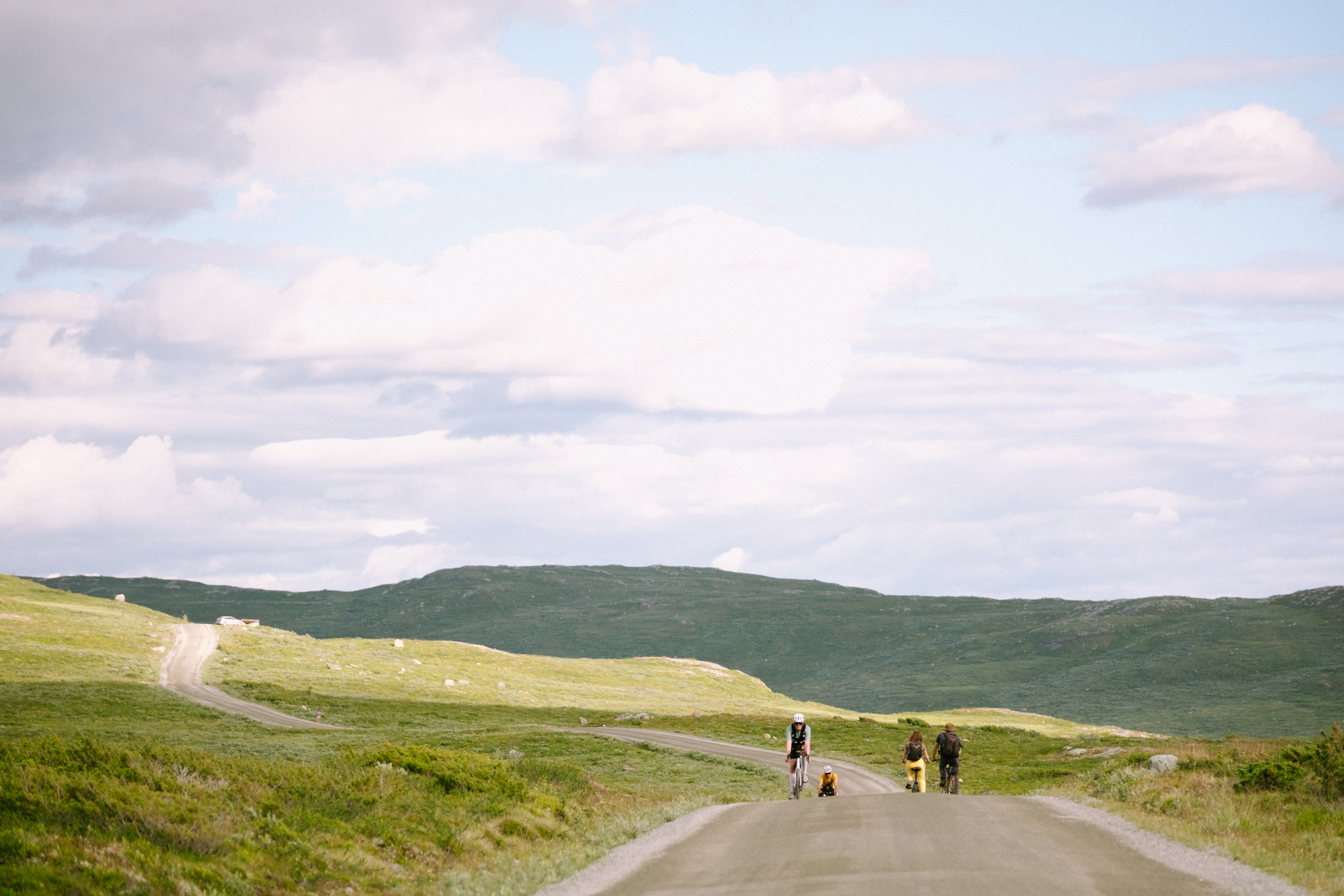
Strung out along the Mjølkevegen, our herd of riders were not alone. Today, the milk road was well trafficked. Of its human populace, there was an even divide: half high-speed randonneurs, there on business, half low-speed retirees, there for pleasure. Of its other visitors – an array of ungulates falling, no doubt, on the business end – all opted for the slower commute. Beating a path for our control car through herds and flocks, I couldn’t help but consider the designation historic a little premature for the milk road.
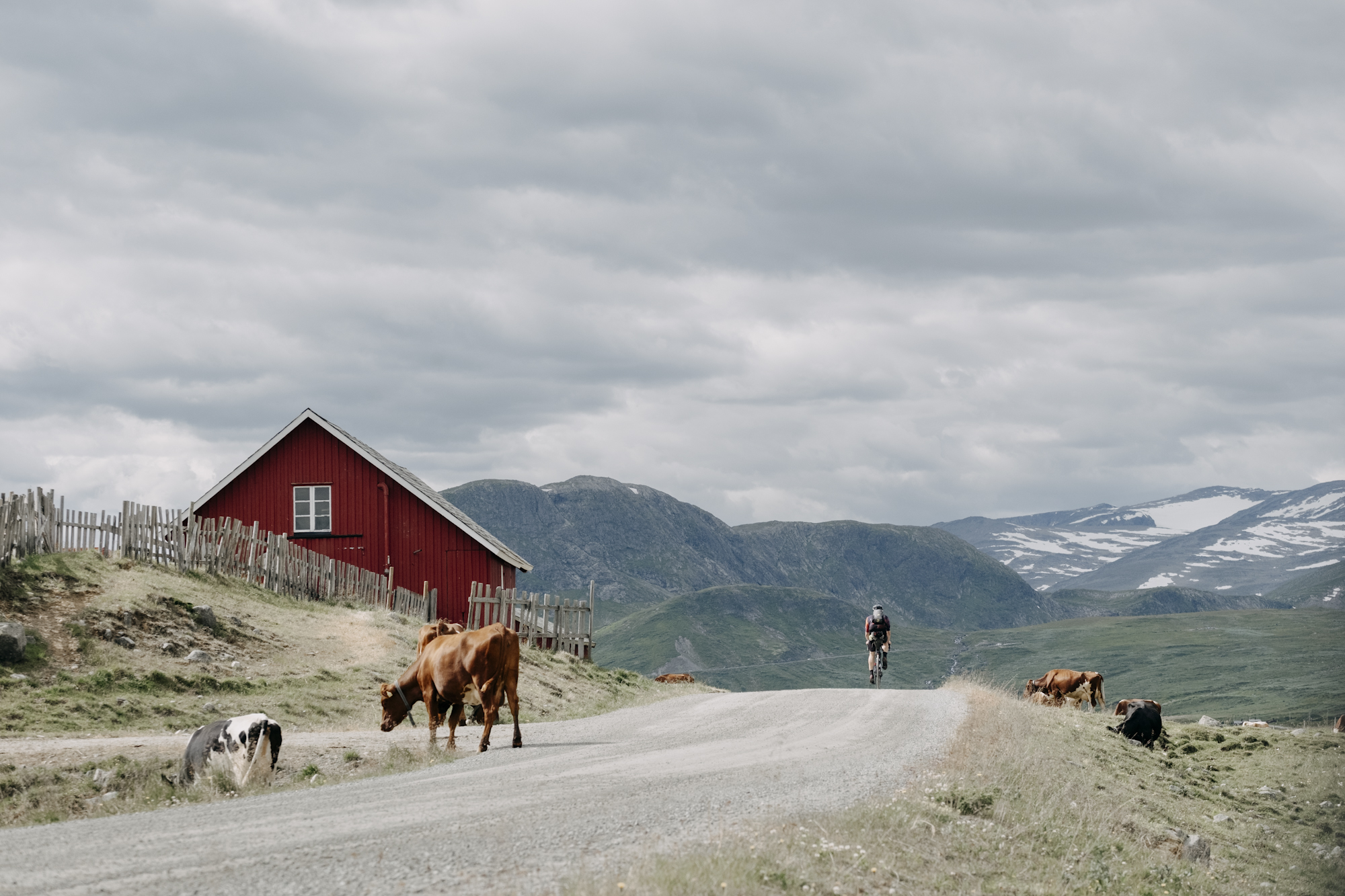
It’s no wonder the route proves so popular. Small settlements of Norwegian huts, painted paprika and mustard, pepper the shores of the fjords that glimmer on each horizon. Their living roofs – grass gardens replacing tiles – and squat, stone chimney stacks blur the boundary of the wild and the domestic. The network of immaculate chalk-white gravel tracks that score the surrounding plains invoke easy parallels. The Nordic strada bianche, perhaps, where lines of cypress are replaced by thickets of silverberry and silver birch.
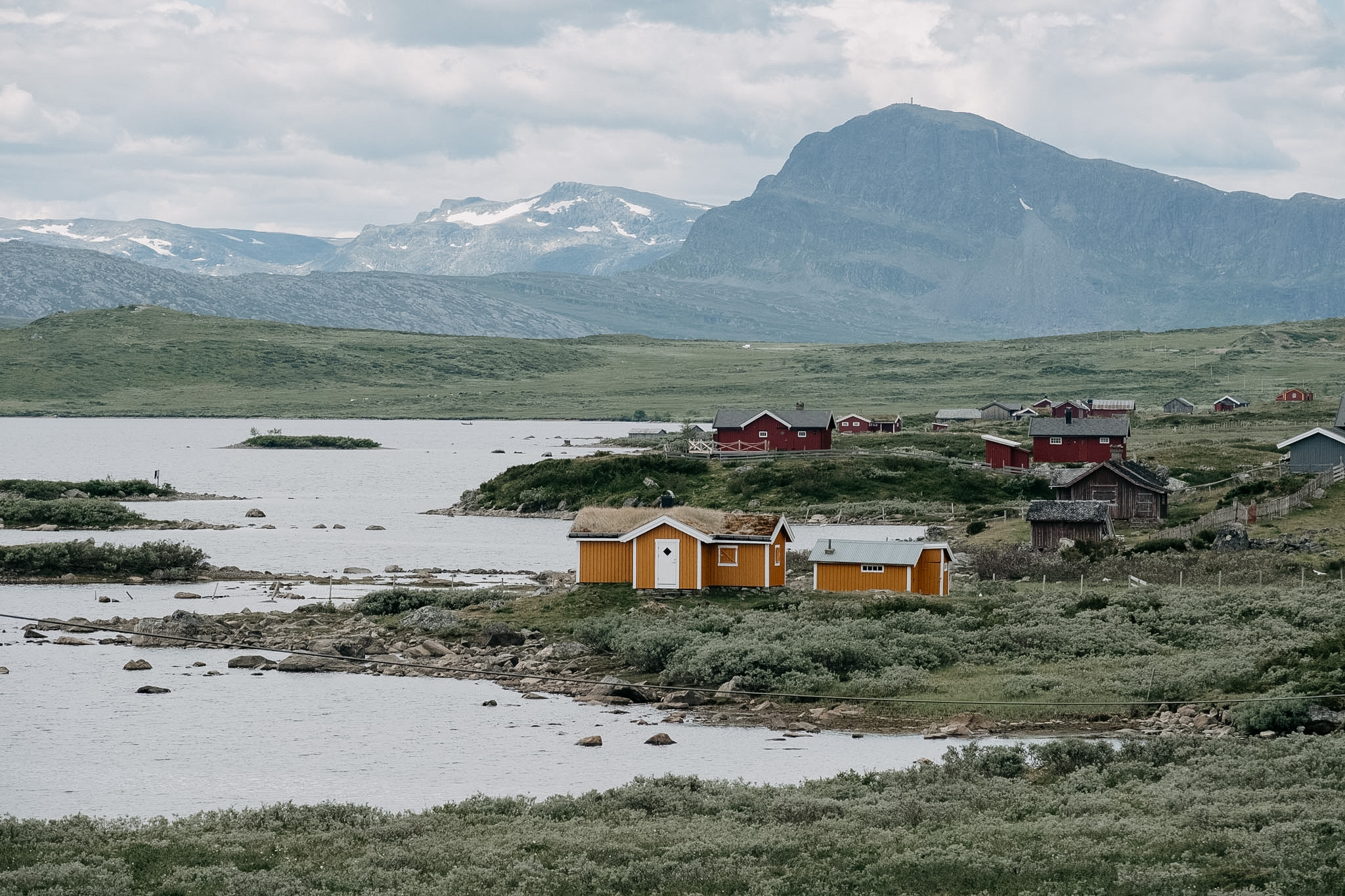
For some riders, however, such things were a mere distraction. Having spent the day firmly in one another’s eyeline, Max and Nicholas traded places throughout the morning, while Christoph, Robert, Jocelyn and Jakub trailed close behind.
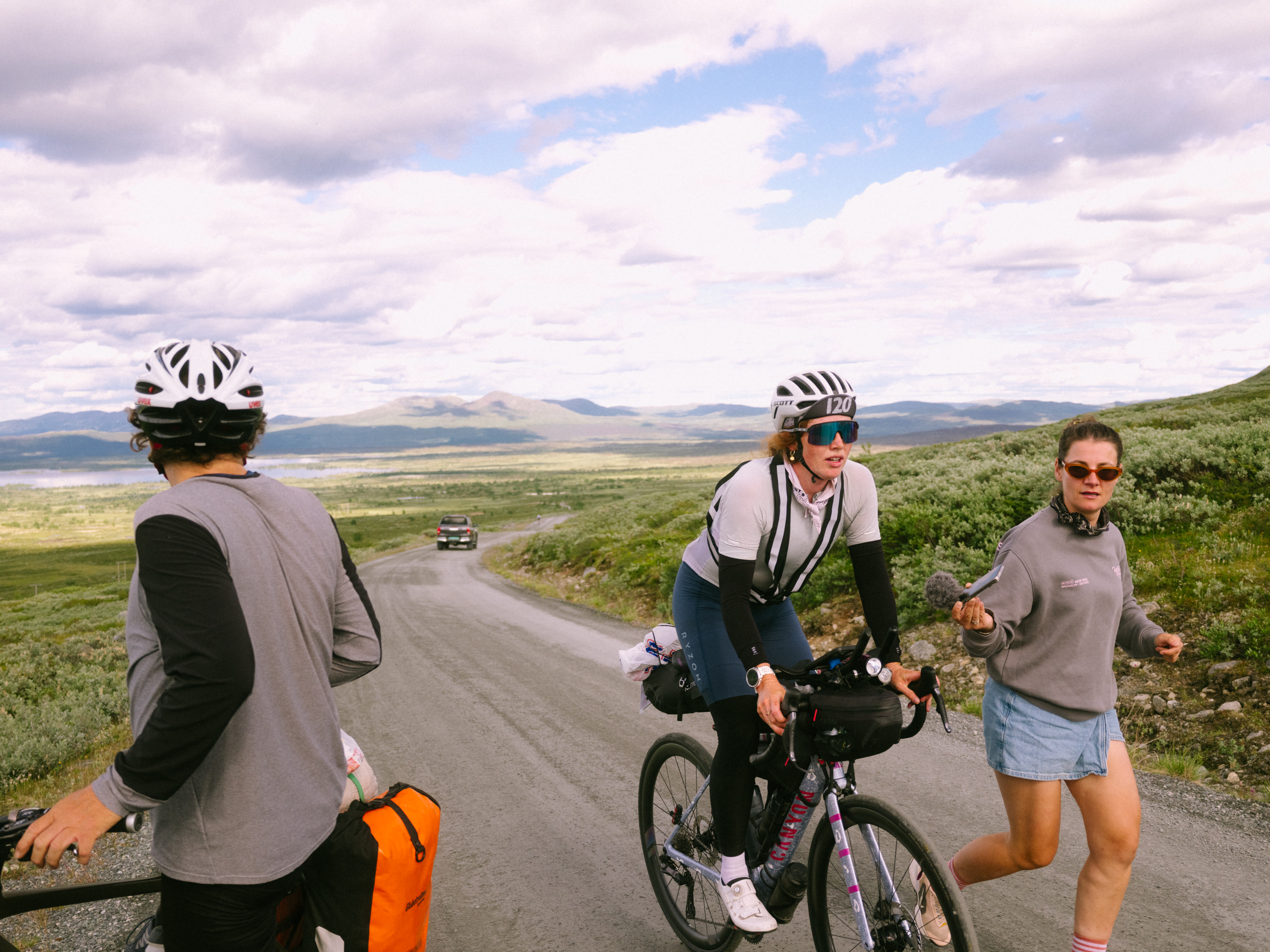
Amongst the FLINTA riders, too, positions traded hands on the approach to the parcours. Hannah Hieke (314), who had held ground in 2nd position through the night and the following morning was followed closely by Camille Albisser (270), Sarah Bosslet (120), Hélène Fromenty (134) and Lea Hamberger (404). Nicole van Batenburg (029), who also laid chase, opted for a more circuitous, westerly approach to the first parcours. The decision, however, came at a cost. By late afternoon, she had dropped back, forced to regain ground in a push towards the first control. By evening, the race between the FLINTA chasers looked too close to call. But the lead? That was in no doubt. Jana’s two-and-a-half-hour advantage, drawn out over an efficient first day in the saddle, saw her primed to hold position at the head of the race’s opening act.
A Cut Above, a Shortcut Below
Elsewhere, one rider was carving out a substantial gap of his own. No one could match the pace set by Robin Gemperle (001). At dusk, his lead was contested, at dawn, it was commanding, by evening, it was cemented. Almost 24 hours since leaving Trondheim’s square, Robin had already put 675 km beneath his wheels. He arrived, consumed with strategy, eyes ablaze with ambition, to open the first control.
Having spent the day patrolling the first half of the split parcours in search of riders, our team in Control Car 1 were suddenly spurred into action as Robin’s blistering progress forced us to lay chase. As he crested the false summits of the Snøvegen – the snow road – we cut a more direct route through the solid gneiss rock below.
The Lærdal Tunnel, our shortcut, is the longest road tunnel in the world – a subterranean artery spanning the 25 km between Lærdal and Aurlands. Bathed in the yellow-blue light of a fabricated sunrise, three vast illuminated chambers punctuate the journey, breaking the monotony and relieving claustrophobia. If only the riders were so lucky.
This Could be Heaven
Yet it seems some were. Those fortunate enough to cross the pass to the first control before dusk settled were treated to a golden hour like no other: a fast, flowing descent through the Norwegian fjords, the road unravelling in the lingering glow of the northern evening.
.jpg)
“This is heaven,” sighed Jocelyn Roth (114). “Honestly, I think it’s the nicest day I’ve had on a TCR.” Christoph Strasser (005) was quick to concur. Waving farewell to the control as he set off in search of rest, he called back, “David, thank you for creating the route up there. It was the best thing I’ve ridden in five years.”
It seemed as good a way to end the day as any. For all, that is, but Robin. As he rode into his second Norwegian night, the landscape slipped into the periphery. His focus had already shifted beyond Norway’s shores and on towards the Baltic crossing ahead.