Buy our book


The Trans Pyrenees Race (TPR) is a self-supported ultra distance cycling event, which traverses the Pyrenees from coast to coast, and then back again. The race covers up to 2000 km of the most spectacular and remote scenery in the Pyrenees.
The foundational principle of all of our races. Find out what self reliance means to us and why it's such a powerful idea.

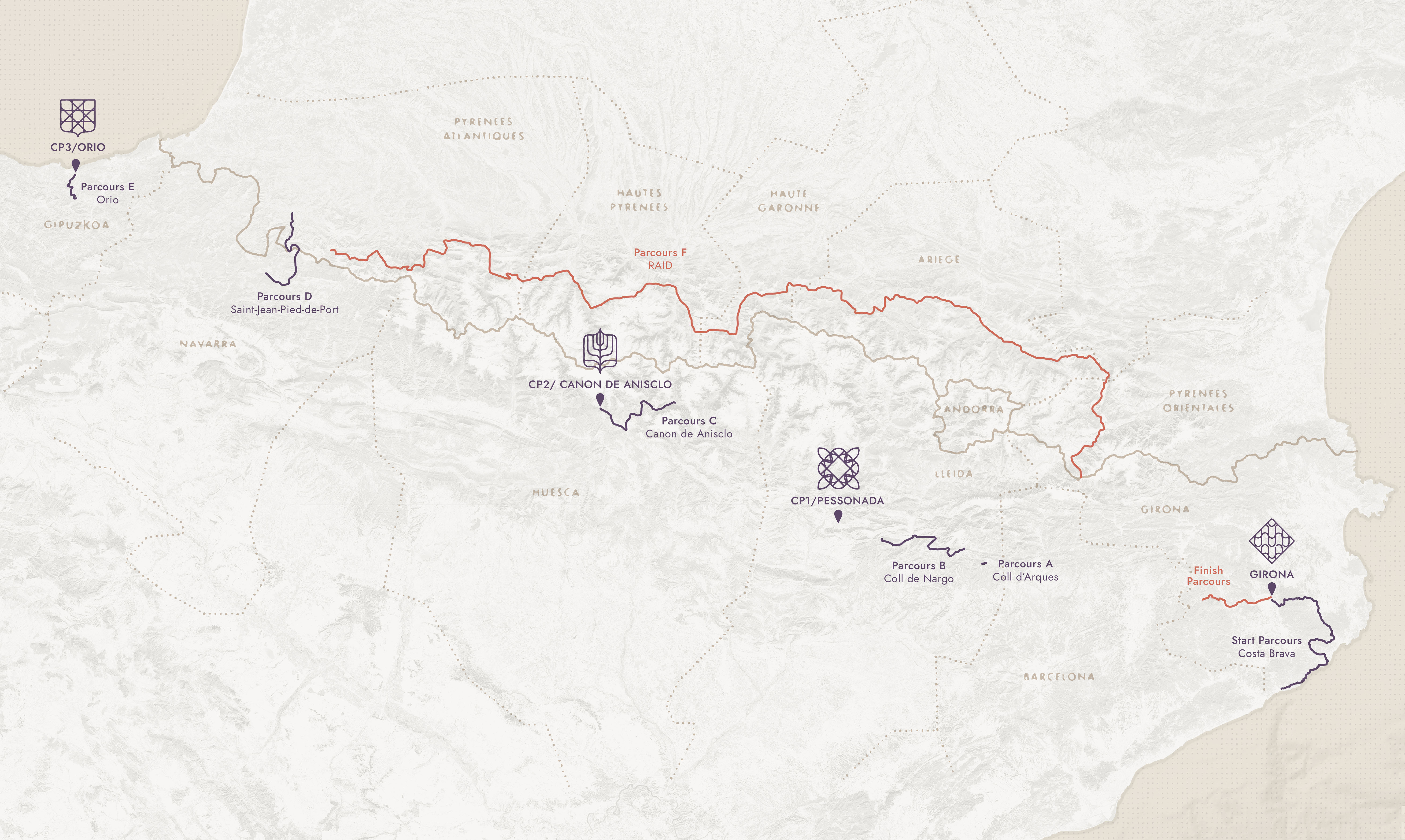
Starting under the watchful eye of Girona’s Basilica de Sant Feliu, the start parcours heads straight for the beautiful sweeping curves of Els Angels - Girona’s most famous climb. From the summit riders descend to the plains of the Baix Empordà and out towards the stunning coastline of the Costa Brava, where tree covered cliffs drop directly into the crystal blue Mediterranean sea. Turning inland, the parcours finishes, but the exploration of Catalonia’s lesser known regions has just begun.
Parcours A’s 2km of tarmac with 17m of elevation gain sound simple in theory, but few who know the Trans Pyrenees Race will think it is likely to be in practice. From the Coll d’Arques, the natural route heads cross country towards Parcours B. But pick your poison carefully, some routes through the forested slopes may be better than others… Starting at Coll de Jou, Parcours B brings the race to a new, unexplored area. Immediately, the sheer rock faces, good gradients, and balcony roads with endless views will have you wondering why these roads aren’t better known. Finishing with the beautiful Coll de Boixols, riders are once again faced with a choice: around, or through?

At Pessonada, on the edge of the Boumort Reserve, sits the race’s first CP. Unmanned, old school, and in tribute to one of the oldest modern ultra races, the Barkley Marathons, riders will validate here in the most analogue way possible, by tearing a physical page from a book. For those interested in prose, it could be said that CP1 marks the end of the foreword as the race heads towards the mountains for some real character building.
After its dash to the mountains, at Parcours C the race skims the edge of the Pyrenees proper as it snakes its way from Plan towards the Canon de Anisclo and the race’s second control. Here, the high peaks of the Ordesa, and its sheer cliffs stand sentry to the high mountains, and anyone lucky enough to ride this way at sundown will see them painted red in warning.
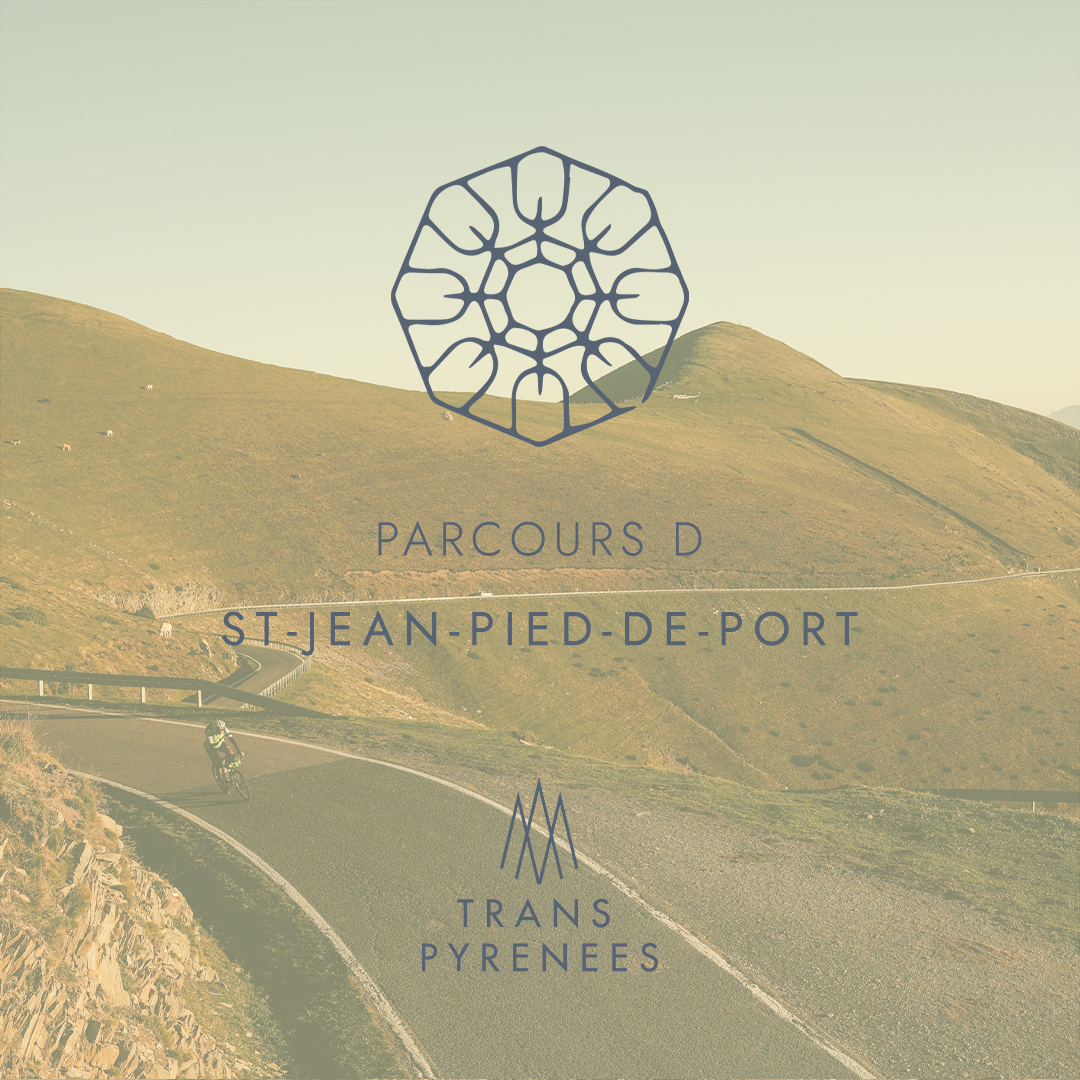
Finding their way across the Pyrenees, and into France for the first time, Parcours D starts in St St-Jean-Pied-de-Port and takes riders on the famous Imperial Peaks Road over the Pyrenees. Famous for its use by Napoleon travelling the other way as he retreated from Wellington’s troops during the Spanish War of Independence, it has long been used by armies and travellers alike as it stays clear and passable even in the winter months.
Landing once more in Spain, the race makes its way through the Basque country to the small fishing town of Orio, nestled in the mouth of the estuary where the Oria river meets the Atlantic ocean — signalling that the race’s first crossing of the Pyrenees is complete. Climbing back up into Basque country, Parcours E takes riders through rolling farmland, forests, and then back out into open pastures with the Bay of Biscay stretching out below them to the horizon.
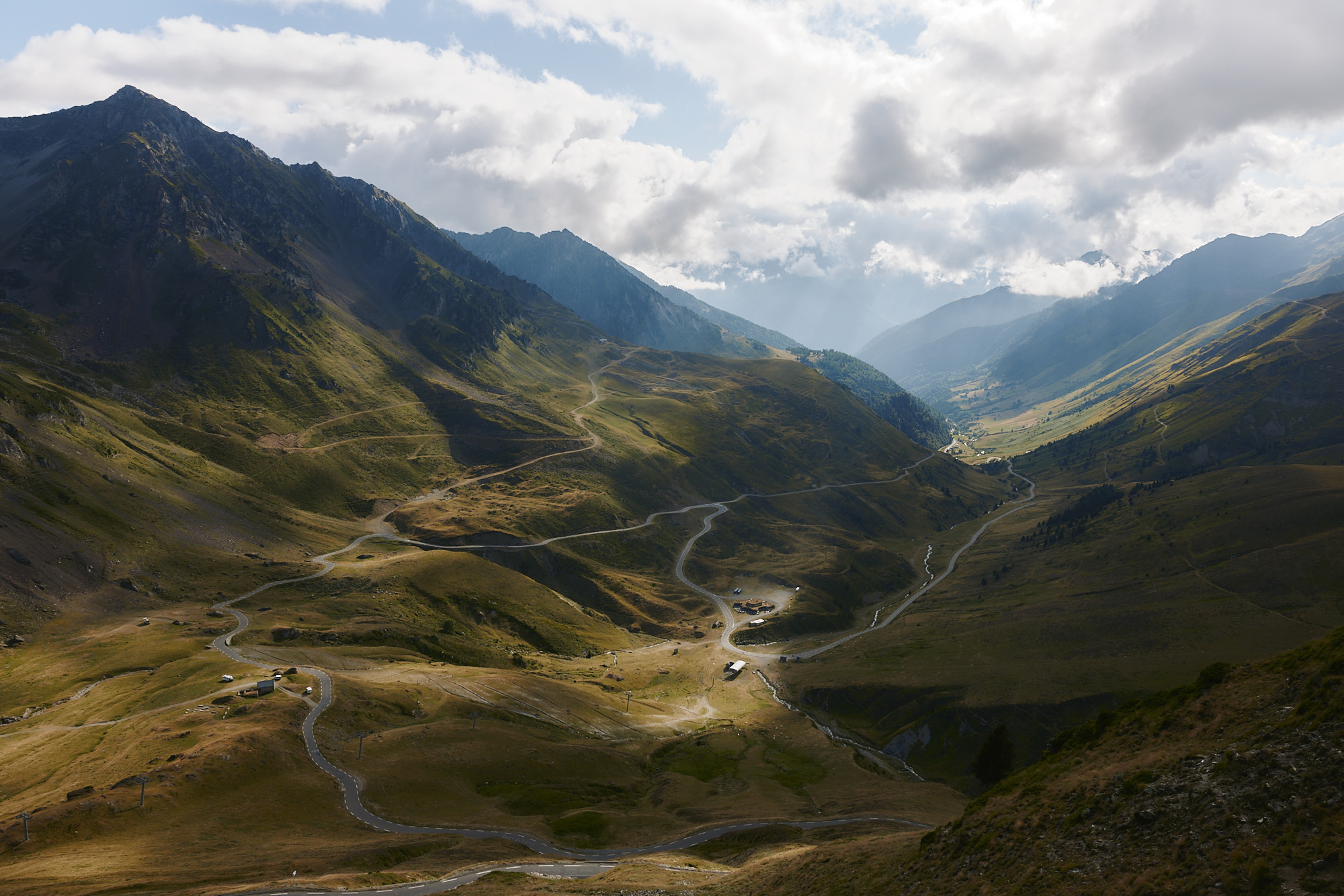
Next comes the race’s second act, the fearsome RAID Pyreneen, taking in col-after-historic-col. Starting with the lesser-known cols of Bagargi and Marie-Blanque, before firing up the greatest hits: Aubisque, Soulor, Tourmalet, Aspin, and Peyresourde, to name but a few. This year, however, the mighty Tourmalet is not the Cima Coppi. In a twist to the RAID, the TPRNo6 Parcours F finishes at 2200m on top of the Cim de Coma Morera.
Starting at the foot of the Panta de Susqueda, the finish parcours follows the Ter river back to Girona, using secondary roads and Via Verde to take riders safely to the finish line, where they can finally rest after almost 1800km of relentless climbing. Time to sit, rest, and order another cortado.