
Lost Dot 101 // Pre-Race Report
May 9, 2026
Words by Athlyn Cathcart-Keays
Photos by Rox Barry, Matt Grayson, Saskia Martin, Sam Dugon and Michael Drummond
.jpeg)
Welcome to the Lost Dot 101
In nearly 24 hours, 148 riders will set off on the inaugural Lost Dot 101 from Santiago de Compostela — a city where countless pilgrims have ended their journeys, and where last year, riders of the 11th edition of the Transcontinental Race (TCR) began their long rides east.
This is more than just a start line, this is the largest gathering of women, trans and non-binary riders the ultra-cycling world has seen moving together at once. In many ultra-distance races, we are still an anomaly. But instead of searching the crowds for others like you, you are surrounded by them. There’s something electric in realising you are not an outlier in the field, but moving through it as part of a collective majority.

As the first ultra-distance cycling race for FLINTA* riders, the Lost Dot 101 marks the beginning of something special for the cycling world. Continuing the ethos of the #100TCRWomen campaign, the 101 invites FLINTA folk to embark on their own pilgrimages through Spain and Portugal, riding ~1,300km on a free-route format, visiting three control points before finishing up in Córdoba in time for the party next Saturday night.
* A note here on the term FLINTA. It’s a German acronym standing for ‘Frauen, Lesben, Intergeschlechtliche, nichtbinäre, trans und agender Personen’, or women, lesbian, intersex, non-binary, trans and agender individuals. Language is constantly evolving, and there are many different terms we could use to denote underrepresented genders in ultra racing. We recognise that no single label will feel right for everyone, but for the purposes of Lost Dot races, we have chosen to use FLINTA as a broad and inclusive shorthand, and one that is widely used. It is not intended to be definitive, but to create a clear and consistent way of describing who this race is for.
Making Space For The 101
Back in 2024, the Lost Dot team first had the idea to start a campaign to increase FLINTA representation in races.
“We’ve always been really keen to encourage more women, underrepresented groups and non-binary riders to take part in our races”, says Race Director Hannah Larbalestier. “Despite always trying to show an equal representation of riders in our coverage, and doing everything we could within the race to promote women racing, we weren’t seeing much uptake in FLINTA riders taking part”.
And so the #100TCRWomen campaign was launched, specifically targeting underrepresented genders, talking to them directly, and providing more education in the lead-up to the race. And it worked — FLINTA participation in TCRNo11 doubled compared to previous editions.
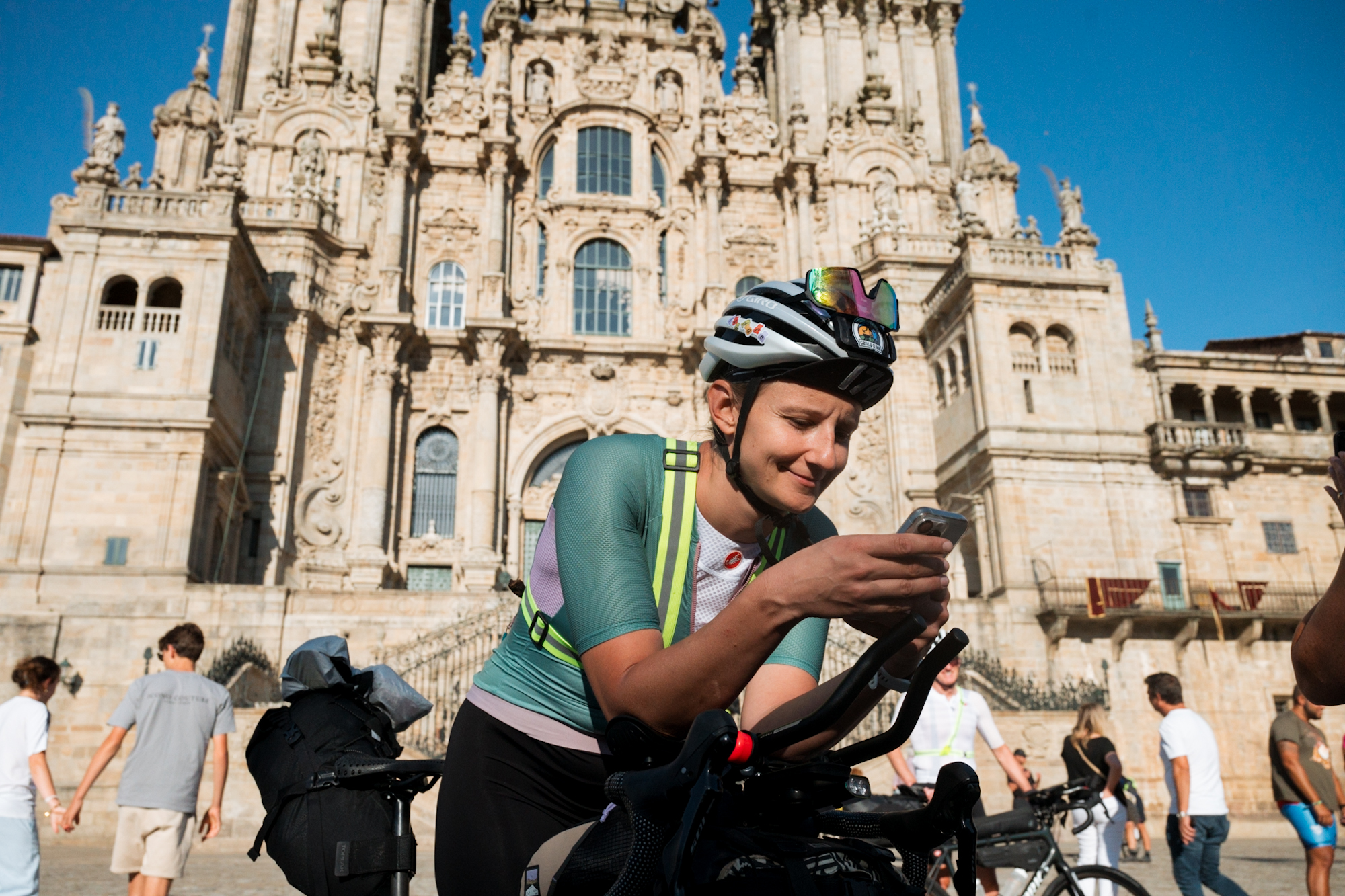
“Putting a number on it was a big part of it as well”, says Race Coordinator Andrew Phillips. “It really inspired people to sort of become part of a movement, and really effect change in one big leap that year”.
The momentum from the #100TCRWomen campaign was powerful, and not just a one-time thing. It helped people feel empowered to step into a space where they might not have otherwise felt comfortable, and to push their limits and discover what they were capable of.

With the success of the campaign, it felt logical to create a race specifically for FLINTA folk. The Lost Dot 101 was created to appeal to first-time racers — a 101 course in ultra-distance cycling — with the same rules and integrity as other Lost Dot races, acting as a ‘feeder school’ for bigger events.
“The idea of the race is to create a mini Transcontinental, which is kind of the pinnacle of ultra racing”, says Andrew. “We would love to have as many as possible of the riders who take part in the 101. Ultimately, it doesn’t matter how long it takes them, but if possible, they’ll graduate to riding the TCR until we reach a point where we have a 50/50 split”.
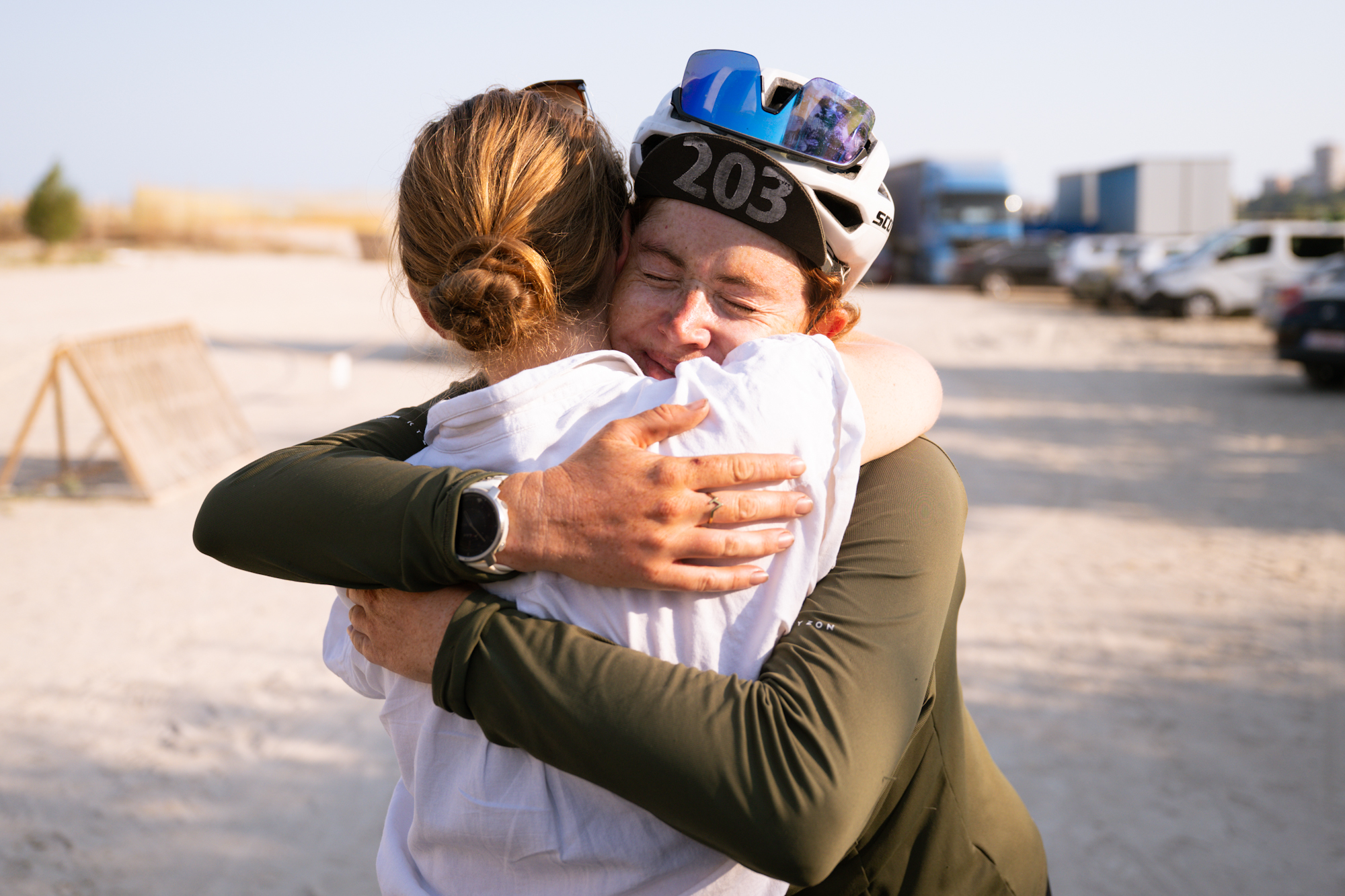
Through things like more relaxed cut-off times, and a lot of education in the run up to the race, the 101 is designed to appeal to those wanting to dip their toes into the ultra-racing pool for the first time. A number of pre-race workshops hosted by Lost Dot covering topics such as packing, route planning, and logistics have helped first-timers know where to start. There’s also an active WhatsApp group to connect and ease anxieties before the race, acting as a safe space for all those seemingly “silly” questions.
But don’t let the beginner-friendly atmosphere fool you. This is still a race, afterall. To meet the cut-offs, riders will still have to ride an average of 200km per day, while committing to being self-supported for the duration of their journey. There are some incredibly strong riders tackling the Lost Dot 101 in its first edition (as you’ll see below), and the race is set to become a strong fixture in the ultra-racing calendar.
But first, the route…
The route
As a free-route race, the inaugural Lost Dot 101 is not defined by a single line to follow, but by a framework of possibilities, challenging riders to navigate between a series of fixed parcours and control points following their own paths. Rather than prescribe each kilometre, the route becomes a strategic puzzle of efficiency vs exploration, smooth vs rough, and direct vs detour.
The race begins where the TCRNo11 left off in Santiago de Compostela — or simply ‘Compostela’, as the locals know it — where the #100TCRWomen reached its crescendo, and the 101 was announced before riders set off.

Where the TCR sent riders straight to the mountains, the 101 is an inverse route with the race syllabus gently ramping up from deep river canyons to sizeable summits as the distance adds up. It could be said that if you were to put a dotted line across the middle of the Lost Dot 101 route, you could fold the mountains of the second half into the valleys of the first. For first-time and experienced riders alike, the inverted topography of La Raya (the Spanish-Portuguese borderlands) will demand careful energy management in the early days.
From Compostela, the first parcours through Galicia sets the tone, leaving behind the historic pilgrimage city and winding through farmland and eucalyptus forest before dropping sharply into the Mino and Sil valleys. Of course, they will have to climb out again, and the parcours ends at the small hilltop village of Cristosende before riders must choose where to cross into Portugal for their onward journey to the sleepy town of Bragança and CP1.
From Bragança the earth drops dramatically once more towards the Douro River, carving a vast canyon where three different vulture species build their nests, launching off the granite boulders to soar on the thermals below. The name Douro likely comes from the Celtic dubro meaning water, which also gives Dover its name. The vineyards along the water’s edge produce wine and port, much of which would have been transported by boat to the river’s mouth in Porto.
Progressing south-westerly toward CP2 at Linhares, riders will be scanning the horizon for the castle that once protected this 12th Century Medieval village. Beyond Linhares, the landscape shifts again as the route rises towards the Serra da Estrela and the highest mountains in continental Portugal. Here, we begin to meet the mountains as granite ridges replace deep canyons, and longer sustained climbs become part of the equation. Far from any sea, this high ground also carries an unexpected literary mention: In Moby Dick, Ishmael describes the Estrela mountain range where “there was said to be a lake in which the wrecks of ships floated up to the surface”. For riders, that same sense of improbability lingers as they climb higher, towards peaks that once felt distant, into thinning air and onto weather-beaten plateaus where little shelter can be found.
Crossing back into Spain, we find Guadalupe and CP3. Set in the hills of Extremadura (meaning the "Extreme Douro", or land beyond the Douro), the village of Guadalupe grew around the Royal Monastery of Santa María de Guadalupe, one of the most important monasteries in the country for over four centuries, and now a UNESCO World Heritage Site. But before brevet cards are stamped, they must first ascend Pico Villuercas – a punchy climb that has featured in numerous professional races including the 2024 Vuelta a España.
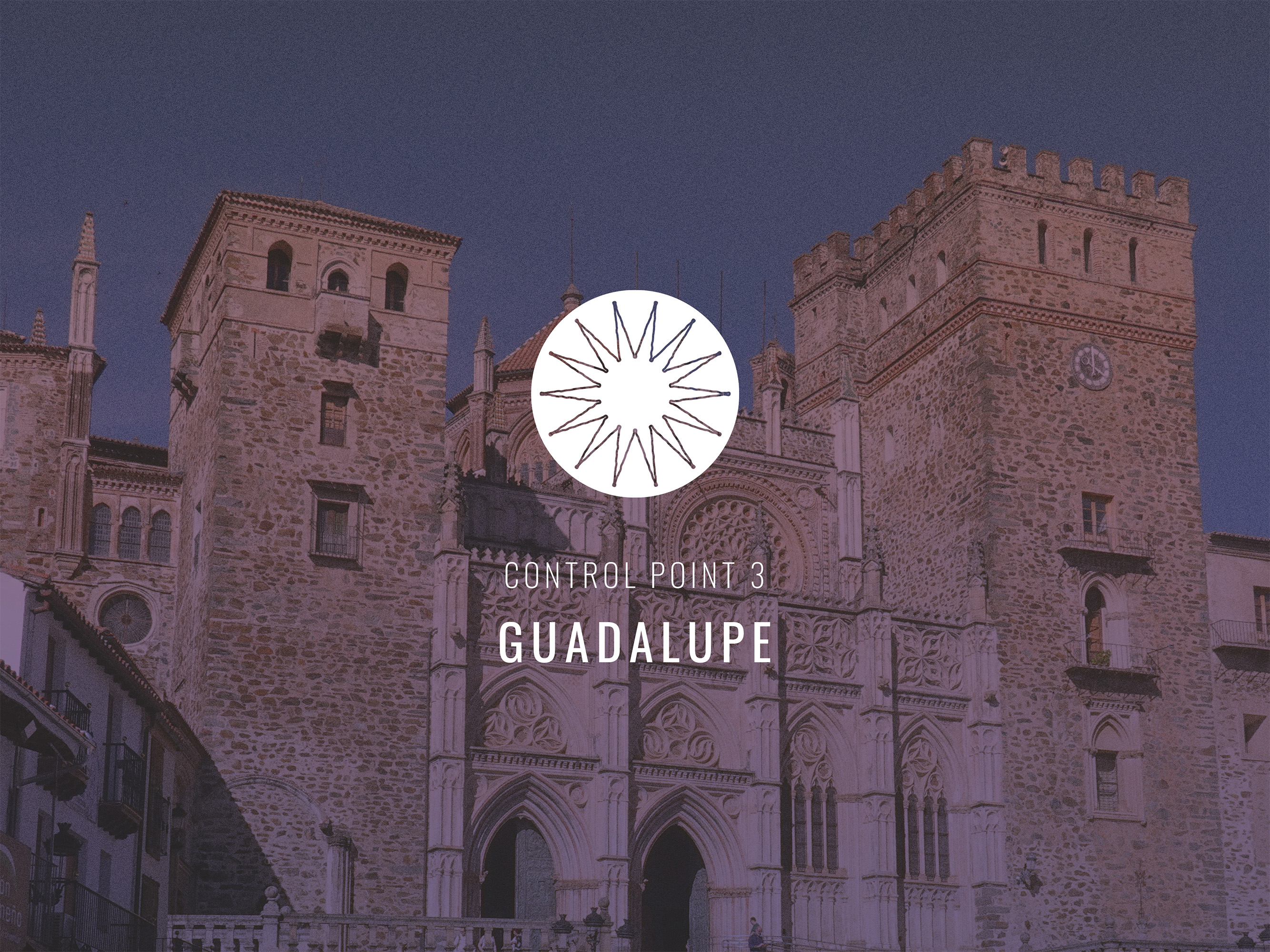
Leaving the cobbled streets of Guadalupe behind, the finish line is still a while away. The final parcours follows narrow, winding roads, skirting the edge of the Sierra de Hornachuelos Natural Park, with roads lined with evergreen, oak, cork, olives and dwarf palm trees. The terrain rises and falls, reaching modest peaks of 500m before descending the balcony roads into the city of Córdoba.
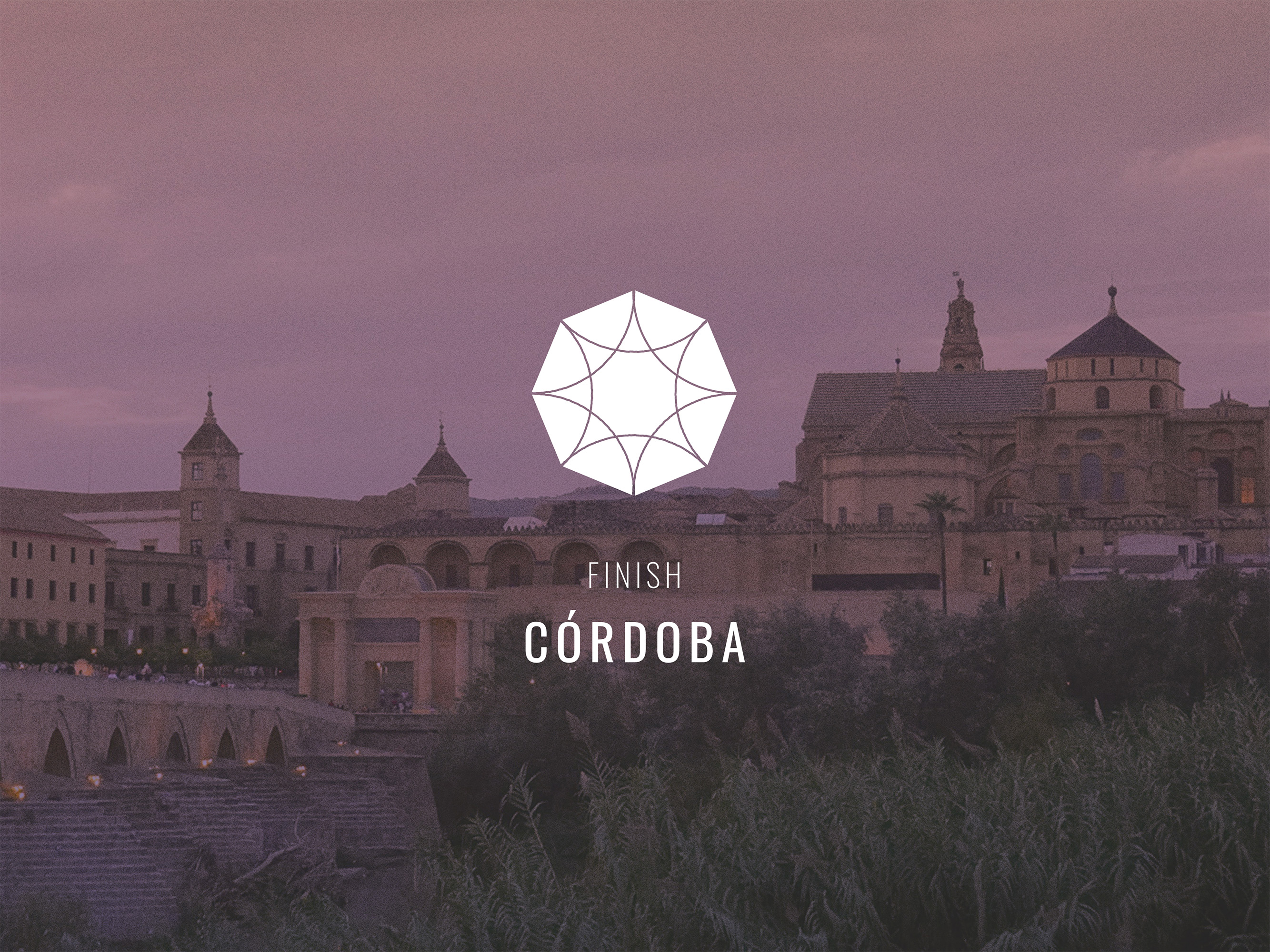
The Roman city flourished under the Caliphate of al-Andalus — the powerful Islamic state that ruled much of the Iberian Peninsula, where Islamic, Jewish and Christian traditions coexisted. Today, the city remains a palimpsest of cultures, its layers of legacy visible in the urban fabric. In modern history, Córdoba has evolved from a provincial Andalucian city to a globally-recognised cultural landmark, with its historic centre designated another UNESCO World Heritage Site.
For riders of the Lost Dot 101, Córdoba marks a definitive shift from isolation to arrival. A journey that began as a pilgrimage in Compostela several days ago finds its conclusion here, shaped by different choices made along the way. After days spent navigating freely across open plains, canyons and mountains, the options narrow into a maze of streets where the noise and movement of the busy city replace the quiet of the previous days’ ride.
The riders
Remember, it might be the ‘101’ of ultra-racing, but just like TCRNo11, there are an abundance of promising riders descending on Santiago de Compostela this weekend to chase the crown. We caught up with some of them ahead of the start.
Ayesha McGowan (she/they)
You may know Ayesha as the first African American woman on a professional road cycling team. Retired from road racing and living on the outskirts of Girona, she now channels energy into Thee Abundance Project — an initiative designed to create a pathway for women of color to get into professional road racing.
One of Ayesha’s first entries into bikepacking was to trace the steps of the Buffalo Soldiers Bicycle Corps (an infantry of black military men, led by mainly white officers) who in 1897 embarked on a 1,900 mile journey from Montana to Missouri to test the efficiency of bicycles as military transport.
With a solid grounding in racing, there’s strong potential for Ayesha to do well. But having never raced an ultra solo before, the 101 will be a first test of distance, navigation, and pacing at a bigger scale.
Nicky Shaw (She/Her)
Making her debut at TCRNo5 in 2017, Nicky is now one of the most experienced riders in the field. From finishing TCRNo9 in 2023 to overcoming a hit-and-run setback in 2024 on the VIA race, Nicky has made a resilient return and we’ll likely see her at the pointy end of the field. With a goal to ride an average of 400km per day to finish in under three days, Nicky will certainly be an exciting rider to watch.
Nicky’s advice to first time riders? “If you’re feeling low and bad, just eat something – food is usually the answer… The journey is full of up and downs. If you trust that a down is followed by an up, just try to ride that wave to the finish line”.
Amrei Kuhne (she/her/they/them)
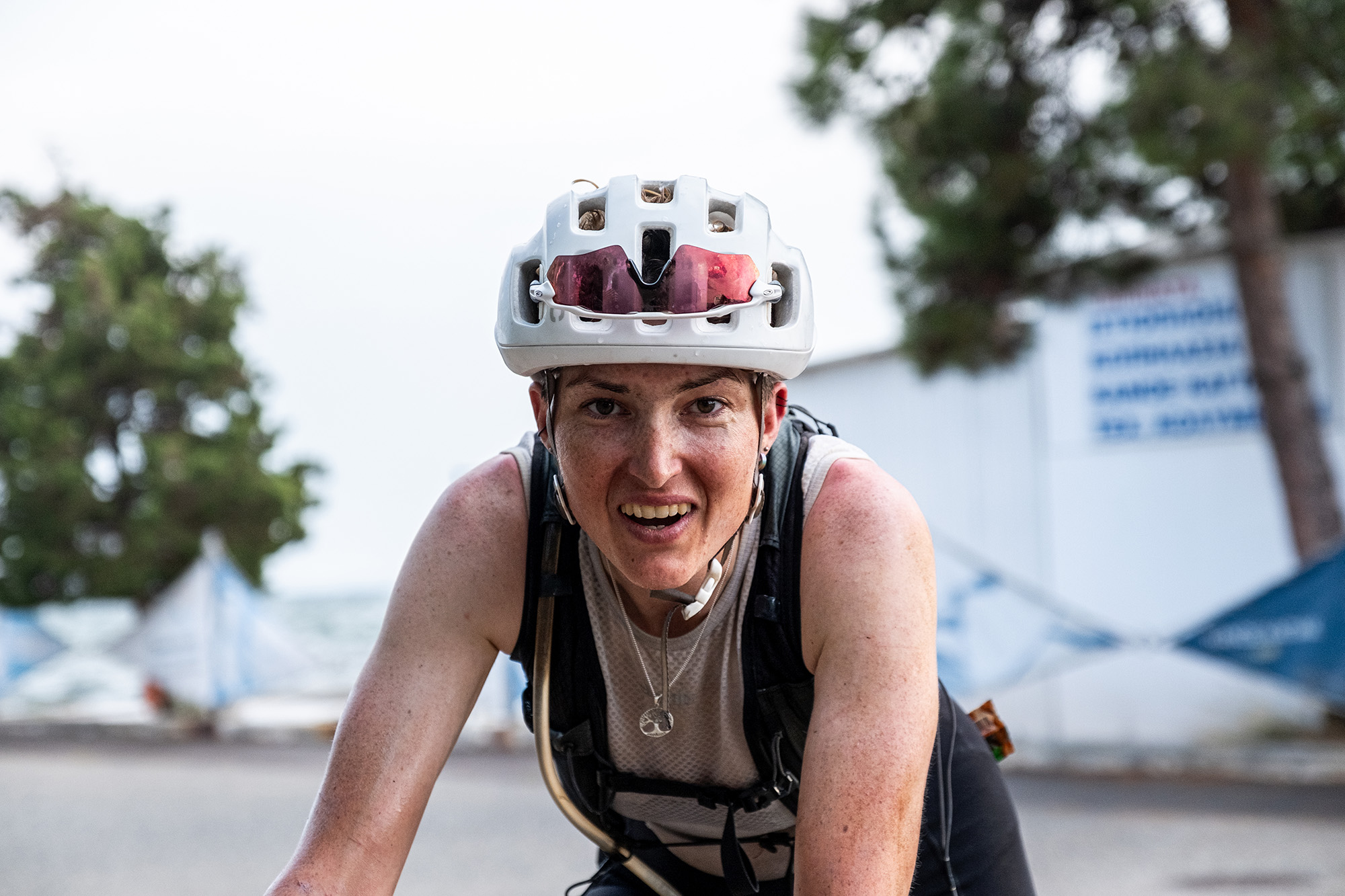
Supported by the Mike Hall Bursary, Amrei rode to a top 20 spot at TCRNo8. Then finishing eighth overall and first woman at Basajuan in 2024, there’s a good chance we’ll see her up there at the inaugural 101. Having just spent seven months exploring Thailand and Malaysia, and then riding from Bangkok to Istanbul, her long distance legs are ready for another adventure.
Travelling overland to the start from Freiburg, Germany, she’s another one to watch on the Green Leaderboard, speaking up in the past about her bicycle as a means for environmental change.
Ada Haas (she/her)
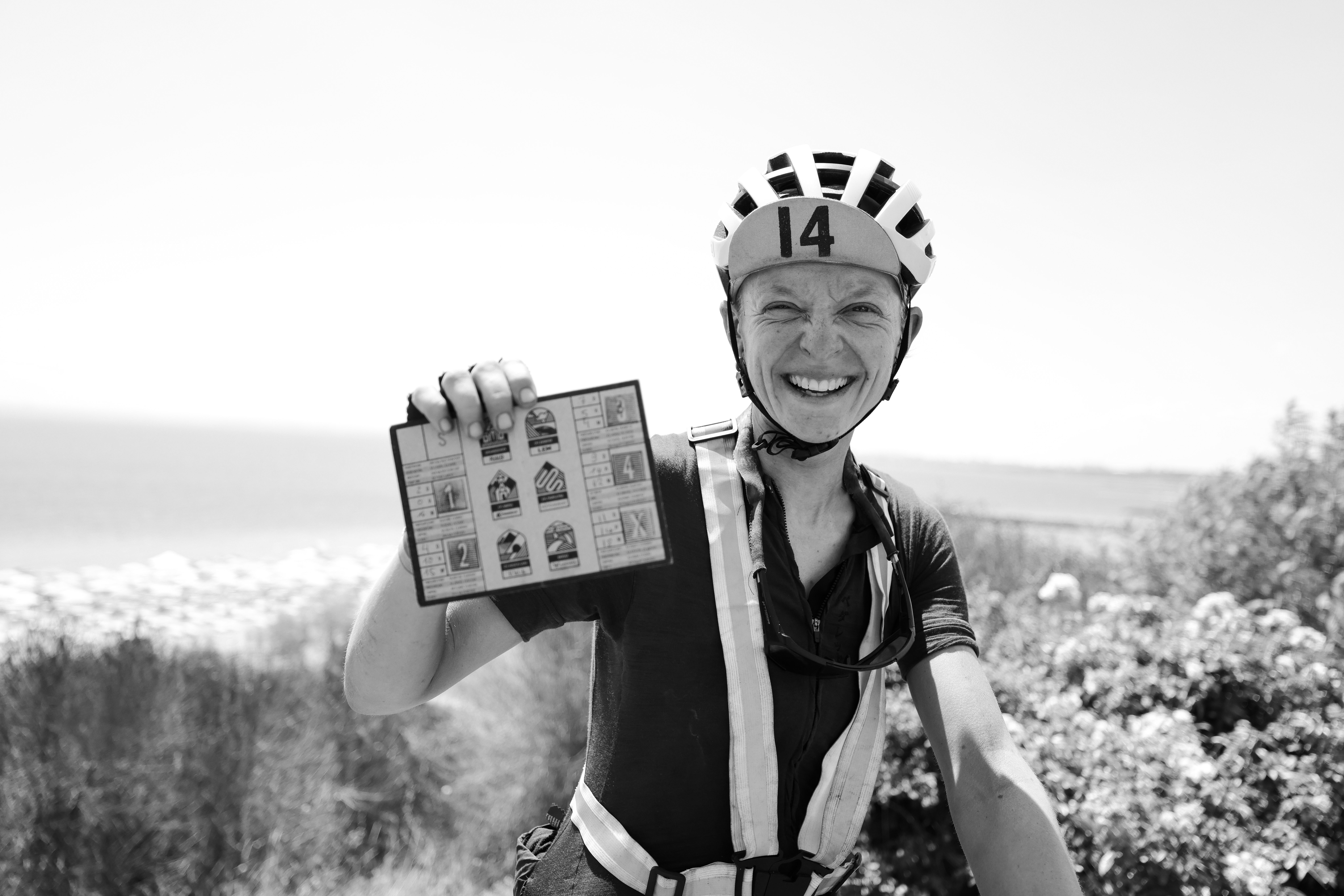
Ada took first woman at Transiberica in 2025, second woman at Unknown Race in 2025, and she’s a solid contender for the winning spot. There must be something in the water in Freiburg, because Ada also hails from the beautiful Black Forest region (along with Amrei, and Marei Moldenhauer, who took second woman and 24th overall at TCRNo9).
Megan Young (she/her)
After coming first in the women’s category at Dorset Divide in 2024, Megan went on to race Tour Te Waipounamu this year, but scratched 100km from the finish due to injury. Having raced and toured extensively in a pair with her ultra-famous partner, Angus, Megan has put the miles in over the years and we’re looking forward to seeing how she fares across Spain and Portugal.
Anna Richter (they/them)
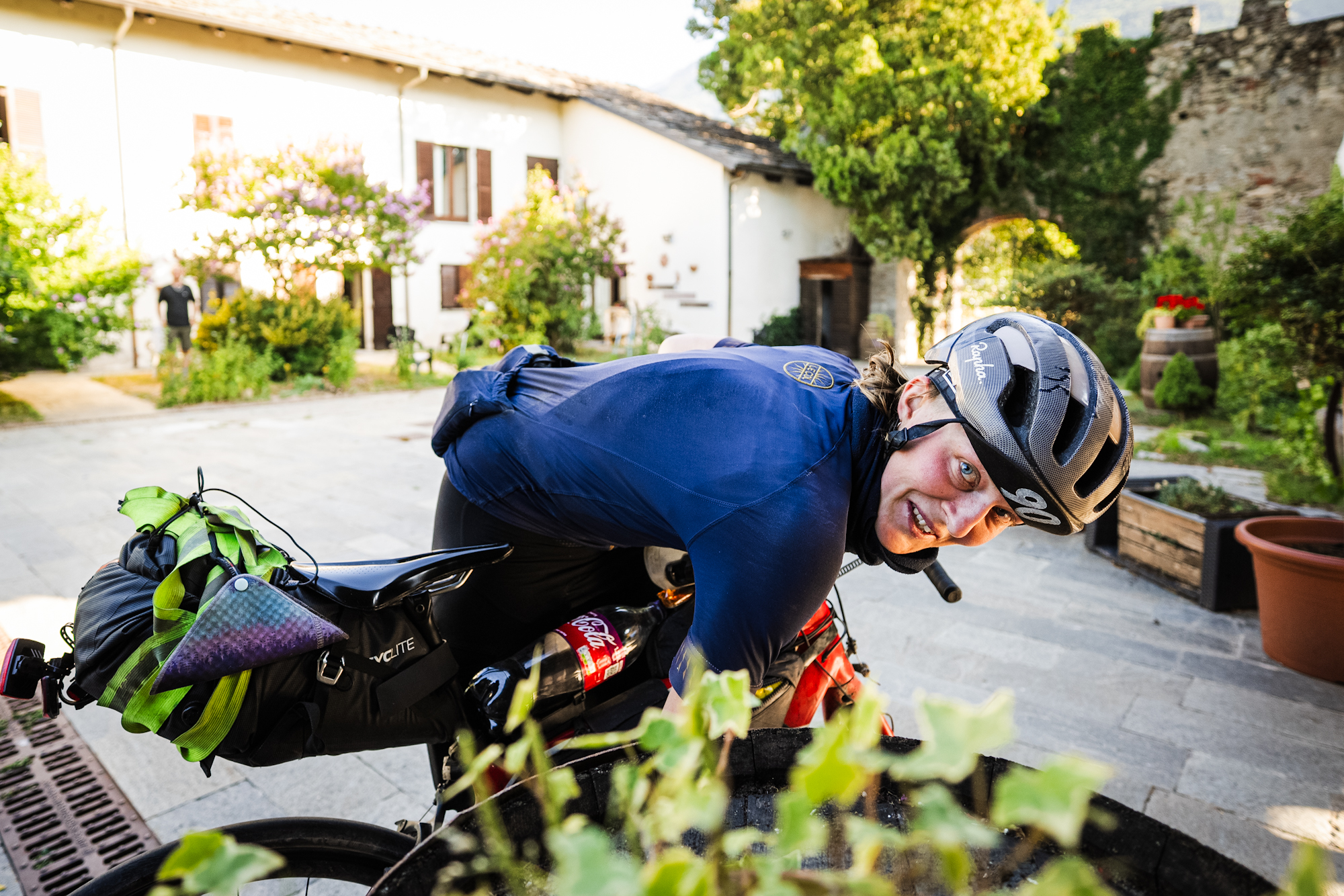
Anna is no stranger to Lost Dot races, having finished TCRNo11 last year in 39th place overall, and TCRNo9 in 37th overall. We’re pleased to see them again for the 101, especially after such a strong performance as the first non-binary rider to reach the finish line of the Atlas Mountain Race this year in a time of 5 days, 1 hour, and 24 minutes, in 14th place overall and beating the race’s fastest woman Cynthia Carson by over 3 hours.
Who else?
We’ll also be scanning the horizon at the finish line for Chris Murray, who finished fast at TCRNo11, with a 635km TT dash to the finish on the final push. Jeanne Lepoix, who finished second fastest woman at the Atlas Mountain Race in 2022, is also on our radar. Though racing has taken a hiatus in recent years, she has spent plenty of time pulling her kids around in a bike trailer, which is certainly good training for the route ahead.
Other riders to watch are those vying for a top spot on the Green Leaderboard — a special ranking for those who commit to overland travel to and from the race, which sits alongside the General Classification to reward those making environmentally-conscious journeys. These riders can be identified by the leafy green emoji attached to their dots on the details tab of the tracking map on the right-hand side.
Though a lot less physical than the race itself, the journey to Santiago overland is its own adventure. Riders have travelled from as far as Glasgow and County Limerick, taking trains, boats and buses in a commitment to promoting low-carbon, flight-free routes to race. You’ll find the Green Leaderboard under the Leaderboard tab on the tracking map.
Lessons From The Road
Over the coming days, the Lost Dot 101 will unfold across Spain and Portugal, with 148 riders making their own modern pilgrimages from Compostela to Córdoba. You can follow the race through daily podcast episodes, written reports right here, and regular updates on social media.
For me on the ground as one of the race reporters, it feels particularly significant to be watching this all-FLINTA group travel across the Iberian peninsula at this scale. Though I’m already familiar with this niche discipline of ultra-distance cycling, there’s something new and electrifying in seeing yourself reflected in the start line, in the discussions happening on WhatsApp, and in the different ways riders carry confidence, doubt and determination.
What stands out most is that each rider is here for themselves — not in opposition to anyone else, but to test their own limits and to see what they are capable of when the distances stretch out and decisions are theirs alone. In a race like this, we find flow in the rhythm of simply turning the pedals and taking care of basic needs. In all that stripping back, there is found a kind of freedom that can be hard to access in everyday life, arguably all the more important for FLINTA folk.
While the race will end in Córdoba, the lessons learned will not stay on the road.
Let’s get rolling.
